In this guide 6 sections
A batch record for roofing membranes or waterproofing compounds ties one production run to its raw material lots, process readings, test results and dispatch. The fields that matter are batch number, formulation version, input lots, mixing or coating readings, tests against specification and the customers who received it.
What a batch record is for
A roof leaks in the second monsoon season. The contractor calls. Which batch was it, which bitumen drum went into it, and did that batch pass its cold flexibility test? The record answers in minutes.
Without it, you argue from memory. With it, you can narrow a complaint to one batch and recall only the rolls or drums that carry the same risk.
The record serves the plant too. It shows drift in a mixing temperature or coating weight long before the customer sees a blister or a split seam.
Fields for bituminous sheets and membranes
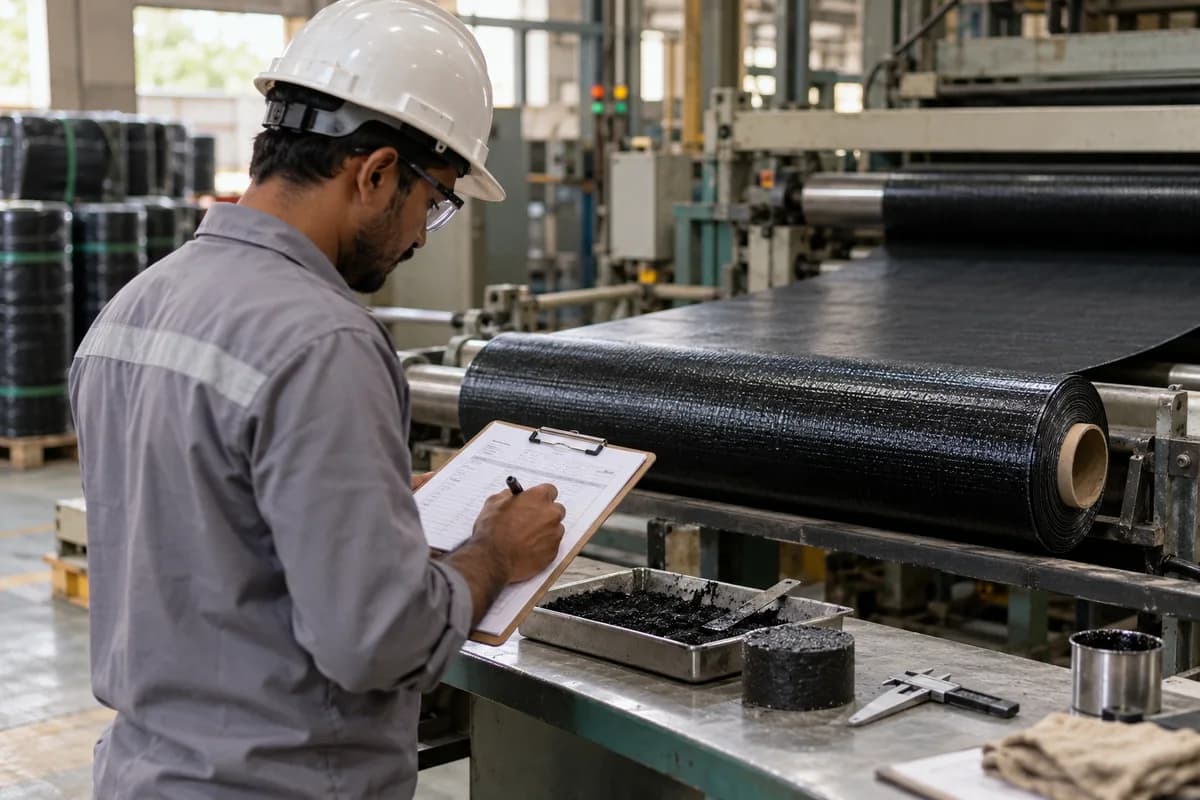
Bituminous roll production has a short list of inputs. Base bitumen or modified bitumen, polymer such as APP or SBS, filler, and a carrier of polyester or glass fibre mat. Each has a supplier lot.
Process readings matter as much as inputs. Record the tank temperature, line speed, coating thickness and cooling. A roll with the right mat and the wrong temperature is still a bad roll.
Tests tie it together. Thickness, mass per area, softening point, cold flexibility and tensile strength are common checks, with the limits taken from the specification you sell against.
- Batch number and roll numbers produced
- Formulation version and polymer type
- Bitumen, polymer and mat lot numbers
- Tank temperature, line speed and coating thickness
- Test readings against specification
Fields for waterproofing compounds
Cementitious slurries, acrylic coatings and polyurethane membranes depend on exact ratios. Record the weight of each ingredient actually charged, not just the recipe weight.
Add mixing time, vessel, operator and the shift. Many defects trace back to a batch that was mixed short, or to a vessel that still carried residue from the previous product.
Shelf life needs its own field. Record the manufacturing date, the expiry and the pack size. Customers will ask, and a faulty expiry label becomes a complaint.
- Charged weights against recipe weights
- Mixing time, speed and vessel number
- Viscosity, solids content and density
- Cure time and adhesion test on a sample panel
- Pack lot, expiry date and fill weights
Linking batches to supply, in both directions
Forward traceability starts from a raw material lot. If a polymer lot proves faulty, list every batch that used it. Then list every customer who received those batches.
Backward traceability starts from a complaint. A contractor quotes the roll number on the label. You find the batch, the inputs, the tests and the dispatch note in one trail.
The links need discipline at the point of issue. Whoever draws a drum from stores must scan or type its lot into the batch. Skip it and the trail breaks.
Keep the record usable, not just complete
A paper batch card works until you have to search it. Then you need a sheet or a system where lot numbers, test readings and dispatch notes are searchable fields.
Hold retained samples from each batch for a set period and note where they are stored. When a complaint arrives, a retained sample often settles it.
Start by choosing one product line and listing its fields from the headings above. Run a mock recall on last month’s batch and see how long the trail takes.
Batch record template for membranes and compounds
Four blocks fill one page. The header holds batch number, product, formulation version and date. The inputs block lists each raw material with supplier lot and charged weight. The process block records temperatures, times and readings. The results block lists tests, limits, pass or fail, retained sample location and dispatch references.
Open a blank worksheet to printQuestions owners ask
Which fields matter most on a waterproofing batch record?
Batch number, charged ingredient weights, raw material lots, mixing time, viscosity or solids reading, test result and expiry date. Together they let you trace a defect to its cause.
Do I need to record raw material lots for every batch?
Yes, for the inputs that affect performance. Without lot numbers you cannot recall selectively when a supplier lot turns out to be faulty.
How long should batch records and retained samples be kept?
Keep them for the full stated product life or warranty, and longer where a standard or contract asks for it. Check the requirement for your market.
Can a spreadsheet do this?
For one product line, yes. It struggles once lots, tests and dispatches must be searched together, which is when a linked system starts to pay off.