In this guide 6 sections
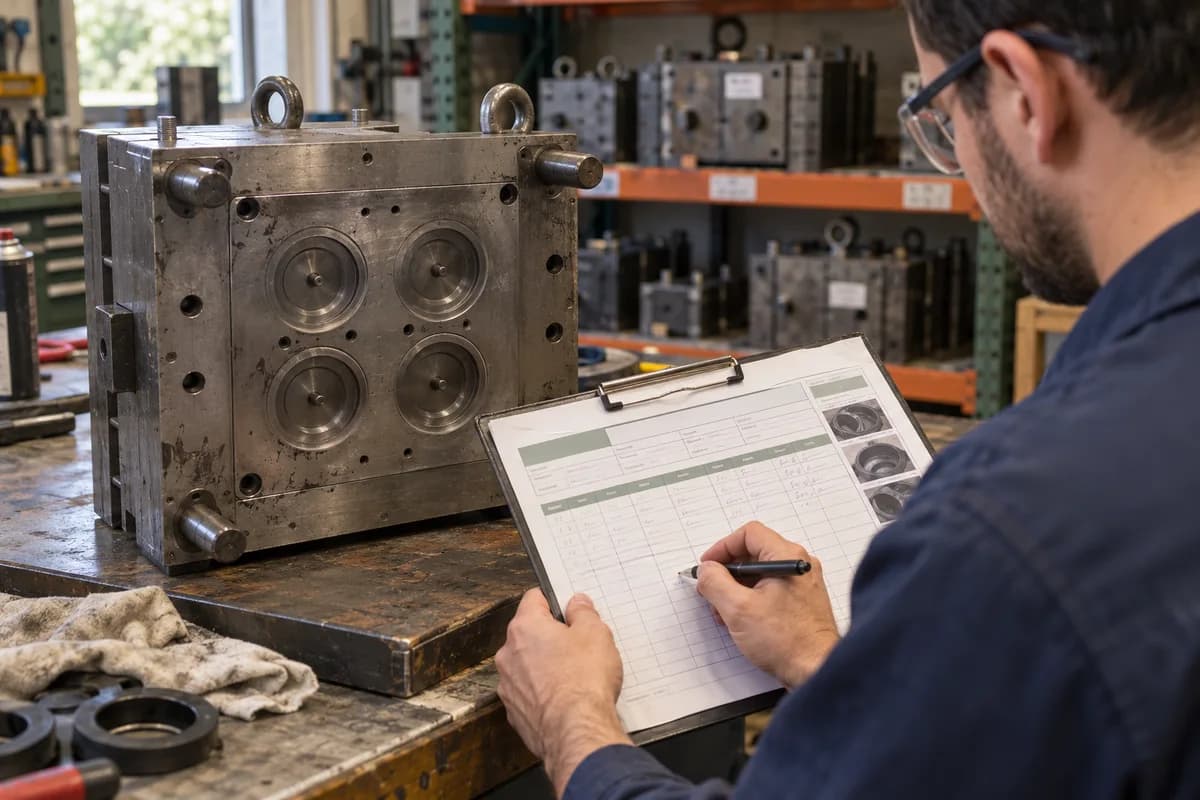
One log follows each mould. Record its identity, shots since the last service, every cleaning method and repair, the cavity condition at each pull, and the rack where it sits between runs. History stays with the steel. Costs stay honest too.
Give each mould one identity
Start with a number stamped on the steel and the same number on the log, because moulds move between presses, shifts and sometimes plants. Masking tape peels off.
Record the type, whether compression, transfer or injection, then the cavity count, the part number, the approved compound and the press sizes it fits. Note the steel type and chrome plating.
Keep the drawing revision with the log. When a part change comes through, the toolroom needs to know which revision this mould was last cut to, before anyone picks up a cutter.
- Mould number and part number it produces
- Type, cavity count and approved presses
- Compound grade approved for it
- Drawing revision and date last modified
Count shots, not days
A mould that ran all week wears differently from one that ran twice, so calendar service dates mislead you about the parting face and the vents. Shot count tracks the wear.
Ask the operator to write the closing counter reading at the end of each run, with the press number alongside and the initials of whoever pulled it. The toolroom does the sums. Nobody gets chased for figures.
Set a service trigger per mould, because a mould that makes flash-prone seals needs attention sooner than a plain washer mould, and each trigger depends on the part. No company-wide rule fits.
Log cleaning and repairs separately
Cleaning and repair are different events. Cleaning removes residue and restores the surface, while a repair changes the steel, and mixing them in one column hides which moulds are quietly wearing out.
For cleaning, write the method, whether dry ice, bead blast, ultrasonic or hand polish, since some methods are gentle on a textured cavity and others are not. Note who did it and how long the mould sat off the press, since those hours are the cost that reaches the production plan.
For repairs, write what was found, what was done and the hours spent, since welded cavities, replaced ejector pins and re-cut flash grooves each deserve a line.
- Date, shot count and cleaning method
- Fault found, repair done and who did it
- Parts replaced: pins, bushes, seals, springs
- Hours off the press and first-article result after
Record cavity condition at every pull
Every pull is a chance to look. Someone should check the cavities when the mould comes off the press and note pitting, flash lines widening at the parting face, a worn vent or a scored core. These show up before parts fail.
Use a short scale: good, watch, repair. A supervisor scanning the log can then find every mould marked watch, pull its photo and book the toolroom, all without reading a single paragraph of notes.
Attach a photo where you can. A dated phone picture of a worn parting line, linked to the log, tells the toolroom more than a description written weeks later.
Say where the mould is
Most lost time is spent searching. Write the storage location on the log as rack, shelf and bay, plus the current location, since a mould may be on press four or at a repair shop.
Add the storage condition. Moulds should go away cleaned, with rust preventive sprayed on and the cavities covered, and the log should note whether this was done.
Print the log for a pilot of five busy moulds this month, keep each one in a sleeve on the rack, and review the sleeves when the month closes.
Mould history card
A single-page card per mould. The header holds mould number, part number, type, cavity count and drawing revision, while a ruled table below it has columns for date, press and closing shot count. Further columns record the event (run, clean or repair), cavity condition rating, work done, hours down and initials, and the foot lists the storage rack, shelf and bay.
Open a blank worksheet to printQuestions owners ask
How often should a rubber mould be serviced?
It depends on the part. Base the trigger on shots since the last service, set it separately for each mould, and adjust it as the history shows where wear begins.
Do I need a different log for compression and injection moulds?
One layout can serve both. Add a few fields for injection moulds, such as runner and nozzle condition, and for transfer moulds, such as the pot and sprue plate.
Who should fill in the log?
The operator records the counter and press, the toolroom records cleaning and repairs, and the supervisor signs off the cavity condition. Splitting the entries keeps each one short.
Can the log be kept on paper first?
Yes, and paper in a sleeve on the mould rack makes a good pilot, since the fields will change after the first month of use. Then the same card moves into software. Shot counts attach to production orders.