In this guide 6 sections
Sand casting traceability follows the pattern, the mould and the heat poured into it, since the sand mould is broken away after one pour and never reused. Investment casting follows the wax tree, the shell and the heat, because one tree carries many parts and each shell dies with its pour. Both chains end at the heat.
The mould is used once in both, but built differently
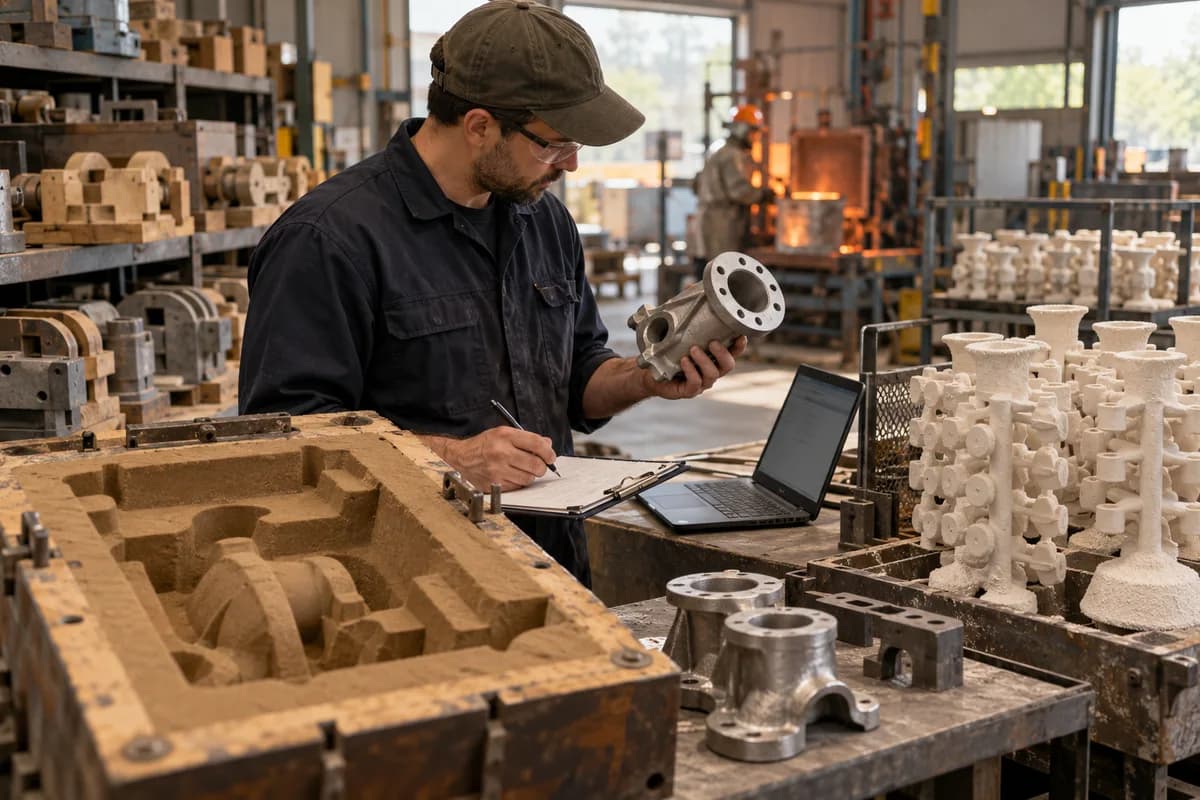
A sand mould is packed around a pattern, split, closed and poured, and once the casting cools the sand is broken away. The pattern survives. It returns to the rack.
An investment casting starts with a wax pattern assembled onto a tree, dipped in ceramic slurry and built up until the shell can hold molten metal. The wax is melted out. Then the shell is fired and poured. Afterwards it is knocked off.
In both processes the mould dies with the pour, so what you can trace is the tooling that made it, plus the metal that filled it.
What a sand casting record must hold
Start with the pattern. Wooden patterns warp and metal patterns wear, so the pattern number and repair history show why castings from one month come out a different size from the next.
Next, link the mould to the heat. A ladle may fill ten moulds and one furnace melt may feed several ladles, so the heat number on the mould sheet holds the chain together.
Sand belongs in the file too. Moisture, green strength and permeability each explain a different family of defects, from gas holes and scabs to mould wall movement, so log them once per shift.
- Pattern number, core box number and repair history
- Mould date, moulding line and flask number
- Heat number, ladle number and pouring time
- Sand test readings for the shift
- Fettling and inspection result per casting
What an investment casting record must hold
The wax stage opens the chain. Record the wax die, the injection batch and the reclaim lot, since wax reused many times changes shrinkage, and a worn die throws parts out of tolerance.
Then comes the tree. One tree holds many parts, so the tree number must link to every part cut from it, and shell removal erases visible marks, so tag early.
Shell records are a third layer. Slurry batch, number of dips, drying time between coats and firing temperature show why a shell cracked, leaked or let ceramic inclusions into the metal.
- Wax die, injection batch and wax reclaim lot
- Tree number and the parts attached to it
- Slurry batch, dip count and drying time
- Shell firing record and pour temperature
- Heat number and chemistry certificate
Marking decides whether traceability survives
A record is only useful when the physical casting carries something back to it, and sand castings often get cast-in numbers or a stamped heat code during fettling.
Investment parts are small and many. A tag or bin card per tree, scanned at each step, keeps the group together until cut-off, and after that each part gets a stamp or etch.
Plan for one returned piece. The customer will ask for the heat, the mould or tree and the pour date, and your answer should take minutes, not a morning spent in notebooks.
Check your system against both chains
Walk one recent casting’s path. Starting from the finished part, ask whether the system can show the mould or tree, the heat, the chemistry certificate and the inspection result without opening a notebook. A notebook step is your risk.
Mixed shops should check how the system stores both chains in one lot table, because the keys differ and a single rigid form usually fails one route.
Test it on last year’s real complaint. Then write down which answers came from the system and which came from memory, because the second list is your backlog of fixes.
Casting traceability chain worksheet
Two lanes, sand and investment, share one page, and each lane lists steps from pattern or wax die through mould or shell, pour, fettling and inspection. Columns name the record kept, the identifier carried, the mark position on the part, the signing role and the date of the check.
Open a blank worksheet to printQuestions owners ask
Is a heat number enough for traceability?
Not alone. The heat tells you the metal, but you also need the mould or tree and the tooling to find the causes of shape or surface defects.
Why do investment castings lose their identity so easily?
Parts are cut from a shared tree and finished in bulk, so unless each part is marked at cutting off, the link to the tree is lost.
Do both processes need chemistry certificates?
Usually yes. Customers buying alloy castings usually ask for a certificate, so store it against the heat and let it print with the dispatch papers.
How detailed should sand test records be?
Per mould is too much. Keep readings per shift on each moulding line rather than per mould, because that is enough to match a defect run with a change in the sand.