In this guide 6 sections
Sell the unit alone when it plugs in or you have no trusted installer. Add fitting bookings when wiring is the barrier to buying, and only for cars you have checked. Count slots in hours, choose your own bay or a partner fitter, and write down who carries the warranty on fitted work.
A fitting booking turns a parcel into a job
Selling the unit alone is a shipping task. You pick, pack and post, and the buyer carries the install. A fitting booking adds a date, a vehicle, a person who turns up and a result you answer for.
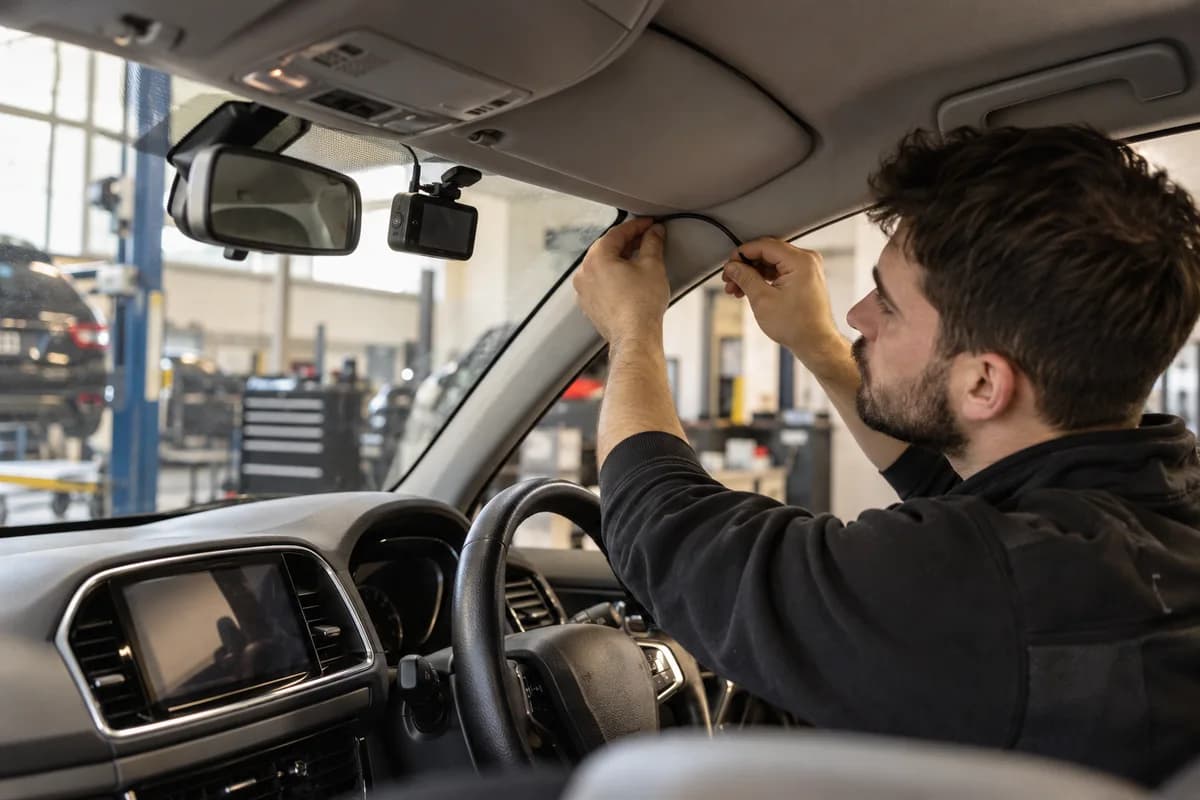
Dash cams and car audio sit at opposite ends of the effort scale. A front camera on a suction mount needs a power plug and a few minutes. A hardwired front and rear set with parking mode needs a fuse tap, trim removal and a plan for the cable route. The gap is wide.
Your answer will differ by product. Most stores end up with all three outcomes. Some units ship alone, some offer fitting, and some require it.
- Plug-in dash cam: the buyer can fit it
- Hardwired dash cam: fuse tap and trim work
- Head unit swap: fascia kit, harness and steering control interface
- Amplifier and subwoofer: a power run through the bulkhead and speaker wire
Check vehicle compatibility before taking the booking
Compatibility is the quiet reason fitted jobs go wrong. A head unit needs a fascia kit, a wiring harness adaptor and sometimes a steering wheel control interface made for that exact car. A hardwired dash cam needs a spare slot in the right type of fuse box.
Hold these as vehicle data on the product. Decide which cars you will fit, and show the rest as unit only. Keep dash cams clear of the sensor area behind the mirror, since many cars place driver-assist cameras there.
Some cars have a factory screen that cannot be swapped. For those the booking button should not appear. Selling a head unit that cannot fit costs a return and a lost day in the bay.
- Fascia kit and wiring harness adaptor
- Steering wheel control interface
- Antenna adaptor
- Fuse box type and a spare slot
- Windscreen area that is free for the camera
Count slot capacity in hours, not in cars
A plug-in dash cam is a short slot. A hardwired front and rear set runs longer, and a full audio upgrade can fill a bay for most of a day. Give each job a duration and let the diary book minutes.
Capacity belongs to the bay and the installer. One installer in one bay is one job at a time. Leave room for brittle trim clips and stuck panels, and keep the last slot of the day open for overruns.
Block the bay while a part is missing. A job halted for a harness that never arrived holds up the next booking too. Check parts the day before.
Choose your own bay or partner fitters, and settle the warranty
Your own bay gives you control over quality, and the installer’s time sits idle on quiet days. Partner fitters give reach into other cities, and they need picking with care. A sensible start is your own bay for the first product, with partners added once the job sheet works.
Then settle the warranty in writing. The maker backs the unit against defects. The installer backs the work: a loose connector, a drained battery, a rattling door card. The booking confirmation should say so.
Battery drain from a badly wired parking mode is a classic argument. A job sheet that records where power was taken and which fuse was used lets you find the cause without guessing. With partners, agree who pays for a return visit.
- Where power was taken from
- Fuse used, and whether a tap was added
- Cable route and trim removed
- Photo of the finished wiring
- Test result: camera recording, audio levels set
A rule for choosing, and a pilot to prove it
Sell the unit alone when it plugs in, when the buyer can fit it, or when you have no bay and no trusted fitter nearby. Add fitting when installation is what stops people buying, or when your returns come from bad installs.
Pilot with one product and one fitter. Offer the booking for hardwired dash cams only, in one city, for a month. Read the returns and reviews before you add amplifiers.
Start with a list. Take your ten best sellers and mark each as plug-in, hardwired or full install. Note the time and parts each one needs.
Fit or ship decision sheet
Every product is a separate row of the sheet. Columns run across: product, type, parts needed such as fascia kit, harness or fuse tap, cars it fits, minutes in the bay, fitter and warranty carrier. The last column holds the decision: unit only, fitting optional or fitting required.
Open a blank worksheet to printQuestions owners ask
Can a buyer fit a hardwired dash cam without a fitter?
Often yes, with a fuse tap, a trim tool and a clear guide. Offer the guide and the booking side by side and let the buyer choose.
Does professional fitting affect the maker’s warranty?
Terms differ by brand. Ask each maker in writing whether work by a partner fitter changes the cover, and keep the reply with the product record.
Should fitting be a separate line on the order?
Yes. A separate line keeps refunds, the fitter’s payout and the warranty note clear if the unit is returned but the work was done.
What if the car cannot take the unit?
Cancel the fitting line, refund it, and offer a return or a model that fits. The compatibility data should catch this before the booking is taken.