In this guide 6 sections
Sell fitted packages only when you can check bolt pattern, offset, centre bore, sensor and load rating against the vehicle, and own a bay to mount and balance. Otherwise, sell wheels alone with a fit check. Send tyre fitting to a partner garage instead.
Six things must match before a wheel goes on
A handsome wheel can still be wrong. Looks prove nothing. The bolt pattern sets where the studs sit, offset sets how far the rim stands out, and centre bore must match the hub or else needs a spigot ring.
Load rating comes next. The wheel must carry at least what the axle carries, and a direct pressure system needs a compatible sensor in each wheel, with a valve hole to suit.
Check caliper clearance too. Conical, flat and ball seats are not interchangeable, and a nut with the wrong seat can feel tight while it bears on only a thin edge of the hole.
- Bolt pattern
- Offset
- Centre bore
- Load rating
- Pressure sensor
- Nut seat and caliper clearance
What a fitted package adds beyond the parts
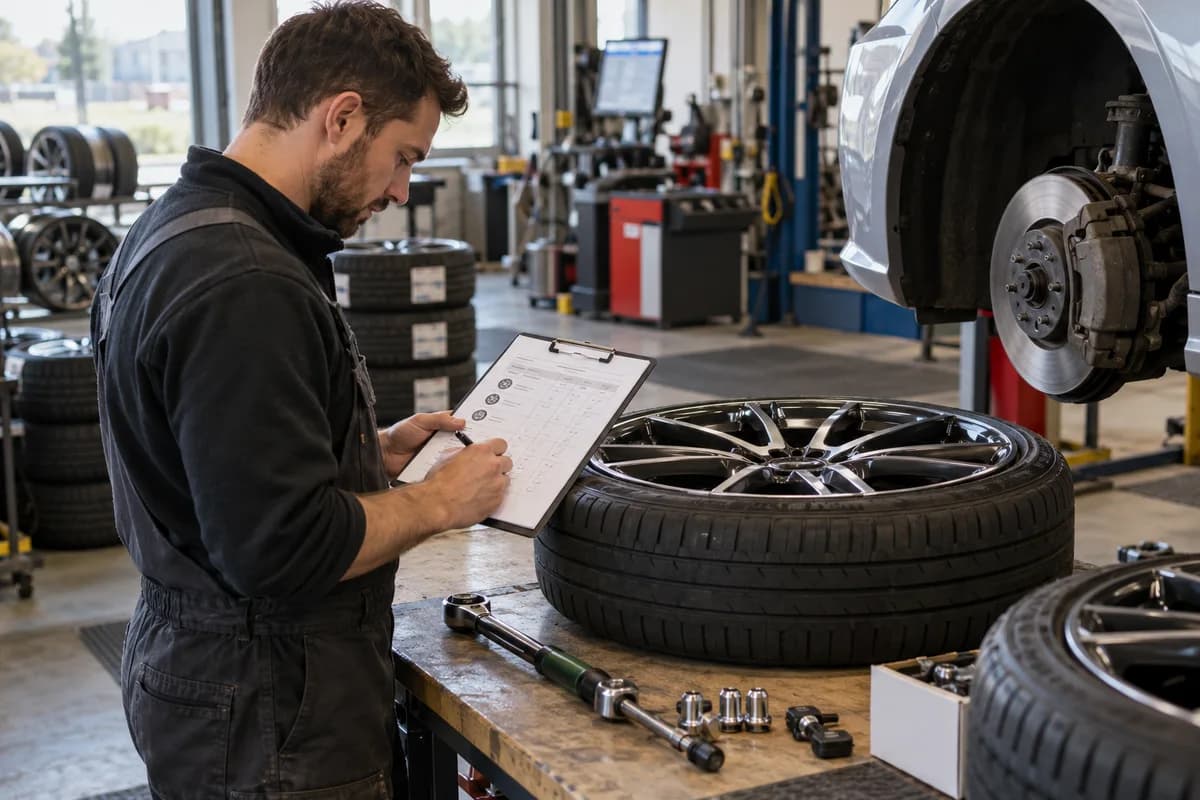
One fitter sees the whole combination. That fitter mounts the tyres, balances each wheel, fits the sensors and checks that the wheel sits flat on the hub before it is boxed. Four wheels arrive ready to bolt on.
That helps the buyer who would otherwise order a tyre in the wrong width for the rim, or pay a garage to balance wheels it did not mount. You also keep the tyre sale.
The cost sits in the bay, the balancer, the tyre changer, the pallet and the crate foam that keeps a lip from bending. Mounted wheels are bulky and heavy. A scuffed sidewall or bent lip in transit turns a sale into a claim, and the carrier will ask for photos taken before it left.
Returns change once the tyre is mounted
An unmounted wheel can be resold. A mounted tyre cannot. The bead has seated, the valve has been cut or replaced, balance weights are stuck to the rim and the tyre now counts as used.
So the fitment check must come first. Ask for the vehicle, confirm each match in writing, mount only after the buyer replies yes, and keep that reply as your record if the wheel fouls a caliper.
Write the terms plainly. Decide who carries the loss in each case, print the terms before payment, and check consumer rights where you sell, since they differ by country.
- Wrong bolt pattern after your sign-off: the seller carries it
- Buyer changes mind after mounting: terms stated on the page
- Damage to a mounted wheel in transit: carrier claim with photos
- Faulty sensor: supplier warranty route
Compare packages, separate sales and a middle route
Packages sell biggest and ship heaviest. Separate sales ship light and return cleanly, yet they leave the buyer with a mounting job and a garage that may refuse to fit parts bought elsewhere.
The middle route sells wheels with a fit check, books the tyre fitting at a partner garage near the buyer, and keeps the booking on your site. The partner confirms the job. The wheel never travels mounted.
Look at who catches mistakes today. If your counter already spots fitment errors before the parcel is packed, choose the package; if buyers email photos of bolt holes asking what fits, sell wheels alone.
- Fitted package: highest sale, heavy parcel, returns on mounted tyres
- Wheels only: light parcel, clean returns, buyer arranges fitting
- Wheels with a partner fitter: booking at a nearby garage, wheel ships bare
Choose by what your bay and your data can do
Ask two questions. First, do you own a tyre changer and a balancer, with someone trained on both, and does your catalogue hold bolt pattern, offset and centre bore for every wheel? Second, can you search by vehicle and flag any combination that will rub against the caliper, the arch or the suspension strut at full lock?
If both answers are yes, start with packages on one wheel range and the five cars it suits best, then widen once returns stay low. Otherwise sell wheels alone for now. Add the partner route later.
Today, take your best selling wheel, write down its measurements and the cars it fits, and treat every gap on that card as a gap in your catalogue.
Wheel fitment sign-off sheet
A one page sheet opens with the vehicle plate and trim, then a table of six checks: bolt pattern, offset, centre bore, load rating, sensor and nut seat. Each row holds three boxes: the vehicle value, the wheel value and a match tick placed for the fitter to initial before anything is mounted. Two signatures close the sheet. The buyer signs at the foot.
Open a blank worksheet to printQuestions owners ask
Do I need a hub centric ring on every set?
Only when the wheel’s centre bore is larger than the hub, because the ring fills the gap and lets the wheel centre on the hub instead of the studs. Record which wheels need one.
Can I ship wheels with the tyres already mounted?
You can, but mounted wheels are bulky, heavy and prone to transit damage, so pack each one carefully, photograph it before it leaves and keep the claim route ready.
Who should confirm fitment before mounting?
A named person should confirm it, working from the vehicle record rather than the buyer’s say-so, and their sign-off plus the buyer’s yes is the record you keep.
Do pressure sensors have to come with the package?
Yes, when the car has a direct monitoring system, because each wheel needs a compatible sensor programmed to the car, and the page should say who does it.