In this guide 6 sections
A voice bot suits routine calls such as status checks, appointment slots and opening hours. Complaints, negotiation and urgent matters should go straight to a person. Decide by call type, and always build a fallback for when speech recognition struggles with accents or line noise.
Decide by call type, not by technology
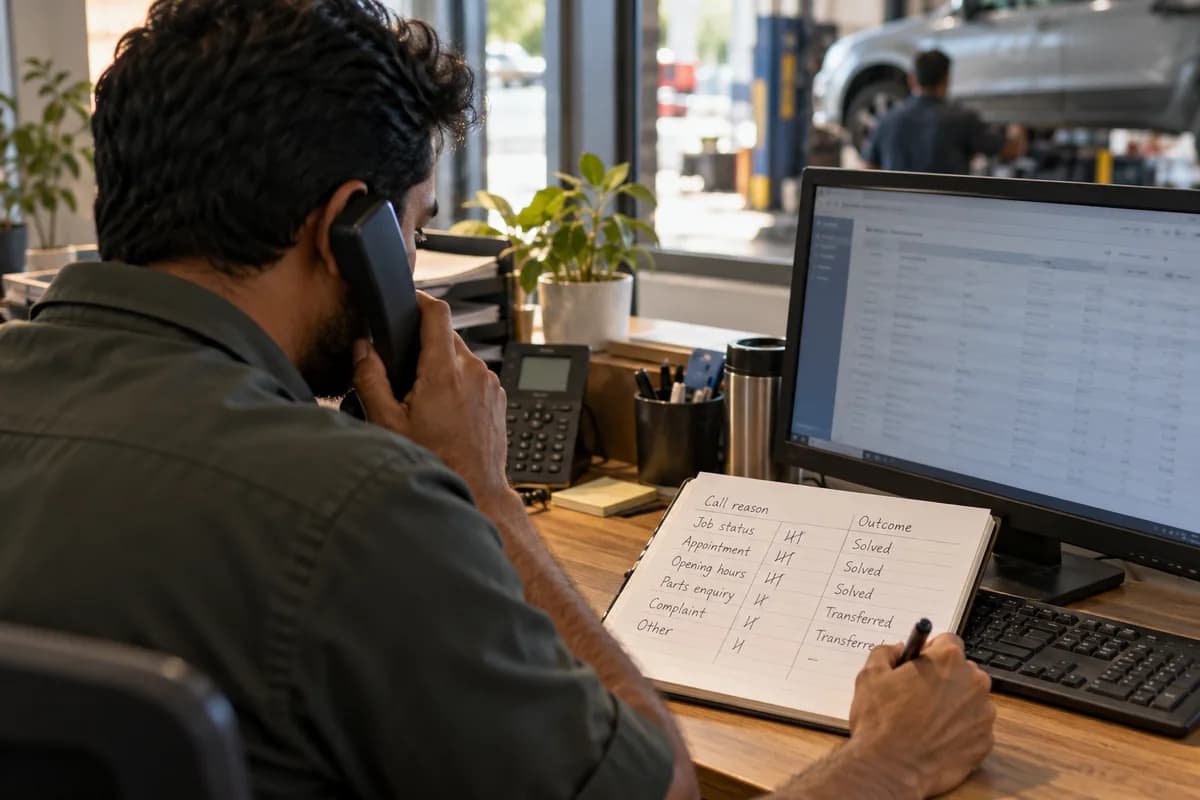
Do not ask whether a bot is good enough. Ask which of your calls it should touch. Listen to a week of recordings, or ask the front desk to tally calls by reason on a sheet.
Most businesses find a small group of repeat questions. Is the car ready? Do you have a slot on Thursday? What time do you close? These have short, factual answers that sit in a system already.
The rest are conversations. Someone is upset, confused or in a hurry. Those need a person, because the caller wants to be heard before being helped.
Calls a bot handles well
A bot does well when the caller wants a fact or a slot and the answer lives in a calendar or job card. A clinic can offer open appointment times. A dealership can read out a service job status. A repair shop can say whether a part has arrived.
The bot works from the same booking system your staff use. If it says Thursday at four is free, it has checked. It writes the booking back, and sends a confirmation message.
Keep each call short, and let the caller interrupt the bot mid-sentence without losing their place. Confirm the caller’s name or vehicle number, answer, then close.
- Appointment slots and rescheduling
- Job or order status by reference number
- Opening hours and directions
- Confirming a visit already booked
- Taking a callback request after hours
Calls that go straight to a person
Some calls should never meet a bot. A complaint. A price negotiation. A patient describing chest pain. A customer whose car broke down on a highway. Anyone who says the word urgent, or who is clearly in distress.
Build trigger words and tone checks into the front of the call. Words such as emergency, accident, refund, lawyer or complaint transfer the line immediately. So does a caller who asks for a human twice.
Never trap people. A bot that cannot be escaped costs you more customers than the missed calls it was bought to fix.
Plan for accents, noise and bad lines
Speech recognition drops in accuracy with strong regional accents, mixed languages in one sentence, wind, workshop noise and weak mobile signal. Test with your own callers, not with a demo recording, and include a few calls placed from a moving vehicle or a noisy bay.
Design the fallback first. If the bot fails to understand twice, it should say so plainly and offer a transfer or a text message link. The caller should never repeat a reference number a third time.
Add a keypad option for numbers. Pressing digits is more reliable than speaking a twelve digit job reference over a noisy line.
Pilot on one line, then measure
Start with after-hours or overflow calls. Missed calls there cost you nothing extra, and any answer is better than a ring tone. Keep your daytime line staffed.
Read transcripts of the first fifty calls. Mark each as solved, transferred or abandoned. Note what the bot misheard. Fix the top three problems before widening, and share the misheard phrases with whoever configures the vocabulary, such as model names or doctor names.
Your first step this week is a call tally. Two columns, reason and outcome, filled for five working days.
Call type decision sheet
A one-page grid with one row per call reason from your tally. Columns: reason, calls per week, answer source system, bot or person, transfer trigger words, fallback if not understood, and the owner who reviews transcripts weekly.
Open a blank worksheet to printQuestions owners ask
Will callers know they are talking to a bot?
They should be told at the start. A short line saying it is an automated assistant sets expectations and lets callers ask for a person straight away.
Can a voice bot book appointments?
Yes, if it connects to your calendar or booking system. It reads open slots, writes the booking back and sends a confirmation, just as your front desk would. Cancellations free the slot at once.
What if the bot cannot understand the caller?
Plan a fallback: a second try, a keypad option, then a transfer to staff or a text message with a booking link. Callers should never be stuck in a loop, which is the complaint that sinks most bot rollouts.
Should it handle calls during working hours?
Start with after-hours and overflow calls. Widen to daytime only after transcripts show callers get answers and staff trust the booking data it writes.