In this guide 6 sections
List each bat as its own item when you sell better grades of willow, because two bats of one model differ in weight, grain and pick up. Entry level bats vary little. List those by model, with size options, and keep one stock record that the shop and the website share.
Two bats of one model are never quite the same
Willow is a natural wood. Two blades cut from the same model can differ in weight, grain count, balance and the way the bat comes off the hand. In the shop, a buyer holding both picks one in seconds.
Online, that choice vanishes. The buyer gets whichever bat the packer lifts from the rack. The complaint that arrives later is not about a fault, it is that the bat feels heavier than the one in the photo.
Premium buyers know this. They ask for the weight, the grain on the face and a photo of the edges before they pay, and they remember the shop that answered.
What a single bat listing has to hold
Each bat gets its own page and a stock of one. That page must carry what the buyer would check at the counter, because anything you leave out turns into an email or a phone call.
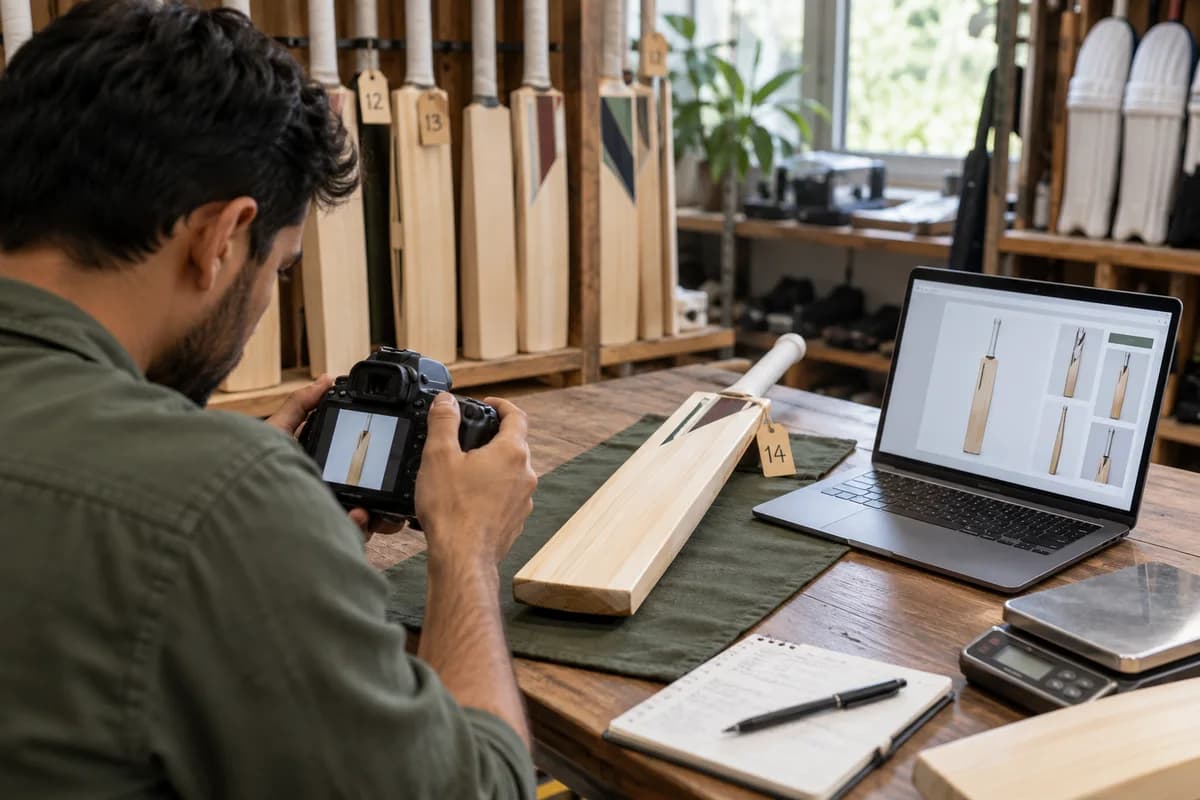
Weigh every bat yourself. A weight copied from the maker’s brochure is only a range, and buyers who care about pick up will write to ask which end they get. Photograph each bat in the same light and from the same angles, so two listings can be compared side by side.
Tie a numbered tag to every bat and match it to a slot on the rack. A packer finds bat 14 in seconds. Nobody has to guess which blade the photos show.
- Bat number on the tag, tied to the shelf slot
- Willow type and grade, such as English or Kashmir willow
- Weight as weighed, balance point and handle shape
- Grain count on the face and any marks or stickers
- Five photos: face, back, edge, toe and handle
- Knocked in or raw, and whether a cover or tape is included
When a model listing is enough
Volume bats are different. Those made in quantity from Kashmir willow, and most junior bats, vary far less from one to the next. Buyers expect a model page with a size choice, such as short handle or harrow, and a stated weight range.
A model listing is easy to run. It needs one page, a few size options and a count for each, and it suits a bat you restock from the maker every month. Photos of the model are enough.
Check your own returns before deciding. If buyers of a model rarely complain about weight or feel, the model page is working. If they do, split the best sellers first.
What each choice does to your stock counts
A single bat listing has a stock of one. When it sells at the counter, the page must close at once, or two buyers pay for one bat and one of them waits for a refund.
A model listing counts by option. Five short handle bats means five, whichever bat the packer picks. The count stays easy. But the weight and grain you promise on the page become a range you cannot control. That is the trade.
Pick one stock record for the shop and the site. A bat sold at the counter, at a tournament stall or online should leave the same count the moment it goes.
Try a middle route for one season
Keep the model page, then add a bat picker beneath it. The picker lists the individual bats of that model still in stock, each with weight, grain and photos. The buyer can take any one, or leave the choice to you.
Start with your highest grade, where the difference in feel is greatest. Compare enquiries and returns for those bats against the model pages beside them. Keep whichever route brings fewer questions and fewer returns.
This week, weigh and photograph five bats from the top shelf, then list them as single items. Watch what buyers ask in the first month.
Cricket bat listing sheet
A single sheet with one row for each bat. Columns: bat number, model, willow type and grade, weight as weighed, balance point, grain count, handle shape, five photo ticks, knocked in or raw, shelf slot and status. Beneath the table, a closing box notes which bats go online as single items and which stay on model pages, plus the date of the decision.
Open a blank worksheet to printQuestions owners ask
Will buyers trust a weight I state?
They will if you weighed the bat yourself and say so. A weight copied from the maker’s brochure is a range, so serious buyers still write to ask.
Can I sell the same bat in the shop and online?
Yes, with one stock record. When a bat sells at the counter, its online page must close at once, or two buyers end up paying for it.
How many photos does each bat need?
Five cover most buyers: face, back, edge, toe and handle. Shoot them in the same light so a buyer comparing two bats sees real differences, not a change of lighting.
Should the listing say if the bat is knocked in?
Yes. Record it in its own field and show it on the page. A raw bat and a bat that has already been knocked in are very different jobs for the buyer.