In this guide 6 sections
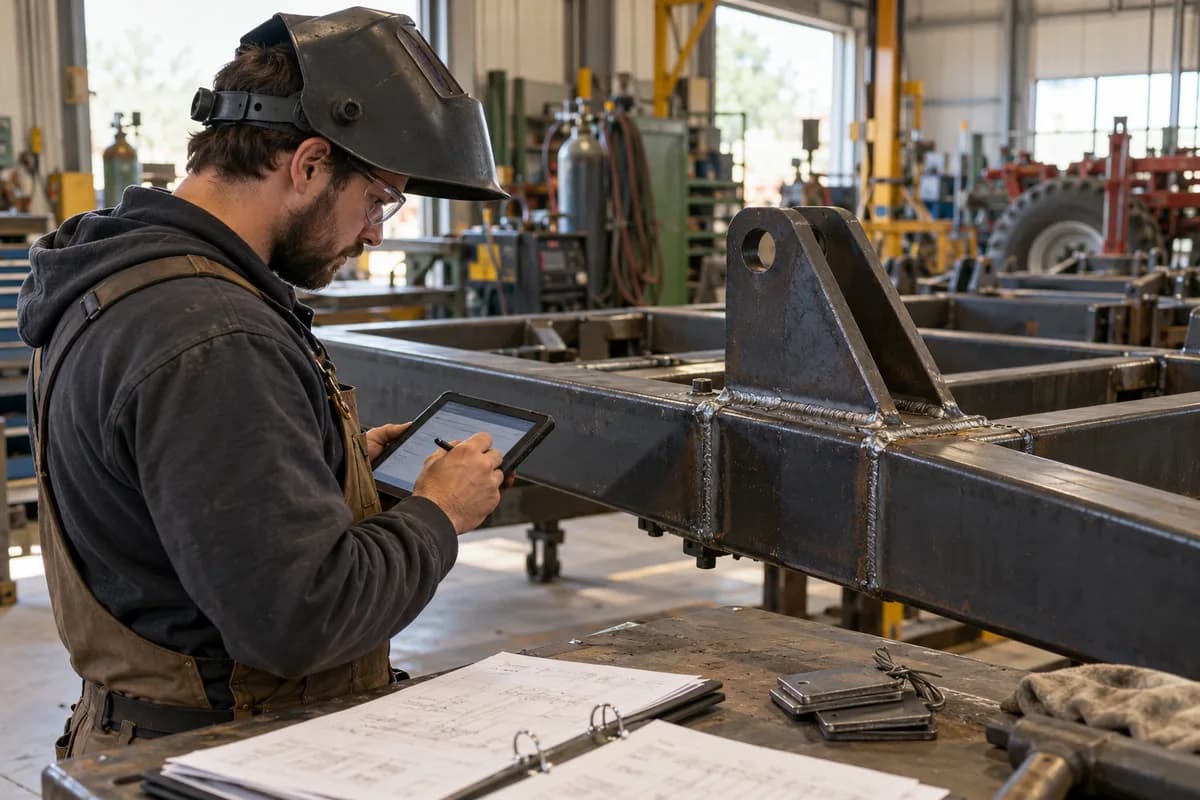
Traceability on steel implements means recording, for each load bearing weld, who welded it, under which procedure, on steel of which grade and heat number. Capture these at the bench, link them to the serial number, and keep them where a quality supervisor can find them after a field failure.
Which welds need a record
Not every bead needs a page. A mudguard bracket is not a hitch pin. Mark the welds whose failure would injure someone or wreck the machine, such as main frames, drawbars, three point hitches, lift arms and axle mounts.
Write the list once per model, on the drawing. The weld symbol, the joint and the required procedure sit together. The welder then knows which joints carry a sign-off.
Keep the list short. A long list gets ignored, and the welders stop reading it.
What to record for each critical weld
Four facts matter most: the welder, the procedure used, the steel grade and the heat number. Add the date, the drawing revision and the inspector’s mark.
The welder is an identity, not a name scribbled on a card. A badge or an initial code tied to the welder’s qualification record works. If the qualification has lapsed, the system should warn before the job starts.
The procedure covers process, filler wire, current range and preheat. A welding procedure sheet is referenced by number, so the record stays short.
- Welder ID and qualification status
- Procedure sheet number
- Steel grade and thickness
- Heat number from the mill certificate
- Drawing revision and inspector mark
Tracing steel back to its heat number
Plate and tube arrive with a mill test certificate that lists the grade, chemistry and heat number for the batch. File it against the goods receipt the day it arrives. Months later is too late.
Heat numbers get lost at the cutting table. Once a plate is nested into twenty parts, the stamp is gone. Transfer the number by marking each part, or by keeping a cut list that names the source plate.
Offcuts matter too. Write the heat number on each one before it goes back to stock.
- Mill certificate filed at goods receipt
- Heat number marked on cut parts
- Cut list naming the source plate
- Offcuts returned to stock with their heat number
Linking weld records to the serial number
The weld record is only useful if you can reach it from the machine, so tie it to the frame’s serial number or job number. When a dealer reports a cracked hitch, you open the machine record and see the weld in seconds.
You can then look sideways. Which other machines used the same heat, welder or procedure that week? That answer decides whether you have one bad part or a batch problem.
Paper travelling cards can do this. They get lost. A barcode scan at the welding bay is faster and keeps the record safe.
Start with the hitch
Choose one model and one critical weld, probably the hitch or drawbar. Record the four facts for a month and then try a mock investigation on a finished unit.
If the trail breaks, you know which step to fix before widening the list. Do that first.
Critical weld log
Each row of this log covers one critical weld. Columns hold serial or job number, weld location, welder ID, procedure number, steel grade, heat number, drawing revision, date and inspector initials. A header block holds the model and the list of welds that need entries.
Open a blank worksheet to printQuestions owners ask
Do all farm implement welds need traceability?
No. Focus on welds that carry load or affect safety, such as frames, hitches and lift arms. Brackets and covers can follow a lighter check.
What is a heat number?
It identifies the batch of steel melted together at the mill. It appears on the mill test certificate and is usually stamped on the plate or tube.
Who should own the weld records?
The quality supervisor owns the format and checks. Welders and inspectors enter the facts at the bench, so the record is made when the work is done.
Can paper records work?
For a small volume, yes. They tend to fail when cards go missing or handwriting is unclear. A scan or tablet entry at the bench makes the trail more reliable.