In this guide 6 sections
A machine record is one file, keyed by serial number, that follows a single farm machine all the way from order to warranty claim. It links the sales order, bill of materials as built, parts issued, test results, dispatch and dealer, so you can say what went into this machine within minutes.
One serial number, one story
Every rotavator, trailer, sprayer or pump set you ship carries a serial plate stamped with a model code, and the machine record is the page behind that plate. It opens from a scan. Everything known about the machine hangs from it, from the first order line to the last dealer visit before the warranty expires.
Without it, the facts sit apart. The order lives in a sales register, the parts list in a drawing folder, the test sheets in a file and the claim on a phone call. Nobody sees it all at once.
A record can be plain. It must be complete. It must be easy to find.
What goes into the record
Start with the order: customer, dealer, model, options and the promised delivery date that the dealer was quoted when the booking was taken. Then add the bill of materials as built, which differs from the standard list whenever a substitute bearing, hose or gearbox went in.
Next comes the build trail, naming the gearbox batch, the heat number of plate, the welder, the hydraulic hose lot and the inspector who signed off each stage. Test results follow, such as pump flow, PTO run time, hub torque and paint film thickness, and the record closes with the dispatch date, transporter and dealer’s receipt.
Later events join the same page: a service visit, a replaced coupling and a warranty decision all belong there, dated and signed by whoever handled them.
- Order, model, options and dealer
- Bill of materials as built
- Batch or lot of key bought-in parts
- Test and inspection results
- Dispatch, dealer receipt and installation date
Why makers need it
A dealer calls about a cracked hitch. With a record, you see the weld sign-off, the steel batch and the other trailers built that week, and you can call those dealers before they call you. Without one, you guess. The dealer waits.
When a seal supplier reports one faulty lot of hydraulic seals, the record shows which serials received it, so you phone the affected dealers and not the rest.
Warranty claims are decided on facts. The dispatch date, the test result and the parts fitted settle most disputes quickly, because both the maker and the dealer can read the same page.
How a record gets built in practice
Issue the serial early. Each step then adds to it, with parts issued from stock, tests entered at the station and dispatch scanned at the gate.
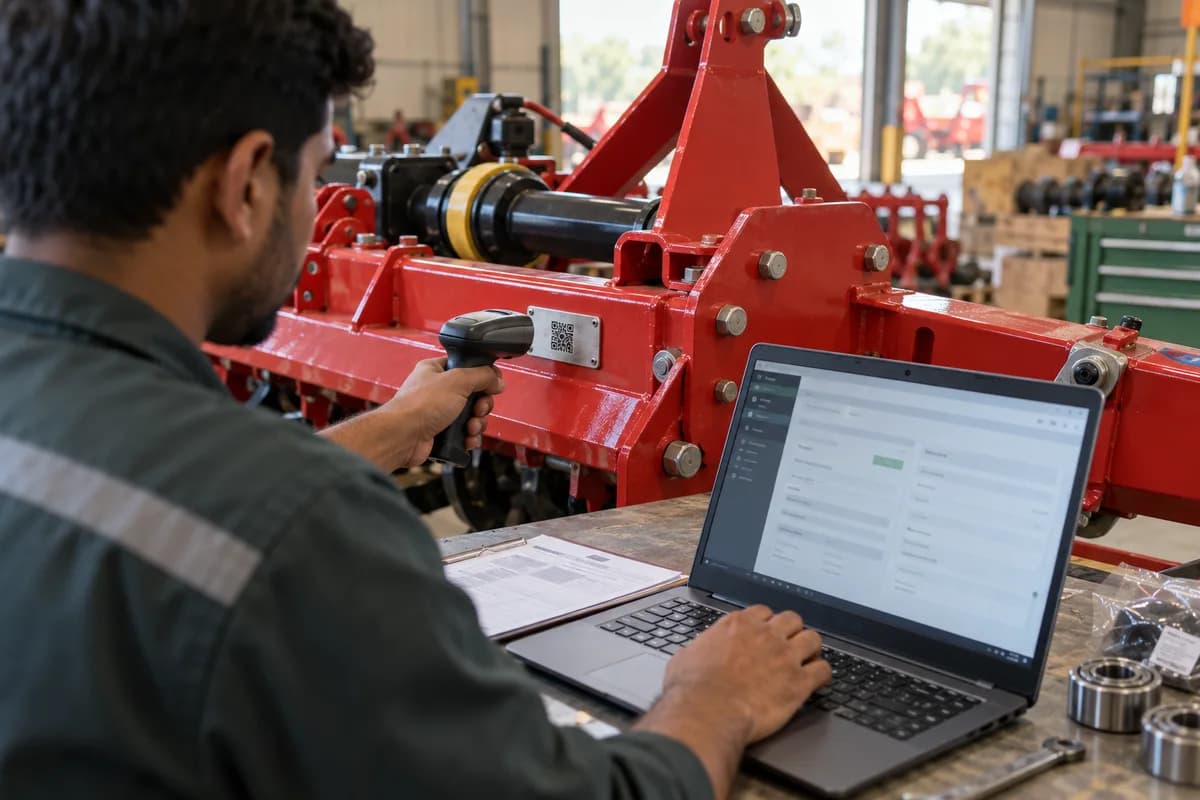
Barcode or QR labels on the plate, the gearbox and the pump cut typing errors, because a label scanned at the station beats a number copied from memory.
Start small by linking the order, the serial and the dispatch first, and add parts and tests only when that works, one station at a time. The floor team learns the habit slowly.
- Serial issued at the start of the job
- Parts scanned when issued to the machine
- Tests keyed or captured at the station
- Dispatch scanned at the gate
Check yours with one old machine
Pick a pump set or tiller sold last year and try to list its order, parts, test results, dealer and service visits, timing yourself as you go. Note which answers were missing.
That list is your gap sheet. Bring it to the next planning meeting.
Machine record template
One page per serial number. Blocks cover order details, bill of materials as built, key part batches, test results, dispatch and dealer, and a service log with date, fault and part replaced. The top box holds serial and model.
Open a blank worksheet to printQuestions owners ask
Is a machine record the same as a bill of materials?
No. A bill of materials lists what a model should contain, while a machine record shows what one particular machine did contain, plus its tests, dispatch and service history.
Do small makers need machine records?
Yes, because the first warranty dispute arrives early, and even a simple sheet linking serial, order and dispatch saves hours when a dealer rings about a failed machine.
Where should the serial number be stamped?
Stamp it on a plate that survives paint and weather and also on the frame itself, then check that both match the number in the record.
How far back should records go?
Keep them at least as long as your warranty runs and your dealers keep servicing the machine, and keep records for load bearing frames and hitches even longer.