In this guide 6 sections
An enclosure ships short when dispatch is built from separate lists for fabrication, coating, hardware and accessories, and nobody checks them against the order’s bill of materials. Keep one parts list per order. Count at packing. Get a sign-off before the truck is loaded.
Why one enclosure becomes five lists
One cabinet order reaches dispatch in pieces. The body and door leave the press brake, the mounting plate comes off the laser, hinges and locks arrive from stores, and the powder coater returns the painted panels. Every stop adds paper. A cabinet passes through the bending cell, the laser, the paint shop and the hardware store before it reaches the packing bay, and each stop produces its own paperwork.
Each department keeps its own count. The fabrication list says forty bodies done, the coating return note says thirty-eight came back, and the stores issue slip shows hinges for forty. No one reconciles the three.
The packer grabs the nearest list. The customer finds the gap on site, usually while an electrician stands idle beside a cabinet with no gland plate to cut.
- Bodies and doors from the bending cell
- Mounting plates and gland plates from the laser
- Hinges, locks, gaskets and earthing studs from stores
- Coated parts returning from the paint shop
- Loose accessories such as rails and cable ties
The usual points where a part drops out
Coated parts return in lots. A partial return is booked as complete, a door reworked after a scratch rejoins the batch late, and a gland plate is cut to a superseded revision.
Order changes cause quiet gaps. The customer adds a mounting plate for ten of forty cabinets, the sales note says so, and the job traveller never learns of it.
Loose items vanish too. A bag of gaskets or a set of lock keys is easy to forget, because nothing on the cabinet itself points to it. The shell looks finished. A shortage born at the paint shop goes unnoticed until the crate is nailed shut, because the packer counts what sits on the bench, not what the order promised. Nobody is careless here.
One bill of materials per order
Build the list once, at order confirmation. It names every part that must ship: body, door, plate, hinges, lock, gasket, earthing hardware, nameplate and any accessories, each with a quantity per cabinet and an order total.
Every department then reports against that list. Fabrication marks bodies complete, coating marks panels received, and stores marks hardware issued, so a shortfall shows the day it appears and not at the loading dock. Stores gain most, since the issue slip finally names the order line it serves and the storekeeper can see which hinge count is still outstanding.
Changes go in the list first. When the customer amends the order, the traveller, the pack list and the coating request all read from it, so every department works to one revision.
The pre dispatch check
Before the crate closes, a second person counts every line against the list, types the count in, never ticks a margin, and leaves any shortfall flagged on the board. The checker also matches the powder coat shade on the label to the order, since a correct count of the wrong colour still comes back as a complaint. Colour counts.
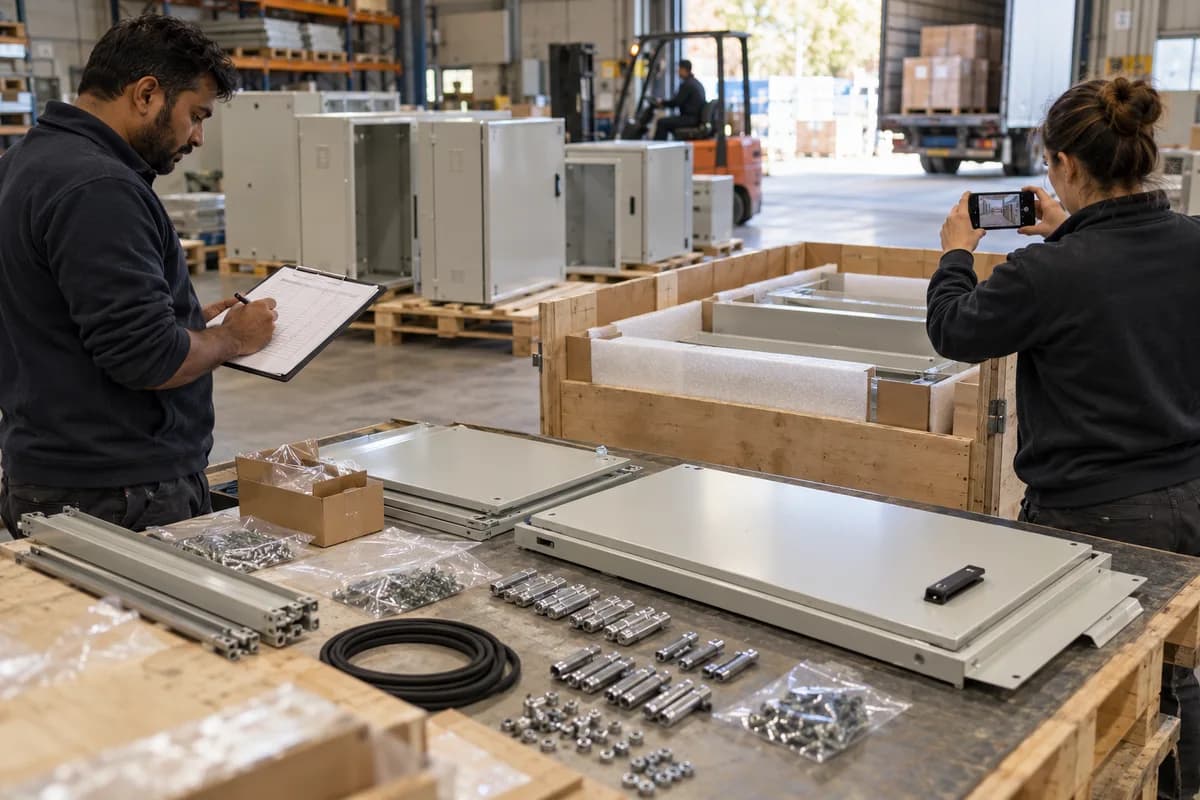
Photograph each packed layer with the label showing, because when a gasket set is later reported missing, a dated photo settles in a minute whether it left the shop. One photo ends the argument.
Decide the shortfall rule in advance. Part shipment with a note to the customer, or holding the whole order, depends on the contract terms and the site schedule.
- Counted quantity against each bill of materials line
- Coated parts matched to the returned lot
- Loose hardware bag sealed and labelled
- Revision number on the packing list matches the order
- Photo of the packed crate taken
Start with the next open order
Pick one open order. Write its bill of materials by hand if you must, then set it beside the fabrication list, the coating return note and the stores issue slip.
Note every mismatch. Each one marks a place where your process will lose a part again, and it names the department that must report against the list. Fix the biggest gap first, then repeat with the following order until the three lists agree without anyone chasing the coater or the storekeeper by phone.
Pre dispatch parts check
A grid for one order. Rows run from body to loose hardware bag, one bill of materials line each, with columns for required quantity, packed quantity, source department, coating lot and shortfall note. Initials close each line. The footer holds the revision number and the packed photo reference, then a sign-off line for the dispatch lead before the truck leaves.
Open a blank worksheet to printQuestions owners ask
Who should own the bill of materials for an order?
Whoever confirms the order. That is usually someone in estimating or sales support, and production and stores report against it, while each customer change is entered there before it reaches the traveller.
How do we handle coated parts that return in several lots?
Log every lot on the same line. The line carries a running total, so a partial return from the powder coater shows as partial and nobody mistakes it for a complete batch at packing.
Is a photo of the packed crate really necessary?
It costs seconds a layer. A dated photo of each layer with the label showing is usually enough to settle a dispute about a missing gasket set, and any phone will do.
Can a short shipment still go out?
Yes, if the customer agrees. Record the missing lines and the promised date, and note who approved the split, so the follow up shipment is not forgotten when the next urgent order arrives.