In this guide 6 sections
Board games come back for four reasons: pieces missing or damaged, a wrong edition or language, an expansion bought without its base game, and crushed box corners. Record a reason code on every return, then fix the listing, the packing or the pack bench check that causes the most.
Sort the returns by cause before changing anything
Returns arrive tagged “not as expected”. That tells you nothing. Open every returned box and give it one reason code, because four separate problems hide behind that label and each one belongs to a different person.
Missing pieces point to your pack bench, edition mistakes point to the listing, expansion mistakes point to the basket, and damage points to the carton and the carrier.
Twenty returns are enough to show a pattern. If one code dominates, start there. When the codes spread evenly instead, the listings across your whole range are probably too thin to answer the buyer’s basic questions.
- Piece missing when the box left your shelf
- Piece lost by the buyer after play
- Wrong edition, printing or reprint
- Wrong language on the rulebook or cards
- Expansion ordered without its base game
- Corner crushed or shrink wrap torn in transit
Missing pieces: did they leave your shelf that way?
The buyer says the box arrived without a meeple, a die or a rules card, and you cannot tell whether a token went missing after three game nights. Evidence is the only answer.
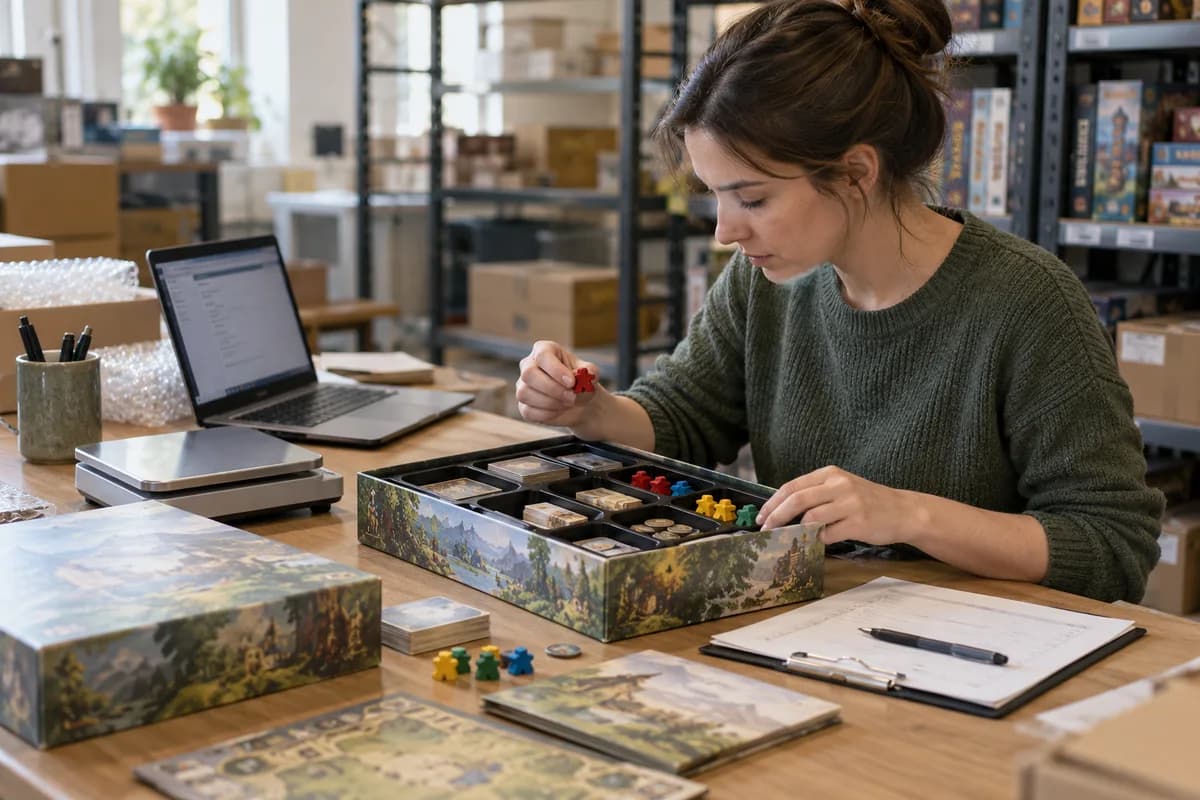
Build it at the pack bench. Weigh every open or used copy on a kitchen scale before it goes into a carton, and store the weight against the SKU. A lighter box on return means a part has gone.
Count open box copies against the component list in the rulebook, then photograph the open tray before sealing the carton. Sealed copies are never opened. When one arrives short, the claim goes to the distributor, and many publishers sell single replacement parts.
Wrong edition and wrong language need better listing fields
Shoppers buy a board game by its cover. Publishers reprint with new art, a rewritten rulebook and sometimes changed card text, so two editions can look identical as thumbnails. An expansion may fit only one.
Language causes the rest. A card driven game in German is useless at an English table, so state the language, edition and printing year beside the photograph of the box back.
Each edition usually has its own barcode. Scan the supplier’s carton against your listing when stock arrives, and a wrong edition is caught before it reaches a shelf.
- Edition name and number
- Printing year or reprint note
- Language of rules and of cards
- Barcode scanned at goods in
- Back of box photograph
Stop expansions being bought without the base game
An expansion needs a base game. A bright box on the screen tempts people to order the expansion first, and they only find out at the table that it cannot be played alone.
Give each expansion a required base game field, linked to the base SKU and to the edition it fits, so the store knows what it needs. Put a banner above the button. A tick box reading “I own the base game” slows the impulse buyer a little without hiding the product from the many shoppers who already own it.
Link the other way too. On each base game page, list the expansions that fit that exact edition, so nobody picks one that will not work with the copy they own.
Grade the condition and pack for the carrier
Crushed corners are easy to prevent. Board game boxes are heavy for their size, and a thin mailer lets the corners take every drop on the way to the doorstep. Use a stiff outer carton with the game boxed inside, and fill the empty space so that nothing slides when the parcel is dropped.
Show a condition grade on the listing. A shopper who knowingly chooses a box damaged copy does not send it back over a squashed corner, and a photograph of the real corners removes any argument.
Pull the last twenty returns next week. Give each a reason code. Put the biggest cause at the top of the pack bench checklist, then count returns again after one month to see whether that code has shrunk.
- Sealed: factory shrink wrap unbroken
- Open box complete: every part counted and photographed
- Box damaged: contents complete, corners shown
- Incomplete: missing parts named, sold as spares
Board game returns log
A one page log, one row per returned game. The columns are order number, SKU, edition and language, reason code, weight shipped, weight received, component count, corner photo reference, grade on return and restock decision. A strip at the foot totals each code. The biggest cause is then plain.
Open a blank worksheet to printQuestions owners ask
Can I resell a returned game with a missing piece?
Yes, once the listing says so. Grade it as incomplete, name exactly what is missing and price it below a complete copy, or order the part from the publisher and restore it first. Never shelve it as new.
Who pays return postage for a wrong edition?
It depends on who made the mistake and on the consumer rules where you sell, so confirm the position with a qualified adviser before you promise a refund. An unclear listing makes it your cost.
How can I show a piece was missing on delivery?
Ask the buyer for photographs of the opened box and the tray within a few days of delivery, and compare them with your pack photo and weight record. Matching weights settle most disputes.
Should I stop selling expansions on their own?
No. Plenty of buyers own the base game and want the expansion tonight, so keep selling it with the banner and the base game field on the page.