In this guide 6 sections
Fit, not faults, drives most stroller and car seat returns. Travel system adapters match only some strollers, harness limits suit a narrow band of heights and weights, and ISOFIX or LATCH anchors differ between vehicles. Show that fit data before checkout. Most of these returns never start.
Read your own return reasons first
Export last season’s stroller and car seat returns. Read the free-text note on each, not only the dropdown, and code it into a short list that you can count by brand and model.
A few listings usually cause most of it. Three adapters for one stroller family, or a single infant carrier bought for toddlers, can account for most of the pile. Match each code with its order lines. Was an adapter in the cart? Did anyone ask for the car model?
- Adapter did not fit the stroller frame
- Seat would not sit right in the car
- Child outside the height or weight limits
- Stroller too bulky for the boot or lift
- Opened and used once, then unwanted
Travel system adapters fit some models and not others
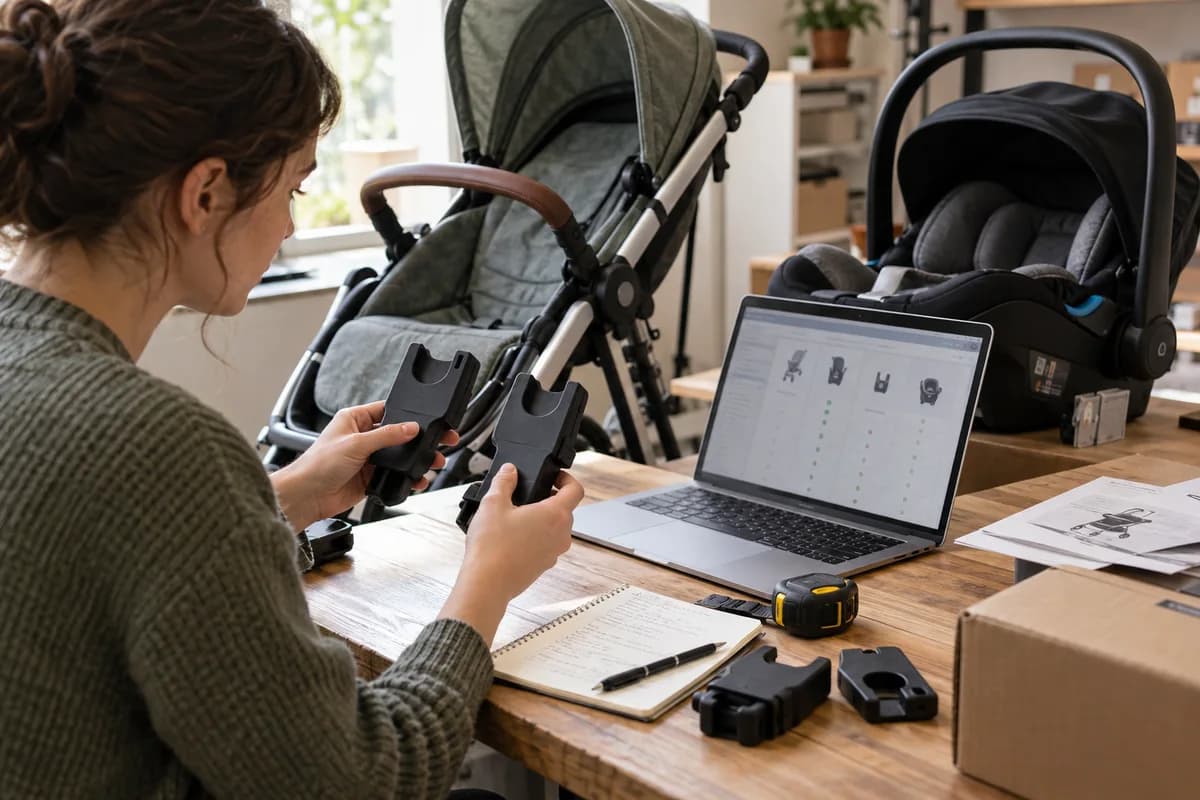
An adapter is a pair of brackets that clips a car seat onto a stroller frame, and each pair suits particular models and often particular years. Two frames from one brand can look identical. They may still take different adapters.
Hold compatibility as a table. Rows are stroller models, columns are car seat models, and each cell says fits, fits with a named adapter or does not fit. The product page then reads that table and offers the right adapter the moment a buyer picks a stroller, so nobody guesses from a photo of brackets.
Add a check at the cart. A car seat and a stroller with no matching adapter should trigger a prompt, and an adapter bought alone should ask which stroller it is for.
Harness limits, growth and the right stage
Every car seat is built for a stated height and weight range, and its harness offers set slot positions for shoulder height. Children often reach the height limit first.
Buyers guess, and they guess wrong. They order an infant carrier for a toddler, or a high-back booster for a baby. Put the limits in a fixed spec block at the top of the page, under the stage name: rear-facing infant, convertible, forward-facing harness or booster.
Ask for the child’s height and weight in a quick selector and flag any mismatch to customer care before dispatch, because one call can save a return. It also saves a worried parent.
- Minimum and maximum child height
- Minimum and maximum child weight
- Harness slot positions or headrest range
- Facing direction: rear, forward or both
- Approval label the seat carries
- Width at the base, for fitting several seats across
Vehicle fit: ISOFIX, LATCH and belt routes
ISOFIX in Europe and LATCH in North America are rigid anchors built into the rear seat, and some cars fit them only on the outer positions. Middle seats often lack them. Many seats add a tether or support leg.
A seat that suits one hatchback can press on the front seat of a small saloon or rock on a sloped cushion. Keep the maker’s vehicle list for each seat. Let buyers enter make, model and year, and answer with one of three results: fits, does not fit or book a fitter.
Link to the manual and a fitting video, and name a local fitting service where one exists, since a wrong installation is a safety matter. The manual and a fitter come first.
Set car seat return rules before the sale
An opened car seat is a hard case. A crash or rough handling can damage the shell without a visible mark, and makers advise against using any seat whose history is unknown.
Publish the rule at checkout. State what can come back sealed, what happens once the box is opened and who pays the return carriage, and remember that consumer rules differ by country.
Give care staff a return form with a reason code, a photo step and a decision field: restock, strip for spares, destroy or send to the maker. Record the serial number with each decision. Review the codes monthly. Fix the listings behind most returns first.
Baby gear fit sheet
Three tables and a log share one page. Table one pairs each stroller model with its adapters and compatible car seats. Table two lists each seat with height and weight limits, harness slots and approval label, while table three covers vehicles with ISOFIX or LATCH positions. A log closes the page. It records the reason code and the decision for each opened seat.
Open a blank worksheet to printQuestions owners ask
Can one adapter fit every stroller from a brand?
Seldom. Brackets are cut for specific frames, and a brand may launch a new frame with a different mount. Match by model and year.
How do we stop buyers choosing the wrong car seat stage?
Show the height and weight limits in a fixed block, name the stage in the title and ask for the child’s measurements before payment. Send mismatches to customer care for a call.
Should we accept returns of opened car seats?
That is your call, within the consumer rules of each country you sell to. Many sellers take sealed boxes back and review opened seats one by one, because the history of a used seat cannot be confirmed.
Where does fit data come from?
Start with the maker’s manuals and compatibility charts. Add your own return codes. Ask each supplier for a current chart per model year and attach it to the product record, so staff never rely on memory.