In this guide 6 sections
Boat and RV dealers lose track because one unit is really several items: a hull or chassis, an engine, a trailer, accessories and a trade in. Each carries its own serial and paperwork. When those records are kept apart, nobody can say which lender, prep job or customer belongs to which unit.
One sale, five serial numbers
A boat package may include a hull identification number, a separate outboard engine serial, a trailer VIN and a battery or electronics set. An RV has a chassis VIN, a coach serial, an awning and an air conditioner with serials of their own.
Most dealers record only the main number in the stock list. The engine serial hides on a delivery sheet. The trailer sits in a different folder because it was bought from another supplier.
That works until a warranty claim arrives. Then the question is which engine went on which hull, and the answer is somebody’s memory.
- Hull or chassis number as the parent record
- Engine make, model and serial linked to it
- Trailer VIN and plate if supplied
- Electronics, canvas and accessories fitted
- Manufacturer’s statement of origin on file
Floor plan records that drift from the lot
Most new stock is financed by a floor plan lender. The lender sends a curtailment schedule and sends an auditor to check units in person. The auditor looks for each unit by serial.
Trouble starts when a unit is sold but the payoff is delayed, or when a unit is moved to a show and the lender is not told. The lot list says one thing, the lender’s list says another.
Keep a line on every unit for lender name, advance date, curtailment date and payoff date. Update it the day the deal is signed, not the day the money moves.
Trade ins that arrive without a story
A trade in comes with an appraisal sheet, a lien check, a title or registration and a walk around. Often these live in four places. The appraiser keeps notes on a phone. The lien payoff letter is in an email.
Link them to the deal and the unit from day one. Photograph the hull, deck, canvas, engine hours gauge and the odometer or generator hours. Note the allowance given and the value you expect after repair.
A trade in with a missing lien letter cannot be resold. It sits on the lot and ages.
Prep work with no owner and no cost
Before delivery a unit needs a detail, a pre delivery inspection, battery charge, decals, registration help and sometimes a water test or a slide out check. Each job eats technician hours and parts.
If the work order is not tied to the unit, its cost never reaches the deal. The salesperson sees a gross profit that is too high. The service manager sees hours with no home.
Open one prep order per unit. Add parts from the parts counter against that order and let technicians clock time to it.
- Prep checklist signed by technician and manager
- Parts issued to the unit’s work order
- Technician hours clocked against the unit
- Delivery date and customer walk through note
Repair the links one unit at a time
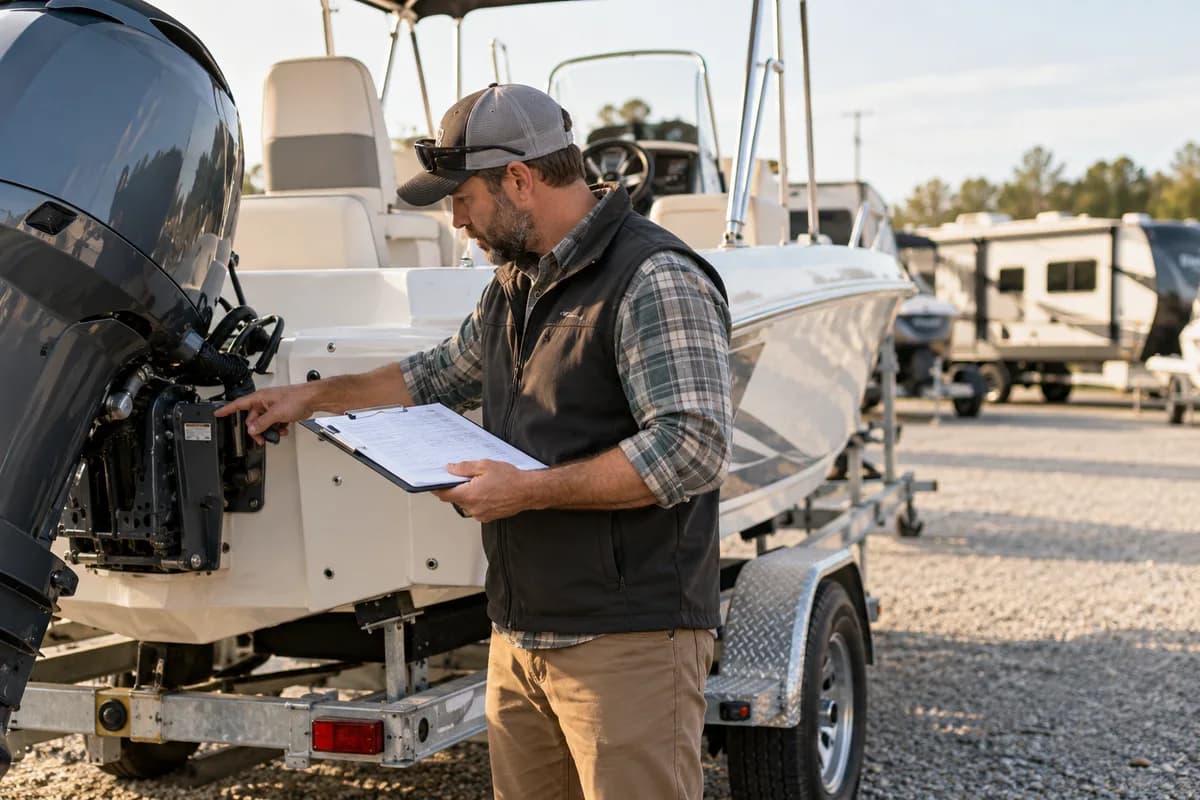
You do not need a full rebuild. Walk the lot with a tablet or a printed list and check every unit’s serials against the paperwork. Fix gaps as you meet them.
Give each unit a single stock number and attach everything to it: lender, engine, trailer, appraisal, prep order, deal. Anything without that number is an orphan.
Start with your five oldest units. Find out which pieces of paper or records are missing for each, and write a short list of who will chase them by Friday.
Unit file cover sheet
A cover sheet kept at the front of every unit file. Rows list stock number, hull or chassis number, engine serial and trailer VIN. More rows cover the floor plan lender with advance and curtailment dates, trade in appraisal reference, lien letter status, prep order number and delivery date. A final column marks each document received, missing or not needed.
Open a blank worksheet to printQuestions owners ask
Why do engines get separated from boats in records?
Engines are often ordered separately and arrive with their own paperwork. Unless the engine serial is added to the hull record on arrival, the two stay unlinked.
What does a floor plan lender check on audit?
Usually that each financed unit is on the lot or accounted for, matched by serial number. Sold units must show a payoff in progress or complete.
What should an RV trade in appraisal record?
Chassis VIN, mileage, generator hours, roof and slide out condition, appliances, tyres, lien holder and photos. The allowance and the expected resale value belong beside it.
How do I stop prep costs vanishing?
Open a work order per unit before any prep starts. Charge parts and time to it so the deal shows its real cost.