In this guide 6 sections
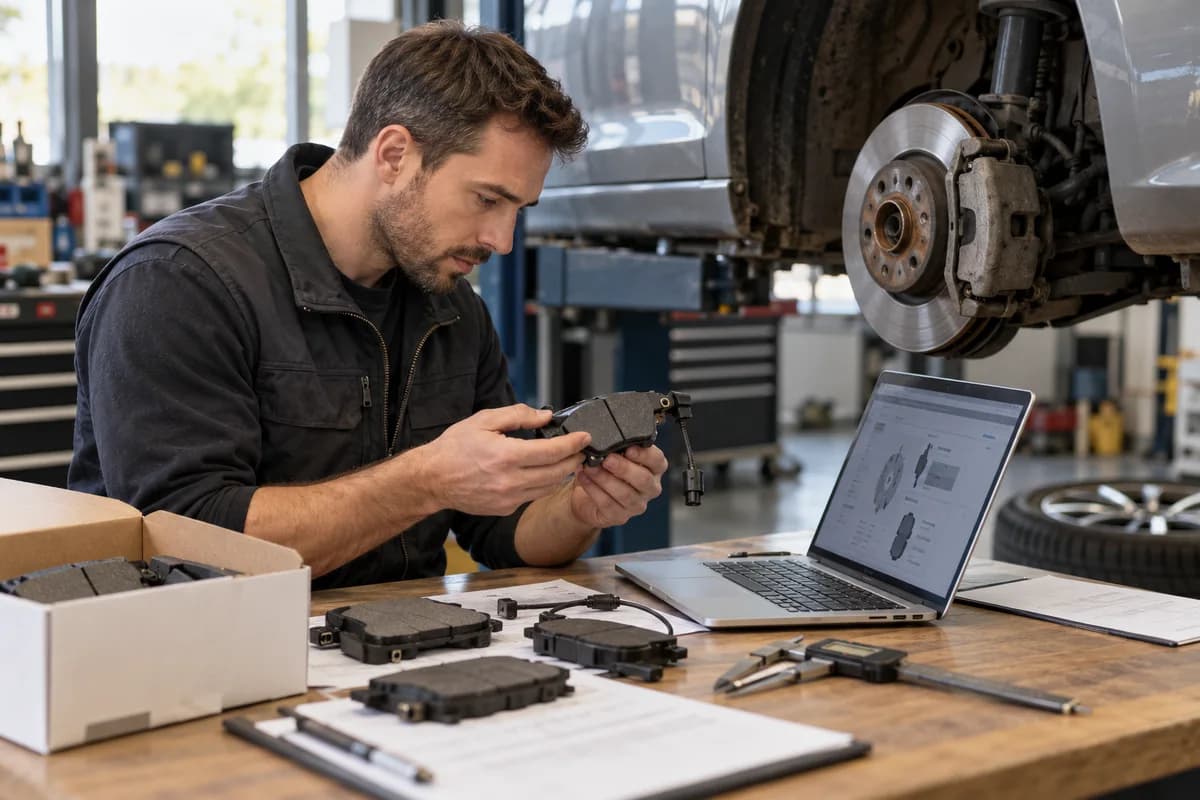
Buyers order the wrong brake pads because one model can need different sets by axle, caliper make, wear sensor and build date, and a make-and-model listing hides those splits. Hold fitment by axle and chassis range. Ask one check question at checkout. Inspect every fitted return before refunding.
One car model can need two different pad sets
A buyer enters a make, model and year, and the shop shows a pad set marked as a fit that may be wrong for the trim. Front and rear pads are different parts. Axle is the first split.
Then the caliper decides it. A sport trim often carries a larger caliper from a different maker than the base car, and the pad outline and backing plate change with it. A mid-year build change can swap the pad shape again while the badge on the boot stays the same, so the old listing keeps selling the wrong set.
Wear sensors add a third split. Some axles take pads with a sensor lead that feeds the dashboard warning light, others take plain pads, and a few use a clip-on sensor sold apart. A missing sensor can light the dash.
- Axle: front or rear
- Caliper make and the pad outline it takes
- Disc diameter and thickness
- Wear sensor: none, wired lead or separate clip
- Build date or chassis range
Hold fitment by axle and chassis range, not model name
Store each pad set against an axle and a chassis range, because a generation code such as E90 or Mk7 anchors a record better than a trim name. Build dates catch mid-year swaps.
Add the tie-break fields next: caliper make, disc diameter and sensor type, imported from your catalogue supplier wherever it sends them as attributes. Where it does not, copy them once from the part box and the maker’s PDF, then mark the record as checked by a named person with the date.
Where your market offers a plate or VIN lookup, use it to read the trim and build date, then compare both against the stored chassis range. Show unchecked records as unchecked. A fit nobody has verified is only a guess, and a wrong guess costs a pad set, a courier trip and a lost afternoon at the support desk.
Ask one question at checkout that settles the doubt
After the buyer picks a vehicle, show only the questions the fitment table cannot answer, which for many cars means just one: disc diameter, caliper make or warning light. Put a photo beside each choice.
Photos work because few buyers know their disc size, yet they can read a stamped number on the disc edge or spot a caliper through the wheel spokes. Ask for nothing the data already knows.
Save the answer on the order line, so the packing bench and the support desk both see exactly what the buyer said when the parcel was packed. That settles most arguments early.
- Front or rear axle
- Disc diameter, with a photo of the stamped edge
- Caliper make, with a photo taken through the spokes
- Dashboard pad warning light: yes or no
- Plate or VIN, to read the build date
Inspect fitted returns before you refund or resend
Brake parts are a safety item, so many sellers refuse them once fitted, and whatever your rule is, it belongs in the returns terms. Where a fitted return is accepted, send it to a bench check before any refund moves, and keep the pads and the buyer’s photos together.
Inspection ends in one of three outcomes. The part was wrong for the car, the car was entered wrongly at checkout, or the part was right and the fitting went badly. Each outcome points to a different fix, which is the catalogue record, the checkout question or a word with the buyer’s fitter.
Record the outcome as a reason code, not a free-text note, because returns counted by code show exactly which fitment records are bad.
- Backing plate outline against the fitment record
- Sensor lead length and plug type
- Pad thickness: unused or bedded in
- The buyer’s photo of the stamped disc
- The order line answer to the checkout question
Fix the records that cause the most returns first
Sort the last two quarters of brake returns by part number, open the worst ten, and look for the few chassis ranges where the record was vague.
Correct those records by hand, add the check question for them, and widen out later, because a full clean-up of the catalogue is a long job. A worst-twenty list is quick.
Your first step is small. Export last quarter’s brake returns into one sheet, give it a reason column, and read the first twenty rows with the catalogue open beside you.
Brake pad fitment check sheet
Three blocks share one page. Block one holds a row per pad set, with columns for part number, axle, chassis range, build dates, caliper make, disc diameter, sensor type, checked by and date. Block two lists the checkout question with its photo choices, and block three tallies fitted returns by outcome: wrong part, wrong car entered or fitted badly.
Open a blank worksheet to printQuestions owners ask
Are make, model and year enough to match brake pads?
Rarely, for models with several trims. Front and rear pads are separate parts, and a larger caliper or a different sensor changes the set, so add the missing field wherever your table shows a split.
Can a plate or VIN lookup replace the checkout question?
Partly, because a lookup, where your market offers one, gives the trim and build date but cannot see a caliper swapped in later. Keep the question for doubtful cars.
Should we accept returns of fitted brake pads?
The decision is yours. Brake parts are a safety item, so many sellers refuse them once fitted, but if you accept them, inspect first and record the reason code. Say which in the terms.
Who should own the fitment records?
One named person in the catalogue team, to whom the packing bench and the support desk report each error, should correct the record and mark it checked.