In this guide 6 sections
Tyre orders go wrong because size is treated as the whole specification. Load index, speed rating, reinforced or run flat construction and winter markings are separate fields, and the right values can differ between trims of one model. Store each as its own field, search by vehicle, and check the sidewall before dispatch.
A size is only the first line of the sidewall
The sidewall opens with width, aspect ratio and rim diameter, as in 205/55 R16. Next come the load index and speed symbol. Two tyres with the same first line can carry different loads and run at different top speeds.
Then come the markings buyers skip. XL means Extra Load, a reinforced build. Run flat tyres carry a maker’s code such as ZP, SSR or ROF. A mountain and snowflake symbol marks a tested winter tyre, while M+S alone is a maker’s claim.
Vehicle makers add their own approval marks. MO stands for Mercedes, AO for Audi and N0 for Porsche. A buyer may not need them, but a car that left the factory on them often wants them.
- Width, aspect ratio and rim diameter
- Load index and speed symbol
- Extra Load or reinforced marking
- Run flat code
- Mountain and snowflake winter symbol
- Maker approval mark
Where the wrong tyre gets into the order
One product page often hides several load indexes behind a dropdown. The default is the first in the list, and a buyer who skims the page gets it.
A buyer who copies a size off an old tyre copies its mistakes. The tyre on the car may have been wrong for years, put there by a previous owner or a tired fitter.
Supplier feeds drop markings. A feed that carries size and brand but not the run flat flag lets a plain tyre into a run flat listing. In the warehouse, pickers match on brand and barcode, and nobody reads the sidewall.
Give every part of the specification its own field
Burying the specification in a product title makes it unsearchable. Each marking becomes a field the shop can filter, compare and print. Make a separate product record for each load index, so no dropdown can default to the wrong one.
Carry the fields through. They belong on the basket line, the order confirmation and the pick note, so the buyer and the picker see the same thing.
Add the direction arrow on directional patterns and the inside and outside label on asymmetric ones. A tyre mounted backwards is a complaint, not a return.
- Width, aspect ratio, rim diameter
- Load index and speed symbol
- Reinforced flag and run flat flag
- Season and winter symbol
- Maker approval mark
- Rotation direction or inside and outside label
Search by vehicle, then test the result
A vehicle search turns a plate, or make, model and trim, into the list of sizes the maker approved. Show those first. Mark any tyre outside the list as not approved for this trim, and ask the buyer to confirm.
Trim matters because one model can leave the factory on different wheels. A heavier or sportier trim can need a higher load index or a different speed symbol. A search that stops at model may show the answer for another trim.
Apply the rules in one direction. A higher speed symbol than the maker’s minimum is usually acceptable, and a lower one is not. The same holds for load index. Check the handbook or the label on the door pillar.
Check before dispatch and learn from what slips
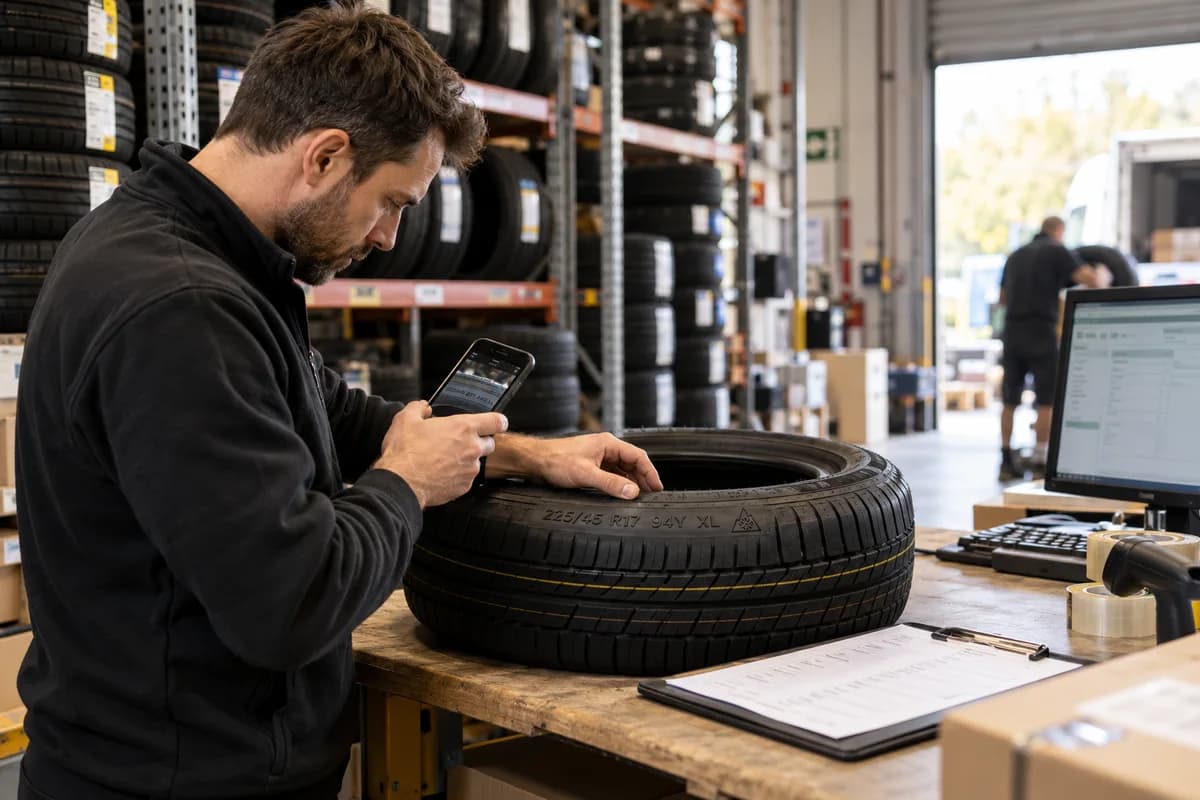
Print the full specification on the pick note, then have the picker read it against the sidewall before the tyre is wrapped. A barcode scan proves the model. Only the sidewall proves the size and the load index.
Photograph each sidewall at the packing bench and attach the photo to the order. When a customer says the tyre is wrong, the photo settles whether it left you wrong. When vehicle details and tyre disagree, hold the order and phone the buyer.
Take last week’s pick notes to the racks and compare each against the sidewall. Whichever field is most often missing from the note is the one to fix first.
- Pick note shows every field
- Picker reads the sidewall, not just the barcode
- Sidewall photo attached to the order
- Mismatch between vehicle and tyre holds the order
Pre-dispatch tyre check slip
A one page slip that prints with each pick note. The top block holds the order number, vehicle plate and trim. The middle block has a row for each field, from size to approval mark, with an ordered column and a sidewall column. The bottom block holds the picker’s initials, a photo tick and a hold for call box.
Open a blank worksheet to printQuestions owners ask
Can a tyre have a higher load index than the maker lists?
Usually yes, since it carries at least the load required. A lower index is not acceptable. Confirm against the vehicle handbook or the door pillar label before you list it as a fit.
Is a higher speed symbol always safe to sell?
It meets the vehicle’s requirement, though ride and wear can differ. A lower symbol does not meet it. Show the buyer the symbol the maker lists.
Why do some cars take different sizes front and rear?
Performance cars and some rear drive models use wider rear tyres. A basket that assumes four of one size ships the wrong rear pair. Let the buyer order by axle.
What does M+S on its own tell the buyer?
It is a maker’s claim for mud and snow grip. The mountain and snowflake symbol means the tyre was tested for snow. Winter tyre rules differ by country, so check them where you sell.