In this guide 6 sections
Upgrades get absorbed because they are asked for aloud, done the same day and priced by nobody. The supervisor stays polite, the client assumes it is included, and the office never hears. A change order captured on a phone before work starts closes the gap.
How a favour becomes a loss
The client walks the site on a Saturday and asks for things. Two more sockets by the study desk? The partition moved a foot? A glossier laminate on the wardrobe shutters?
The supervisor says yes. He wants the client happy, and each request looks small. The electrician pulls extra cable before lunch, and the carpenter re-cuts the ply after tea.
Nobody tells the office. The final bill matches the original quote, while the cost of copper, labour and plywood quietly lands on the contractor’s margin.
Why site teams stay quiet about it
Supervisors are rewarded for finishing on time and keeping the client calm, and they are rarely thanked for paperwork. Asking someone to pay for two sockets feels petty in the moment, especially with the family standing next to you.
There is a practical block too. He does not know the rate. The estimator sits across the city, and the quote is a PDF on a laptop.
So yes looks sensible. Sorting it out later never happens, because by then the wall is plastered and the conduit is buried.
- No rate card on site
- No quick way to reach the estimator
- Fear of an awkward conversation
- No form that takes under five minutes
What a phone-based change order looks like
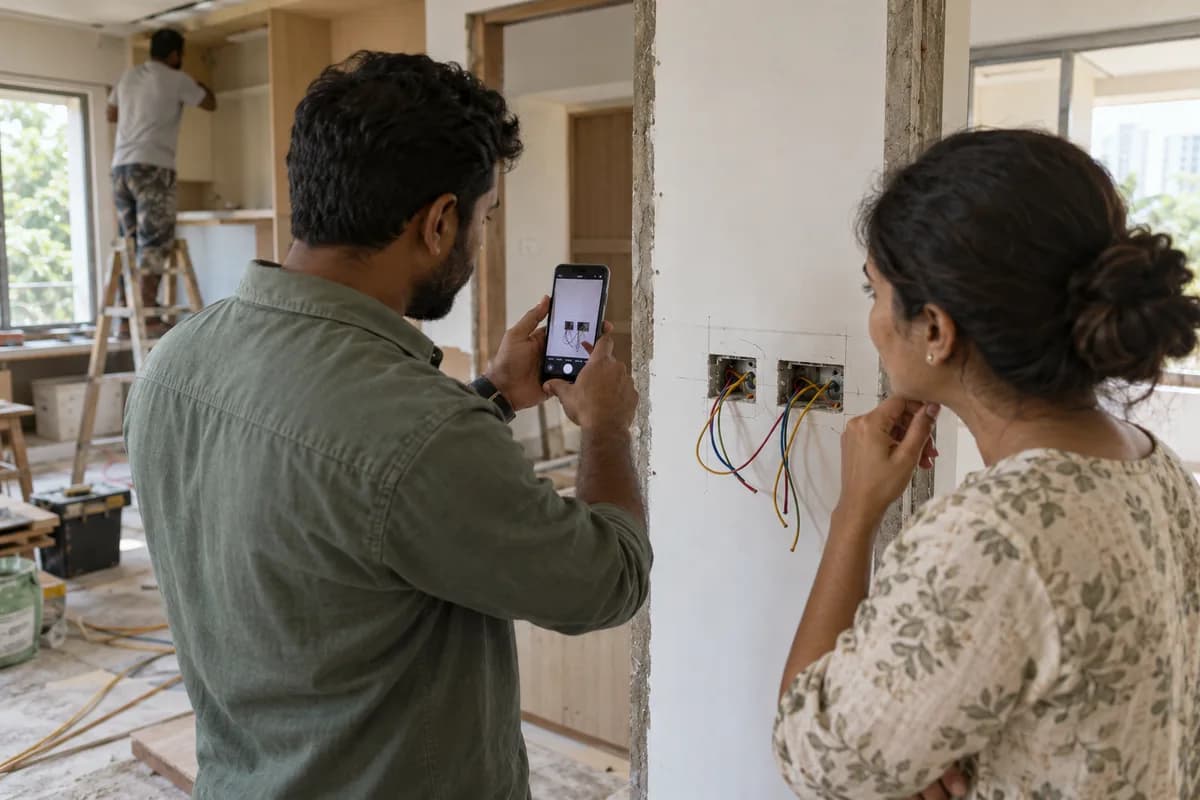
Open the job on a phone and tap New change. Pick the room, choose the item from a short list, add a photo and enter the quantity.
The rate comes from a stored rate card or a quick call to the estimator. The client receives a message showing the description and the price, and a reply of approved is stored against the change before any work begins.
It takes about three minutes. The client also sees that you guard their money as carefully as your own.
Rules that make it stick
Set a plain rule. No extra work starts without a change record. Tell every supervisor and subcontractor on day one, and tell the client at the first meeting in friendly words.
Keep a rate card for the usual extras: added points, wall shifts, finish upgrades, extra coats of putty and paint, and extra cut-outs in the countertop. A supervisor who can quote on the spot rarely skips the step.
Allow a small goodwill budget, with a ceiling the owner sets. Goodwill then becomes a choice, not an accident.
- Rate card for the twenty most common extras
- Photo of the area before work starts
- Client reply stored with the record
- Goodwill items marked as such, with value
Seeing the leak in your own jobs
Take your last three finished jobs. Compare the quote against material issued and labour days used. The gaps often point to add-ons that never reached the invoice, such as extra tile boxes or two more days of painters.
Ask the supervisors, kindly, what they remember agreeing to. Write the answers down with a rough value.
Bring that list to your next owners’ meeting. Decide the rule that applies from Monday, name who enforces it on each site, and print the change card for every supervisor before the week starts.
Site change order card
A half-sheet card carrying fields for job, room, date, what the client asked, photo reference, quantity, rate, total, client reply and approver. A tick box marks goodwill items with the owner’s initials. A footer shows the running total of unbilled changes.
Open a blank worksheet to printQuestions owners ask
Should we bill every small change?
Not necessarily. Decide a ceiling for goodwill items and record them anyway. What you want is a choice, not silent absorption.
How do we handle a client who objects to the price?
Show the request, the photo and the rate card. Offer the lower-cost alternative if there is one. Most disagreements ease once the item is written out.
Do subcontractors need to use the same form?
Yes. Painters, electricians and carpenters often take the verbal request first. Give them the same card or app link and the same rule.
Can a paper pad do the job?
It can, provided the pages reach the office the same day. A photo of the card sent to a shared group works as a minimum.