In this guide 6 sections
Melt cost and yield stay estimates when charge weights, returns and good casting weight sit in different places or are never weighed. Record each heat with its charge, additions, furnace energy, metal poured and good castings shipped. Yield is then good weight against charge weight, heat by heat.
What a yearly estimate hides
The usual yield figure divides tonnes sold by tonnes of metal bought. It ignores stock on the floor, scrap lying in the yard and returns that were remelted twice. It cannot say where metal was lost.
Melt cost has the same flaw. Electricity comes off one monthly bill for the whole shop, not off the furnace. Refractory, flux and alloy additions drop into general expenses.
A number built this way is a guess with a decimal point. Two foundries on the same alloy can differ widely and neither knows why. The owner sees only a margin that moves each quarter.
- Charge weight by material
- Gates and runners remelted
- Alloy additions such as ferrosilicon or magnesium
- Furnace power from its own meter
- Metal lost as slag and dross
Weigh the charge for every heat
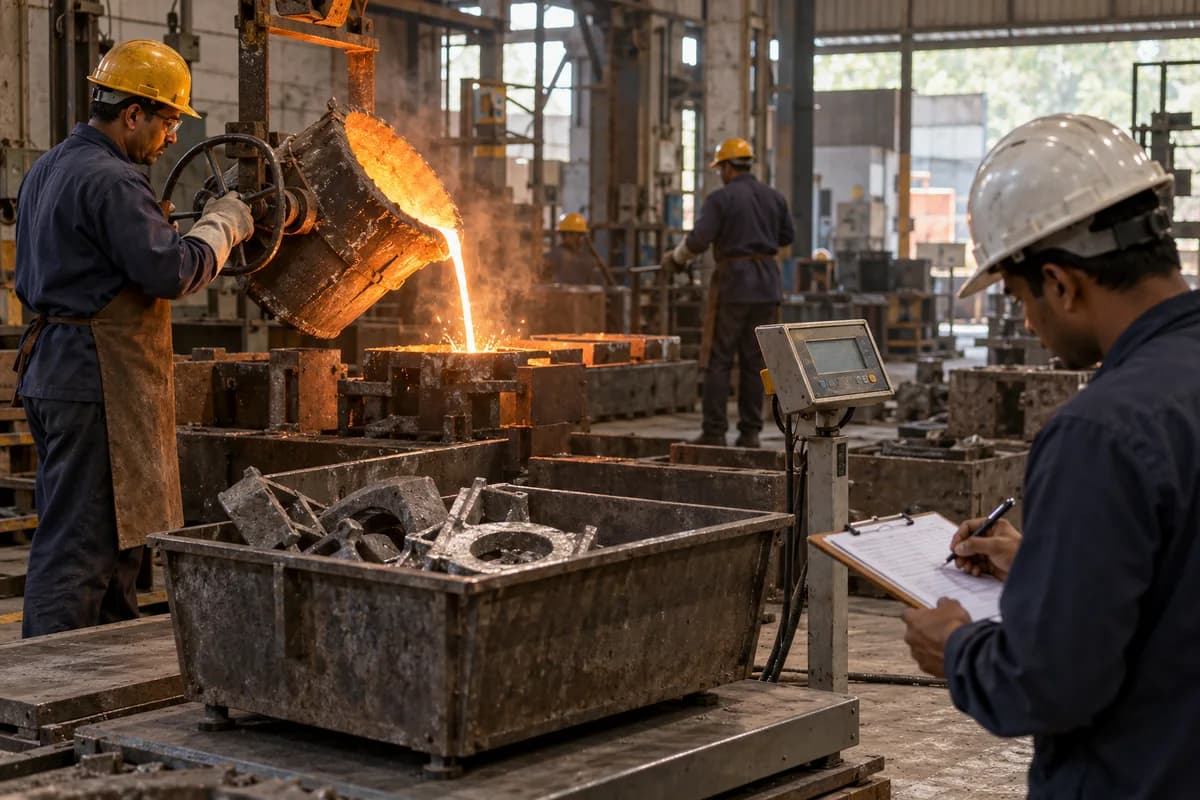
Put a calibrated scale at the charging bay and record each bucket: pig iron, steel scrap, foundry returns, bought scrap and ferroalloys. A crane scale is fine if someone checks it against a test weight. Record the check date on the scale itself.
Give each heat a number. Tie it to the furnace, the crew and the grade being made. The tap temperature and the spectrometer result belong on the same record.
No heat number, no yield. Incoming scrap needs a weighbridge slip with its supplier, so the cost per tonne of the charge is known at the same time. Mixed scrap grades should be weighed apart, since steel scrap and cast iron scrap price differently.
Count what goes back and what comes out
Returns are what wreck most yield figures. Gates, runners, risers and rejected castings go back into the furnace. If they are never weighed, the same metal is counted twice and the yield looks better than it is.
Record metal poured from the ladle, or count moulds against the weight of one tree. Then weigh castings after fettling. Good casting weight divided by charge weight is the yield.
The gap is slag, spills, ladle skull and rejects. Split it into those lines. You will see quickly which one is large. Slag losses point to melting practice, while rejects point back to moulding, gating and pouring.
- Metal poured per heat
- Gates and risers returned to the furnace
- Rejected castings by weight
- Slag and dross removed
- Ladle skull and spillage
Build melt cost from the same records
With heat records, a cost per tonne of good castings follows. Add the charge at purchase rate, the additions and inoculants, the furnace energy read from a sub-meter, flux and a share of the lining. Spread each cost over the tonnes of good castings, not the tonnes melted, or the figure flatters you.
Linings matter. A coreless induction furnace wears a little with every heat, so log heats per lining and the date of each relining. Cupola shops record coke and blast hours in the same way.
Keep labour out of it. Melt cost is a metal and energy figure that you can compare from heat to heat, furnace to furnace and grade to grade. A rising figure on one furnace often means a worn lining or a leaky cooling circuit.
- Charge at purchase rate
- Alloy and inoculant additions
- Furnace energy from a sub-meter
- Lining wear per heat
- Flux, coke or electrodes where used
Start with one furnace for one month
Do not roll this out across the shop at once. Choose the furnace that melts the most and run a sheet for every heat there. The habit forms faster with one crew.
At month end, total the charge and the good casting weight. Compare the figure with your old estimate. The difference is usually the first useful finding. Share it with the melters and ask them what explains it. They usually know.
This week, place a clipboard at the charging bay with printed heat sheets and name one person to fill them. Review the first ten sheets together, correct the blanks, and then add the second furnace.
Heat record sheet
A single sheet with four blocks per heat. The charge block lists material, supplier, weight and bucket count. The melt block holds furnace, start and tap times, tap temperature, additions and energy meter readings. The output block records metal poured, returns, rejects and slag. The result block shows good casting weight, yield and cost per tonne.
Open a blank worksheet to printQuestions owners ask
What is a good yield figure for a foundry?
It depends on the alloy, the process and the casting shape. Heavy steel castings with big risers differ from thin ductile iron parts. Compare your own heats over time rather than chase a published number. A trend that improves after a change in gating is worth more than any benchmark.
Do we need a scale at every furnace?
One calibrated scale at the charging bay is the minimum. Add scales where returns are collected and where castings leave fettling. Check each one against a test weight on a set day. A scale that drifts quietly corrupts every yield figure built on it.
Should the spectrometer result sit on the heat record?
Yes. A chemistry result tied to the heat number explains many rejects and supports the test certificate you send with the load. Carbon equivalent and magnesium recovery in ductile iron are common culprits.
Can a spreadsheet hold heat records?
It can for one furnace. Several furnaces, shifts and grades make double entry and gaps likely. A shared system with a heat number as the key keeps the records linked.