In this guide 6 sections
A heat is one furnace melt. A ladle carries metal to the moulds. Gating is the channel system that feeds the cavity. Fettling is cleaning a casting after shakeout. Yield is good casting weight divided by metal poured. Each term maps to a record you can store and trace.
Heat and ladle: where the metal comes from
A heat is a single batch of metal melted in a furnace and tapped. It gets a number, and that number links the chemistry report to every casting poured from it.
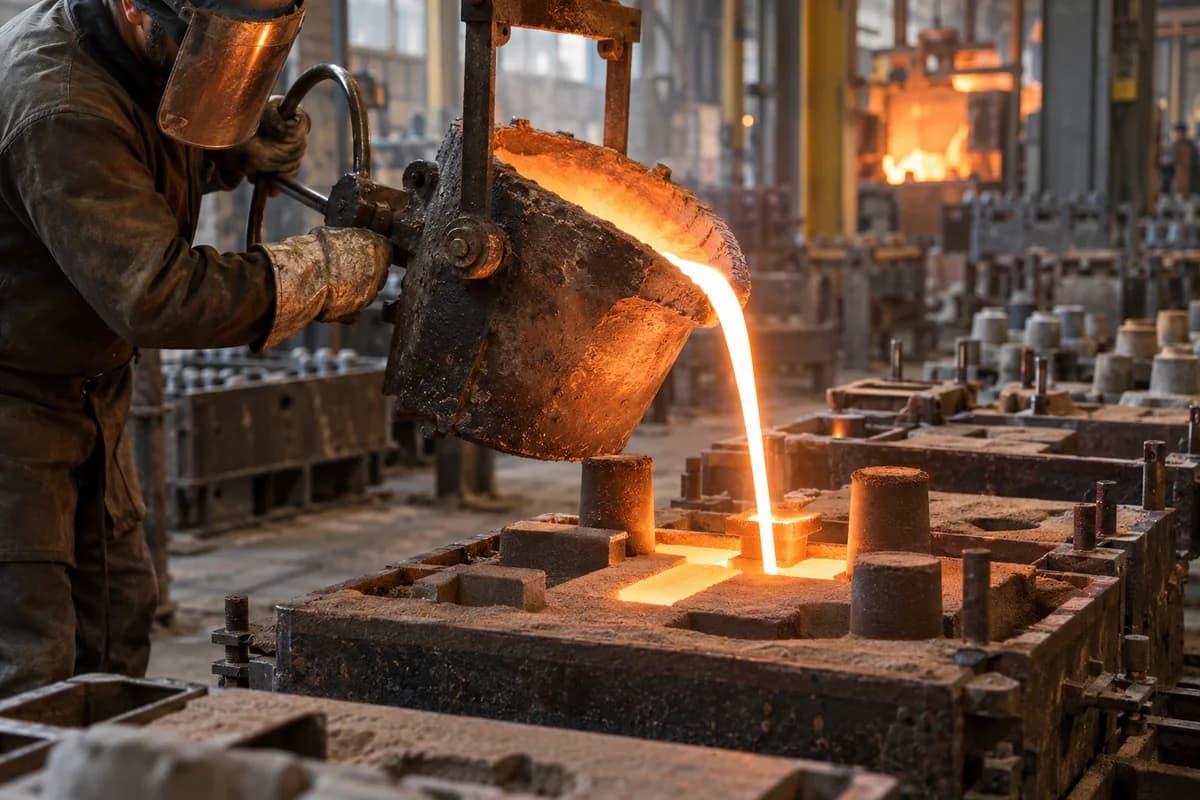
A ladle is the vessel that carries metal from furnace to mould. One heat can fill several ladles, and one ladle can fill many moulds. Each hop is a place where a record can break.
Record the heat number, the tap time and the ladle used, or you cannot answer a customer query on metal grade.
- Heat record: number, furnace, charge mix and tap temperature
- Spectro result: carbon, silicon, manganese and others
- Ladle record: ladle number, pour start and pour end
Gating and risering: how the cavity is fed
Gating is the set of channels that carries molten metal from the pouring basin into the mould cavity without tearing the sand wall. It includes the pouring cup, sprue, runner and ingates. Poor gating gives turbulence, trapped slag and sand inclusion.
Risers are reservoirs that feed the casting as it shrinks. They are cut off later and returned to the furnace as scrap.
The gating layout belongs on the pattern record. Changes to it should be logged, because a small edit can change casting yield and defect rates.
Shakeout and fettling: after the pour
Shakeout breaks the casting out of the sand mould. It comes out rough, with gates, risers, flash and burnt-on sand still attached.
Fettling is the cleanup. Workers cut gates, grind parting lines, shot blast the surface and repair minor faults. It is slow, dusty and often the bottleneck.
Track fettling hours and rework per casting. They show cost that the pour record never captures.
- Fettling batch with casting count and weight
- Grinding and welding repair marked per casting
- Shot blast cycle and finish check result
Yield and rejection: how much was worth it
Yield compares good casting weight with total metal poured, including gates and risers. A low number means you melted a lot of metal that went back as scrap.
Rejection rate counts castings failed in inspection, grouped by cause. Common causes are blowholes, shrinkage, cold shut, sand drop and dimension faults.
Both come from existing records. If heat weights, casting weights and reject tags are logged, the system can work them out on its own.
Turn the vocabulary into a record map
A new buyer or supervisor can learn this fast by walking one casting. At each term, ask what is written down and who writes it.
Gaps show up quickly. Maybe the ladle is never logged, or yield is a guess made at month end when the furnace log has already been thrown away by the night shift. Those gaps are where traceability breaks.
Print a one-page glossary with the record name beside each term and pin it at the shift desk.
Foundry terms and records glossary
A one-page glossary table with three columns: term, plain meaning and record where it is kept. Rows cover heat, ladle, gating, riser, shakeout, fettling, yield, rejection and pattern. A blank last column lets each shift supervisor note who fills it.
Open a blank worksheet to printQuestions owners ask
What is the difference between a heat and a lot?
A heat is one furnace melt. A lot is a group of castings dispatched together, which may come from several heats. The system should link both.
Why does fettling cost so much?
It is manual and varies by casting shape. Gating design, sand quality and mould accuracy all change how much grinding a piece needs.
How is yield worked out?
Divide the weight of good castings by the weight of metal poured. Poured weight includes the gates, risers and any spilled or rejected metal.
Do these terms apply to non-ferrous foundries?
Most do. Aluminium and bronze shops use heat, ladle, gating and yield too, though furnace types and cleanup steps differ.