In this guide 6 sections
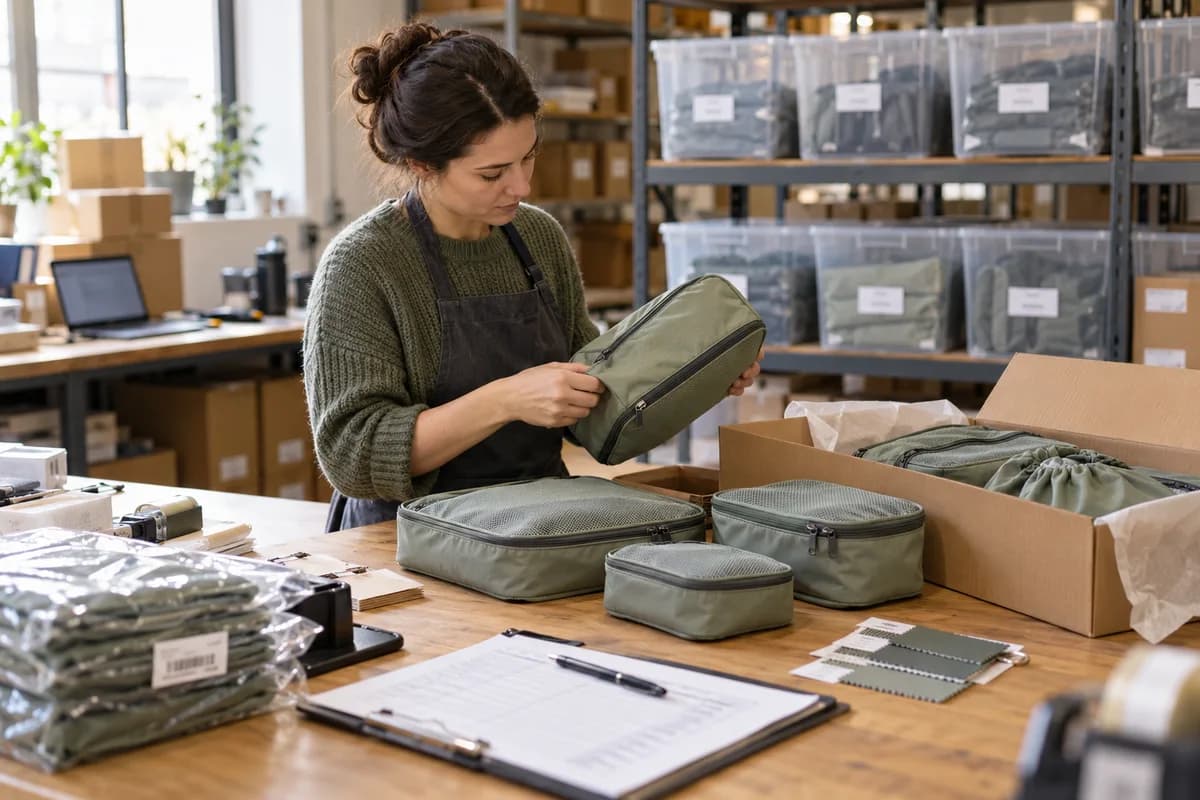
Sets go out short or mismatched because the shop counts single cubes and pickers collect them one at a time. Count the set as its own stock item, tag each colour with its dye lot, and pack sets at goods-in so a picker lifts one sealed unit. Loose cubes feed only the bench.
Piece counts turn a set into a guess
A set comes in threes, fives and eights. Each set mixes small, medium and large cubes, sometimes with a shoe bag, a laundry sack or a compression cube thrown in for the bigger sets. The shop holds singles only.
An order for a five-piece set in sage creates five separate pick lines, one for each cube, and the system treats them as five unrelated sales. The picker grabs what is there. The count drops by five, which is correct, but nothing checks that the five cubes in the box make a matching set of the right sizes.
Then one size runs dry. Large cubes vanish while small ones pile up. The next set ships with a different shade standing in, or with four pieces and a packing slip that says five.
Dye lots decide whether the colours match
Fabric is dyed in batches. Sage from one batch sits slightly greener than sage from the next, and the zip tape and piping may be dyed in separate runs again. Side by side, the difference is plain.
The supplier’s carton label carries a lot code. Capture that code at goods-in, scan it into the receiving record, and hang a tag with the same code on the bin where the cubes are stored. One set, one lot. Cubes from mixed lots go to a separate bin for single sales, and any listing that sells them must say that the shades may differ.
Keep a swatch card for each lot. When a customer says the cubes do not match, hold the swatch card against the photo they send and read the lot code off the order record. It takes a minute.
Make the set its own stock item
There are two ways to do it. Either pack sets in advance at goods-in, or keep a virtual set whose availability follows its scarcest piece and let the picker gather the cubes. Pre-packed sets pick faster. They are easier to check.
Whichever you choose, the set gets a SKU, a barcode, a pack date and a lot code of its own, printed on one label that survives the polybag. One scan, one sealed unit. Loose cubes only feed the packing bench.
- Set SKU, with the size mix written out in the title
- Colour name and dye lot code, printed on the label
- Barcode that scans as one unit at the picking face
- Pack date and the initials of the person who packed it
- Loose cube bins kept for single sales and for the packing bench
Gift packs and returns can break the count
A gift pack adds a sleeve, tissue, a ribbon or a luggage tag, and each of those can run out on the busiest week of the year. Make it a variant of the set. Hold sleeves, tissue and ribbon as consumables with a reorder point each, so a gift order never waits on a missing ribbon.
A returned set arrives opened. Count the pieces, check each cube for stains, odour and zips that catch, then confirm the lot code on every one. Until then it waits in an inspection bin.
Ban substitution at the picking face. If a size is short, the picker raises an exception on the scanner, and a supervisor decides whether to wait, swap or cancel the line. Near matches chosen by eye cause the complaints.
Check a packed set before the box closes
The pick slip lists the pieces by size. The packer counts the cubes against that list, reads the lot code on each one, and runs every zip once before the cubes go into the bag. All codes must match. Print the lot on the packing slip.
Once a week, open ten sealed sets at random, count them again and log each fault as a missing size, a wrong colour or a mixed lot. Patterns appear within a few weeks.
Pull the last month of complaints about short sets and sort them into three piles: missing size, wrong colour, mixed lot. The biggest pile is your first fix.
Set build and lot check sheet
Each set SKU gets one row. Columns hold the set name, pieces by size, colour name, dye lot code, bin location, packed by, checked by and date. Loose cubes get their own lower section, by size, colour and lot, with quantity on hand and the bin that holds them. Each row ends with a tick box that confirms every cube in the set carries the same lot code and was counted by hand.
Open a blank worksheet to printQuestions owners ask
How can I tell that two cubes come from different dye lots?
Lay them side by side in daylight and compare the fabric, the zip tape and the piping, since the tape is often dyed in a separate run. Then read the lot codes. A mismatch in either check means different lots.
Should I pre-pack sets or build them at order time?
Pre-packing suits a steady seller, because the picker lifts one sealed unit and the packing bench works ahead of the orders. Building at order time suits slow lines with many colour options, where packed stock would sit on the shelf for months. Either way, the set needs its own line.
What do I do when one size in a set runs out?
Hide the set from the catalogue until the missing size arrives, or take orders for a later dispatch date that the page states plainly. Do not substitute by eye. If you offer a replacement shade, send the customer a photo of the actual cubes and ship only after they accept it by reply.
Can I sell cubes from mixed lots?
Yes, as singles, or as a set that is clearly listed with mixed shades in the title, the photos and the first line of the description. Never sell them as a matching set.