In this guide 6 sections
A tent kit shows in stock because the shop counts the finished kit as one item and never looks at its parts. One snapped pole changes nothing in that count. Track each component, set kit availability to the scarcest part, and list spare poles by model so a broken pole never costs you the whole sale.
One number for the whole kit hides the parts
A tent is not one thing. It is a flysheet, an inner tent, a pole set, a bag of pegs, guy lines, often a footprint and a stuff sack. Most shops give it one SKU.
The number is typed in at goods-in and drops by one at each sale, whatever happened to the box in between. It never looks inside. A returned tent with a bent pole segment goes back on the shelf as one more kit, because the system has no way to know otherwise.
The shop keeps selling. The picker opens a box, sees the pole bag empty and has three choices: ship it short, hold the order, or cancel. None is good, and all three begin with a count that went wrong the day the first damaged return was put back on the shelf.
Count components and build the kit from them
Give every part its own stock line. Flysheet, inner, pole set, peg set and footprint each get one, tagged with the tent model and the season, since pole lengths and fly cuts change between years.
Write a bill of materials per kit: one flysheet, one inner, one pole set, one peg set and, where the tent comes with one, one footprint. The shop then reads availability from the parts rather than from the box, and the lowest line decides how many kits can be sold at any moment. Five flysheets, four pole sets: four kits.
Some sellers box kits in advance. In that case the boxed kit is a stock line too, with a pack date beside it, and the loose parts feed a repack bench.
Choose availability rules that match how you pack
A rule has to say what happens when one part runs out, and it should be written down rather than left to the picker. Three questions cover most cases.
Is the part required or optional? A footprint can be an add-on, so a missing one should not stop the tent from selling, but a missing pole set must stop it at once. Can a part be swapped? Who approves the swap?
- Required parts set availability; optional parts do not
- Reserve components at checkout, not when the box is packed
- A swap needs a named approver and a note on the packing slip
- Colour or season variants never mix inside one kit
- Returned kits go to an inspection bin, never straight to saleable stock
- Below a set level for any single part, hide the kit from the catalogue
Returns are where poles go missing
A returned tent comes back in a damp bag after a wet weekend, with pegs left in the grass and a pole segment bent in a gale. By then three parts may be wrong. Nobody has written it down.
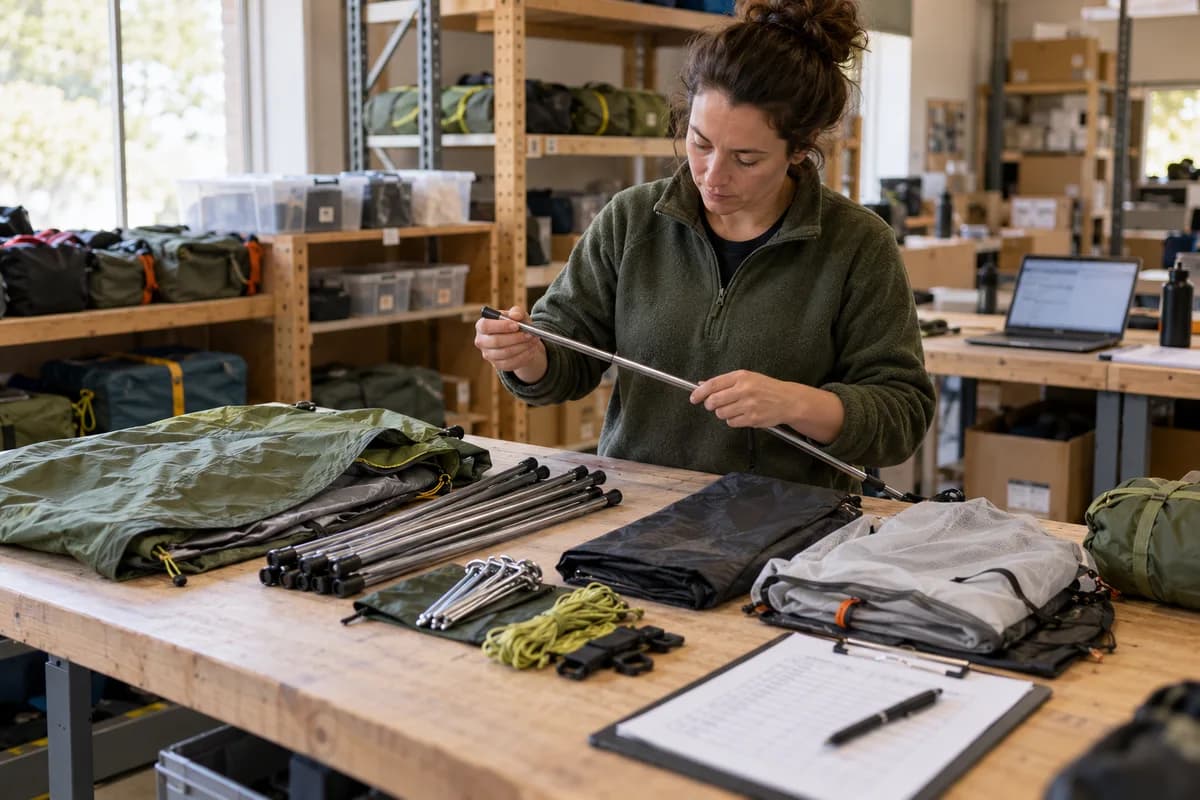
Open every returned kit on a bench, lay the parts out in a row and count them against the bill of materials before anything is restocked. Run each pole segment along a flat table. Check the shock cord and the zips. Dry the fly fully before it goes back in its sack, because damp fabric packed away grows mould within days.
Record the fault by part. A bent pole, a missing peg bag, torn mesh and a wet-packed fly are different faults with different fixes, so each gets its own reason code. The part moves to a spares bin or is written off, and only a complete, dry kit returns to saleable stock.
Offer the spare pole before you refund the tent
Customers with a snapped pole want that pole, not a new tent, yet most shops can only offer a refund or a new kit. Build a spare parts page for each model, filtered by season, listing the pole set, a single segment, the peg set and a fly patch kit.
The component lines that build the kit also feed the spares listing, so a pole sold alone and a pole sold in a kit leave one count. A buyer can search by model name and by the year printed on the inner tent label, and the page then confirms that the part fits.
Start small. Pick your five best-selling tent models, write the bill of materials for each, and count every part on the shelf this week. The lowest line per model is the real number of kits you can sell, so compare it with what the shop shows today.
Tent kit parts sheet
One block per tent model. Rows list the parts: flysheet, inner, pole set, peg set, footprint, stuff sack and repair patch, each with a part code and the quantity needed per kit. Further columns hold on hand, reserved and in inspection counts, a required or optional flag, and whether a spare is listed for that part. The bottom row shows the lowest result. That number is what the shop should display.
Open a blank worksheet to printQuestions owners ask
What is a virtual kit in a stock system?
A virtual kit has no stock of its own. Its availability comes from the parts in its bill of materials, so the count falls whenever any one part falls. Pickers still lift the loose parts.
Should the footprint count towards tent availability?
Only if every tent ships with one. Many sellers list the footprint as an optional add-on, so a missing groundsheet does not hide a tent that is otherwise complete.
How do I stop a returned tent going back on sale?
Send every return to an inspection location that sits outside saleable stock, so nothing can be picked from it by mistake. A named person counts the parts, runs each pole along a table and releases the kit with a signature on the return line. Until then it counts as unavailable.
Can I sell a tent that has lost one peg?
You can, if the listing says so. It is safer to top the peg set up from your spares and record the use against the order, so the spares count stays true. Short kits earn poor reviews.