In this guide 6 sections
Proof of delivery arrives late because the paper copy travels through several hands: the driver, a branch, a courier bag and a data entry desk. Each step adds a wait. Capturing a photo or signature on the driver’s phone at the door removes most of the chain.
Trace the paper before blaming the driver
Take ten recent late PODs and write down every hand each one passed through. Delivery at the door, driver’s bag, depot pigeonhole, courier envelope, head office tray, data entry clerk. Add the date at each point.
Most owners expect the driver to be the problem. Rarely true. Often he hands the copy over the next morning, which is fine. The loss is in the envelope that waits for a weekly courier run.
The trace tells you where days go, whether that is the driver’s cab, the branch pigeonhole or the clerk’s overflowing tray at month end. Fix that step first.
- Date signed at the consignee’s dock
- Date handed to the depot or dispatcher
- Date the courier bag left the branch
- Date the bag reached the billing office
- Date the entry clerk keyed the delivery status
The usual causes, step by step
Driver handover slips when trips run back to back and the driver goes straight to the next loading bay. Copies stay in the cab for a week. Some are lost, and the consignee’s stamp is smudged by then.
Courier return slips when branches batch their envelopes. A branch that sends once a week adds up to a week to every POD, however fast the driver was.
Office entry slips when one clerk keys statuses for every branch. Pending stacks pile up near month end. Exceptions, such as short delivery remarks, get skipped because they need a call.
Capture at the door instead of at the desk
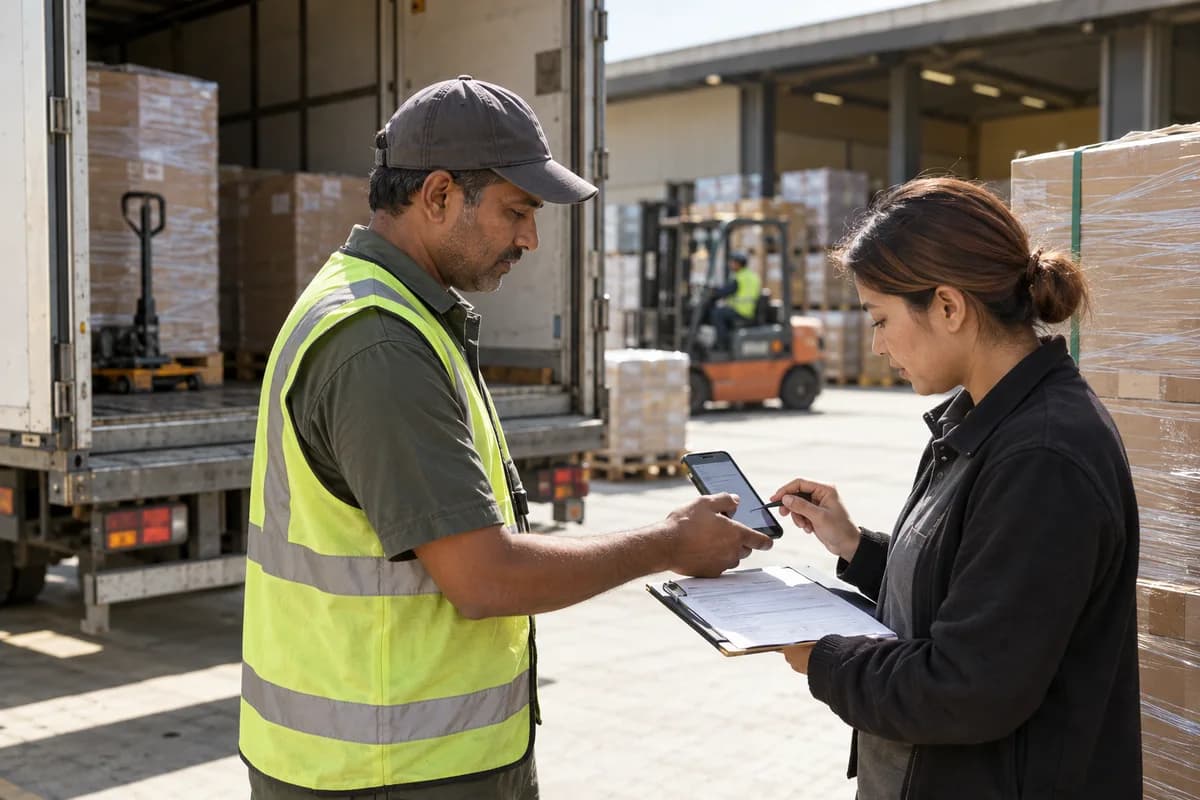
A driver app can take a photo of the signed copy, collect a signature on the screen, and record the time and location in one action. The proof reaches the office before the truck leaves the gate.
Add the consignee’s name, the quantity received and a remarks field with set choices such as damaged cartons or short count. Structured remarks let billing and claims staff act without calling anyone.
Keep the paper copy as a backup. Some consignees insist on it. Some consignees still insist on a stamp. The photo of that stamped copy is what counts for tracking.
- Photo of the signed delivery note
- On-screen signature with receiver’s name
- Time and location stamp
- Quantity received against quantity sent
- Exception choices for short, damaged or refused
Handle the places where capture fails
Phones lose signal at remote sites and inside some warehouses. The app should store the proof and send it once the network returns. Drivers need to know that a saved proof is a delivered one.
Some drivers hold back because they fear a dispute photo will count against them. Explain what the record protects. A photographed short count protects the driver as much as the company.
For third-party operators who will not use your app, ask for a photo through a shared messaging group, then file it against the consignment note the same day.
Measure it and make it routine
Track one number each week: the days between delivery date and the day proof is on file, per branch. Post it where dispatchers see it. Branches that run slow will explain why, and their reasons are useful.
Link billing to proof. A freight bill that cannot go out until the proof is attached makes everybody care. Start by flagging, not blocking, for the first month.
Review the slowest five consignments every Friday. Ask which step failed.
POD delay trace sheet
Ten rows on a single sheet, one per late consignment. Columns run left to right: delivery date, driver handover, branch dispatch, billing office receipt, entry date and total days. A final column names the step that lost the most time, so a pattern appears after one week.
Open a blank worksheet to printQuestions owners ask
Why does proof of delivery take so long to reach the office?
The paper copy usually waits at each handover, especially the branch courier run and the data entry desk. The delay is spread over several steps, not caused by one person.
Is a photo of the signed delivery note accepted as proof?
Acceptance depends on your contract and the consignee. Many accept it for status and billing, while some ask for the original later. Check your agreement and keep the paper copy until the client confirms.
Do drivers need smartphones for this to work?
They need a basic Android phone with a camera and a data connection. Offline saving matters more than the model, because proofs are often captured where the signal is weak.
How soon should proof be on file?
Set a target with your clients, such as the same day for city drops and the next working day for long routes. Measure it weekly by branch and review exceptions every Friday.