In this guide 6 sections
Repeat visits stay hidden because the job list treats every callback as a new job with a new number. Link each revisit to the original visit, mark it warranty or paid, and record the technician, part or product that caused it. Then the cost of rework becomes visible.
A revisit looks like a fresh booking
A customer rings to say the leak under the basin is back. The office creates a new ticket, assigns a plumber and closes it once the compression fitting has been tightened again. Nothing says it is the same fault. It just looks new.
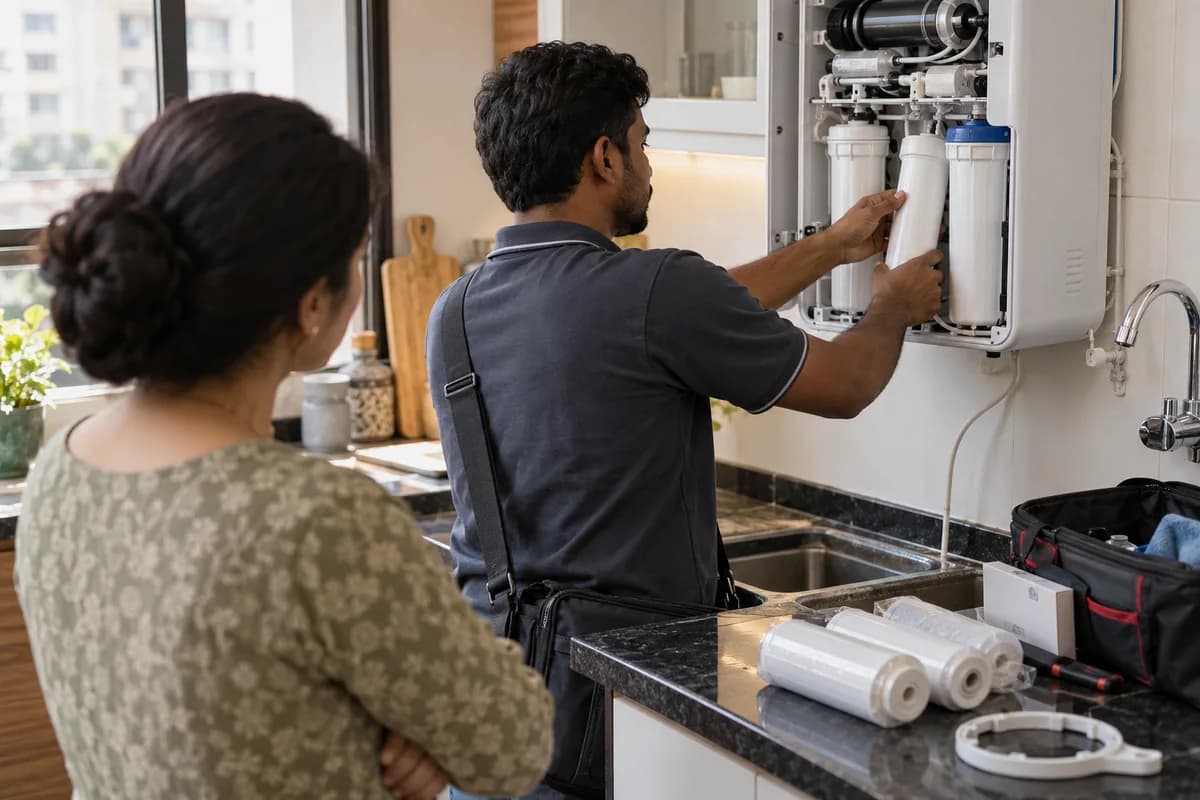
Pest control does the same: German cockroaches reappear in week three after a gel treatment, and the retreat is booked like a fresh service. A purifier with falling RO membrane pressure does too. Every call enters as ordinary work.
The monthly job count looks healthy while the margin thins, because the hours spent redoing visits that should have held are counted as new revenue-earning work. Why? The gap is the hours spent redoing visits that should have held.
Link the callback to the original job
Add one field to every new job card: the number of the earlier visit it relates to. Leave it blank for fresh work. Fill it for anything that is a return.
Ask the caller two questions at booking. When was the last visit? What was done? A booking agent can answer both in seconds if the customer’s history, with the old job card and the technician’s notes, opens on the same screen.
Once the link exists, a chain appears. Visit one, return visit two, return visit three. Long chains point at a fault nobody has fixed. Read them weekly.
- Original job number
- Date and technician of the earlier visit
- Work done and parts fitted then
- Complaint raised on this call
Separate warranty revisits from paid ones
Not every return is the company’s fault. A termite retreat inside the treatment certificate is free. A new infestation after the cover ends is paid. A leak at a fresh solvent-weld joint differs from a leak at an old union nobody touched.
Set the rule once and mark each revisit as warranty, contract or chargeable. Warranty visits carry a cost to the company, and chargeable visits carry an invoice with a clear line for labour and any spare.
Write the cover terms on the job card itself. Technicians then settle the question at the door. No arguing a week later.
- Warranty period and what it covers
- Contract or AMC cover in force
- Customer-caused fault, such as misuse or a third party’s work
- Chargeable visit with a quote
Charge rework to the cause
Every warranty revisit costs a technician’s hours, a vehicle run and often a part. Charge those costs to the cause: the technician, the spare part, the chemical or the product model that was used.
You may find one technician accounts for most pipe leak returns, or one PTFE tape brand for the failures. A purifier model may bring back its sediment filter housing every second month. Patterns hide in plain sight.
Be careful with the first reading. Context matters. A technician given the hardest sites will show more returns. Compare like with like, such as hard-water sites against soft-water sites, before anyone is blamed.
Start with a return rate you can read
Count revisits inside a set window, such as 30 days, as a share of completed jobs, by technician and by service type. Check the figure every Monday before dispatch. It takes five minutes.
A plain sheet with the linked job number is enough for the first month. If the return rate stays high, move the link and the cover rules into your job software so the office cannot skip them.
Callback tracking sheet
A sheet on one page, a line for each revisit. Columns carry the revisit job number, the original job number, the date gap and the technician on both visits. More columns name the part or product involved, the cover type (warranty, contract or chargeable) and the cause code. A summary block counts returns by technician and service type.
Open a blank worksheet to printQuestions owners ask
What counts as a repeat visit?
Any visit about the same fault at the same site as an earlier job. Set a time window, such as 30 days, so everyone counts the same way.
Will linking jobs slow down booking?
Only slightly. A customer history screen that shows the last visit lets the agent pick the old job in one step.
Should technicians pay for their own callbacks?
That is a management decision. Start by measuring and reviewing the cause with them. Many returns trace to parts, access or unclear scope, not effort.
How does this fit an AMC contract?
A contract visit and a warranty revisit are different codes. Keeping them apart shows whether the contract price covers the real number of returns.