In this guide 6 sections
Paddy loses weight as moisture, husk, bran and broken grain, so output never equals intake. The real gap hides in lot mixing, drying shrink, uneven moisture readings and unrecorded by-products. Trace each paddy lot through the stages, compare it with a standard yield for its moisture, and examine the variance.
Not every missing kilo is a loss
Paddy is a weight you buy and a weight you cannot fully sell. Husk leaves first. Bran leaves next. Water follows. Water leaves during drying and storage, and a lot held for several weeks in a warm bay keeps losing a little more of it each day. Hulled rice, called brown rice, loses weight again when the bran layer is polished off, and a parboiled lot behaves differently from a raw one in both cases.
Whole milled rice, called head rice, is only one output. Broken grain, brokens of smaller size, bran and husk make the rest. Each sells at its own price to its own buyer.
Split the gap into expected shrink and unexplained loss. Only the unexplained part deserves a hunt.
Moisture at the weighbridge moves the whole answer
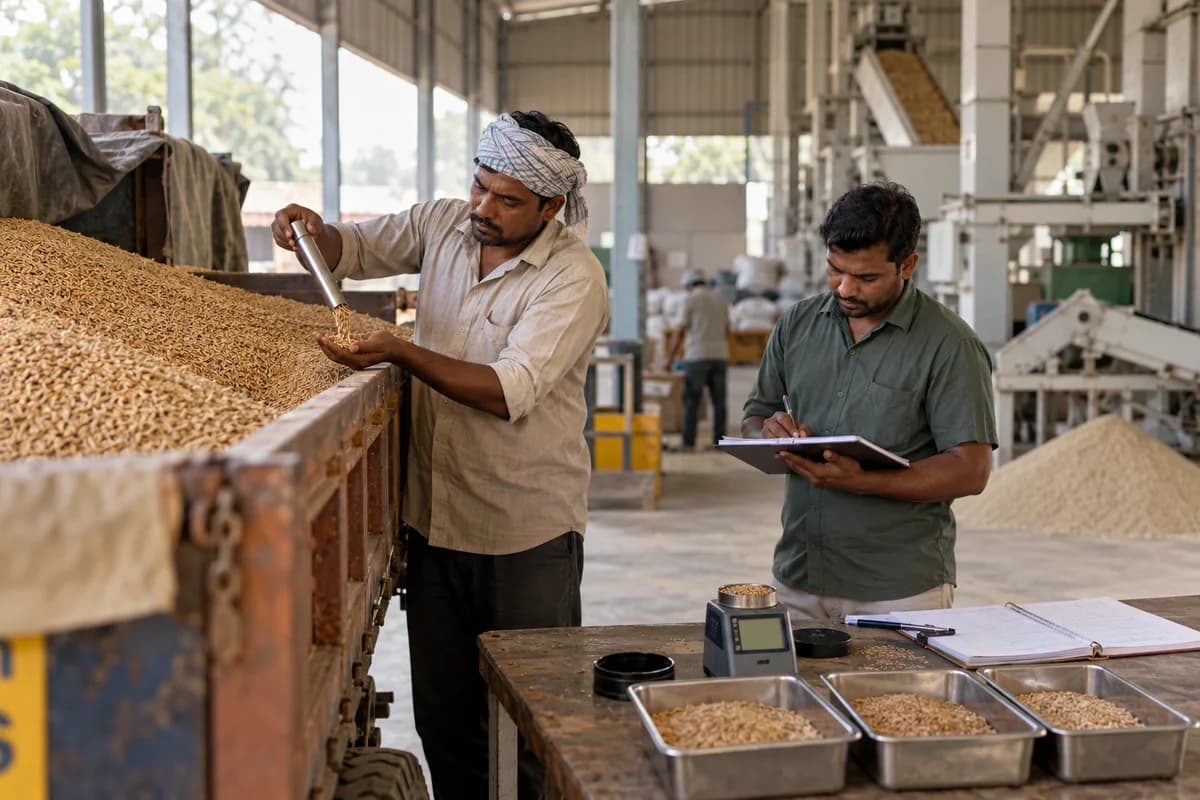
A truck of wet paddy weighs more and yields less. If the moisture reading is rough, or written on a slip that gets lost, the lot starts with a wrong baseline. Wet paddy dried in a recirculating dryer can lose several points of moisture in one pass. Ticket weight and bin weight will never match.
Take samples from the top, middle and bottom of the truck. Use one meter, calibrated on a schedule. Record the reading against the lot, since a supplier’s name alone cannot show which load was damp.
Drying changes weight again. A lot that enters at one moisture reading and leaves the dryer at another has lost water, not rice. Record both weights.
- Gross, tare and net paddy weight
- Moisture reading and meter used
- Variety and supplier
- Weight before and after drying
- Silo or bay where the lot is stored
Lot mixing hides the source of a poor run
Many mills draw from several bays into one hopper. That is normal. The trouble starts when no one records the ratio.
A poor milling outcome then cannot be tied to a variety, a supplier or a harvest. The records say only that the mill ran paddy. You are left guessing. Mixing a long-grain lot with a short-grain lot also shifts the broken share, because the two varieties break at different rates in the huller and in the whitener.
Ask the line supervisor to log every hopper draw by lot and quantity. Even a plain sheet clipped beside the hopper, filled at every change of bay, gives you a record that memory never will.
Measure each output by batch
At the end of a run, weigh head rice, broken grain, bran and husk separately. Add the total and compare it with the paddy that went in. What remains unexplained is the true variance.
Sort the outputs by grade, since a high broken share lowers the value of a run even when total weight looks fine. Polisher and sorter settings influence this, so note them too. Rice that is graded through an indented cylinder and a colour sorter drops rejects at each step, and those rejects need a destination, whether re-milling, feed or sale.
Husk and bran often leave the plant without a weighbridge entry. Those sales drop out of the yield sums, and the mill appears to lose weight it simply sold.
- Head rice weight by grade
- Broken grain weight by size
- Bran and husk weight sold or used
- Polisher, huller and sorter settings
- Run start, end and operator
Compare against a standard and chase the variance
Build a standard yield for each variety and moisture band from your own past runs. Every new run is then compared with that standard, and not with the mood of last week’s shift. Even forty runs of data give a usable baseline for each variety, provided the moisture, the polisher setting and the lot are recorded with every run.
Sort variances by lot, by shift and by machine. A pattern usually appears within a month. One shift might run a roller too hard, or one supplier may deliver damp, immature grain.
Software does this sorting without effort, but the sheet works first. Log the lot at the hopper tomorrow.
Paddy-to-rice yield worksheet
This yield sheet prints on one side of a page and holds one line per paddy lot. Columns hold intake weight, moisture, drying weight loss, hopper draw, head rice, broken grain, bran, husk and unexplained difference. A last column notes the shift, machine and supplier behind each large variance.
Open a blank worksheet to printQuestions owners ask
What yield should a rice mill expect?
It depends on variety, moisture, paddy quality and machines. Use your own past runs by variety and moisture band as the standard, not a figure from another mill.
Why does yield differ between shifts?
Machine settings, feed rate and operator habits all change it. Logging output by shift usually shows which setting moved.
Does drying always reduce weight?
Yes, since water leaves the grain. The question is whether the loss matches the moisture drop. A larger loss points to handling waste or measurement error.
Can software fix the yield gap?
It cannot fix machines, but it shows where weight leaves. Lot-wise records turn a vague complaint into a named supplier, shift or setting.