In this guide 6 sections
Returns follow because brands cut to different charts. European numeric sizes, US chest sizes and letter sizes do not line up, and armour pockets sit at different heights. Publish a chart per brand, show stock by size, tag every return with a fit reason and offer an exchange before a refund.
Three size systems share one shelf
A riding jacket from an Italian brand is labelled 52, a US brand marks its jacket 42, and a third brand simply says M. Nobody agrees on the chest behind those labels. Riders who own three brands wear three labels.
Cut differs as well as numbers. A race cut jacket is narrow at the waist and long in the arm for a tucked position, while a touring cut leaves room for a liner. Same label, different garment.
A single house chart that tries to cover every brand hides those differences behind a neat table and leaves the buyer guessing. Show each brand’s own chart instead, and ask each supplier for flat garment measurements of every size, not only the label.
Fit on the bike differs from fit on the hanger
A jacket is tried on standing, arms down. It is worn leaning forward with arms out to the bars, so sleeves ride up, the back panel lifts and a chest that felt right now feels tight.
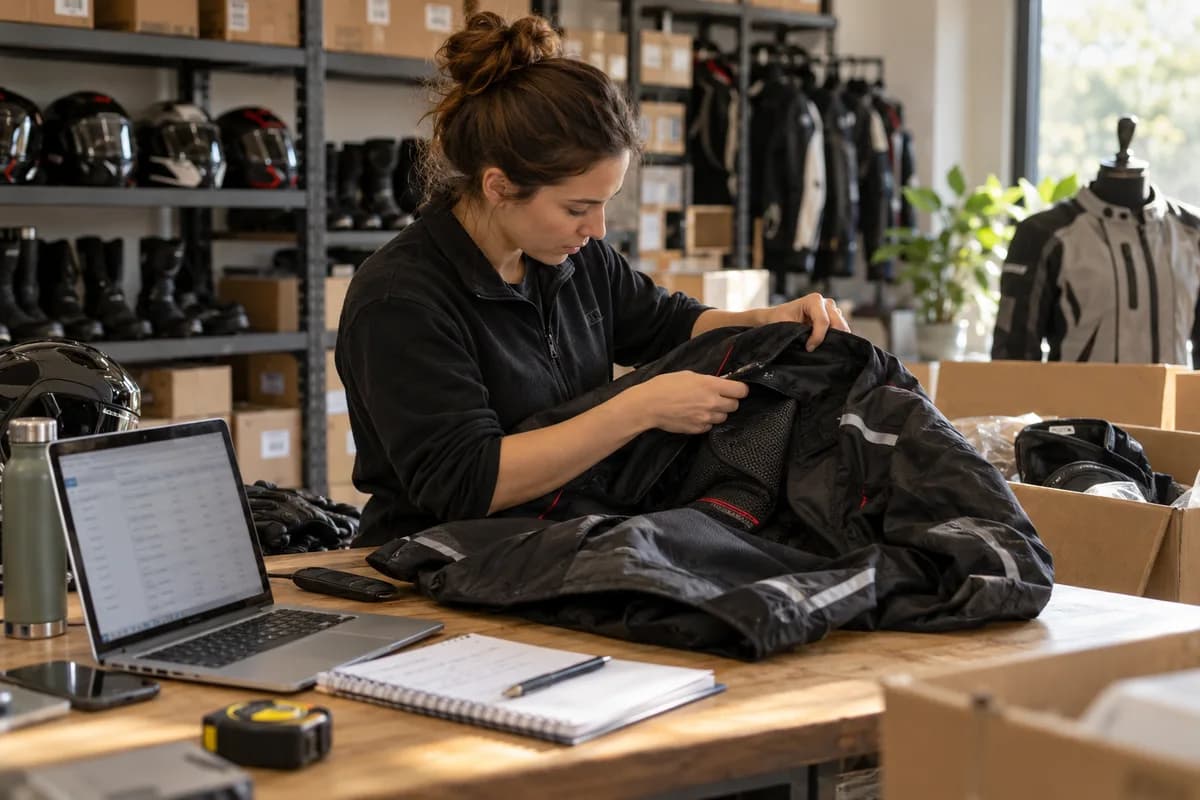
Armour raises the stakes. Shoulder and elbow protectors must sit over the joint, and a back protector pocket is cut for a given back length, so a misplaced pocket leaves it off target. The buyer sends the gear back.
Other pieces carry their own measures: riding trousers depend on inseam and knee armour height, boots on shaft height and calf width, and gloves on finger length. List these, not only chest and waist.
- Chest and waist, stated as flat garment or body measure
- Back length for the back protector pocket
- Sleeve length with arms forward
- Inseam and knee armour height on trousers
- Boot shaft height and calf width
- Glove finger length and palm width
Find out why each return happened
An order number alone tells you nothing. Add a required reason list with specific choices to the return form, which costs the buyer a few seconds and gives you a record you can sort. Pair the reason with the size kept after an exchange, so you see whether a larger size solved it.
Then tally by brand and size: if one size of one brand comes back again and again, the chart is wrong and the buyers are not. Even spread points to weak measuring advice.
Review the two views each month. Check returns per brand and size beside the split of reasons, correct the chart first, and only then rework the product photos.
- Chest too tight
- Back too short, protector sits high
- Sleeve short when leaning forward
- Armour off the elbow or knee
- Boot calf too narrow
- Arrived in a different size
Imported stock runs out by size and leaves buyers stuck
Gear from overseas brands often lands in one shipment per season, so popular sizes sell out first and a sold out size may not return until the next container. The buyer meets a dead end.
Show stock per size on the product page. Grey out the sold out sizes, offer a back in stock alert, and suggest a neighbouring size only when the chart shows the measurements are close.
This shapes your exchange offer too. A buyer who sends back a medium for a large needs a large to exist, so check the shelf before you promise one. If the large has gone, say so at once and offer the refund.
Set up an exchange route and test it
Make the exchange the first choice. Put it above the refund on the return page, ask for the reason and offer the next size from stock. Reserve that size when the request arrives, not when the parcel returns, so two buyers never chase one jacket.
On receipt, inspect the returned gear. Look for road wear, torn seams, missing liners and armour left out, restock the clean pieces, grade worn ones as used and record which.
Pull last season’s returns this week. Tag each with a reason, count them by brand and size, and fix the chart for the pair at the top of the list first. Repeat the tally next season to see whether the change worked.
Brand size chart and returns log
Two blocks share one page. The first holds one chart per brand: size label in all three systems, chest, waist, back length, sleeve length, inseam, armour pocket height and cut. The second is a returns log with order number, brand, size ordered, size exchanged to, reason and stock left in that size.
Open a blank worksheet to printQuestions owners ask
Should one house size chart replace each brand’s chart?
No. Show each brand’s own chart with measurements in centimetres beside the labels, because a merged table looks tidy but guesses at how brands compare. You pay for the guess in returns.
How do I treat gear that was worn on a ride?
State the rule up front. Inspect every piece on receipt, grade gear with road wear as used, and take anything crash damaged off sale because its protection can no longer be trusted.
Do women’s ranges need separate charts?
Yes, they do. Women’s lines are cut differently through the chest, waist and hip and often carry their own labels, so give them their own charts and their own return reasons.
What if the size a buyer needs is sold out?
Offer a back in stock alert. Name the date of the next shipment if you know it, suggest a neighbouring size only when the measurements match, and never promise a size you have not ordered.