In this guide 6 sections
Shade and lot mix ups happen when a roll loses its dye lot identity somewhere between the dye house and the dispatch bay. Tags fall off, stock from two lots gets merged, and re-dyed cloth keeps the old number. Hold the lot against every roll and shade card, and the error has nowhere to start.
A lot is a shade, and the shade lives in one vat
Cloth dyed in one vat, on one day, with one recipe, shares a shade, while cloth from the next vat will differ slightly even with the same recipe card. Water, liquor ratio, fabric tension and temperature ramp all drift.
Most buyers accept that drift between lots. They do not accept it inside one garment or one order, because collar and body cut from different lots show up as a visible band under showroom lights.
So the lot is not paperwork. It is the only proof that two rolls will match.
- Dye recipe and vat number
- Date and shift of the dyeing run
- Greige lot and fabric construction
- Shade card approved by the buyer
Where the link between roll and lot snaps
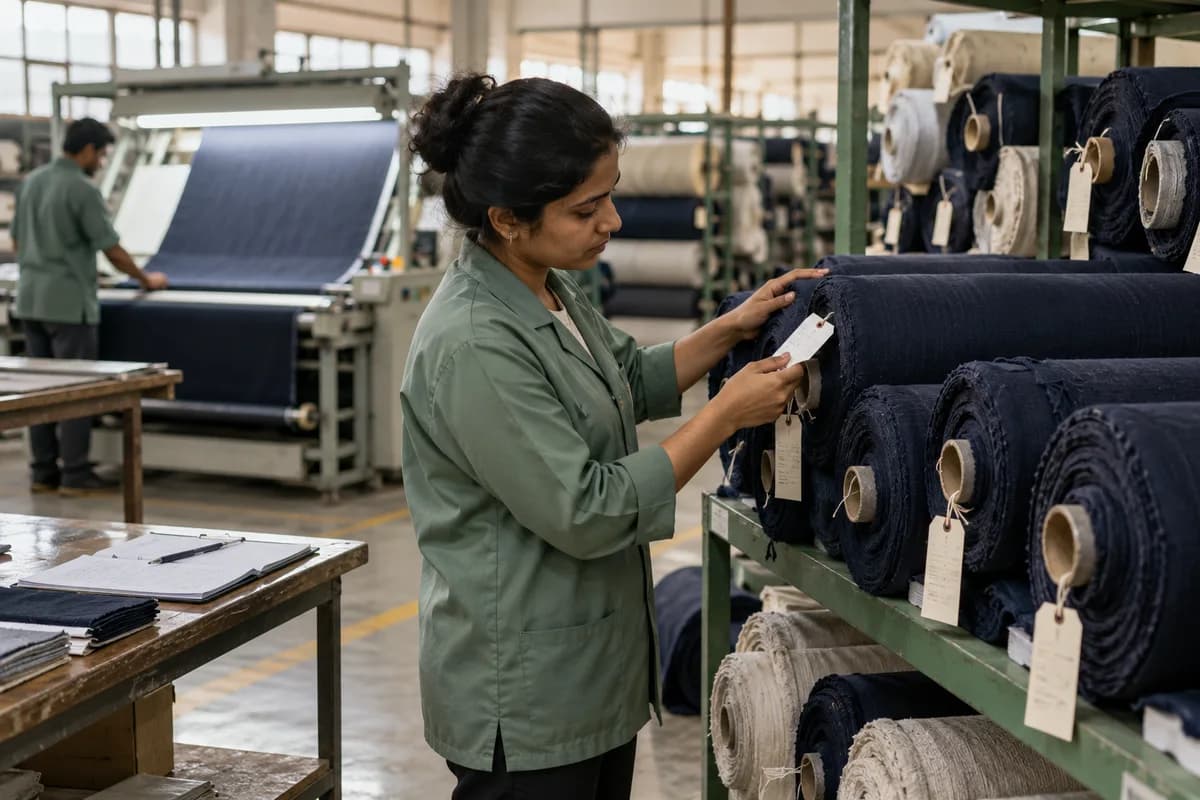
Look at the physical handling first. A paper tag is stapled to the roll end, and that end gets cut for inspection, while a marker pen number rubs off in the stenter or during baling.
Rolls then move to the folding table, the inspection machine, the finishing line and a rack. Each move is a chance to swap a tag or stack two lots in one pile.
Merged stock is the quiet culprit. A rack holds the short rolls left over from three orders, and somebody counts them as one quantity of navy. The lot split vanishes from the register the day that count is keyed in.
- Tags removed when the roll end is trimmed
- Leftover short rolls pooled by colour name only
- Sample cuts taken without a lot note
- Rolls relabelled by the folding team from memory
Re-dyes and shade corrections lose the lot trail
A roll that fails the shade check goes back to the dyeing machine for a top-up or a strip and re-dye. The cloth now carries a second history, and if it keeps the first lot number nobody can tell it apart from a clean roll of that lot.
Give every re-dye its own lot, linked to the parent, so the record shows the original lot, the correction recipe and the date. Planners then see that this cloth is a re-dye and must not share a garment with first-pass rolls.
Job work adds another break. Cloth sent to an outside processor returns with their lot number, not yours. Capture both at the gate.
Keep a lot record against each roll and shade card
The fix is a record, not a bigger tag. Each roll gets a unique roll number at first inspection. That number points to a lot row holding the recipe, the date, the shade reading and the approved card.
Every move updates the roll, not the pile, so scan or key the roll number at the folding table, the finishing line and the rack. A pile is then just a list of rolls, and the list always shows its lots.
At order allocation, the system should refuse to pick rolls from two lots for one cut order unless a person overrides it and states a reason.
- Unique roll number set at inspection
- Lot row with recipe, date and shade reading
- Shade card number tied to the order
- Re-dye lots linked to the parent lot
- Override reason when lots are mixed
Start with one audit before you change any system
Pick five open orders and walk to the racks, then match each roll to its lot on paper and count how many rolls you cannot place. That number tells you where the link breaks most.
Fix the weakest handoff first, which is often the point after inspection where rolls lose the tag at the roll end. Write the new rule on the folding table. Check it for a week.
Lot and shade control sheet
A single sheet with three blocks. The top block lists the lot number, vat, recipe, run date and approved shade card. The middle block has one row per roll with roll number, length, rack location and inspection grade. The bottom block logs every re-dye with parent lot, new lot and reason.
Open a blank worksheet to printQuestions owners ask
Can two rolls from one lot still differ in shade?
Yes, though the gap is small. Shade can vary from the start of a roll to the end, so many mills also cut rolls into bins by a visual or instrument reading.
What should a shade card hold?
A cloth swatch, the buyer’s approval, the lot number, the date and the light source used for the check. Without the lot number, the card cannot prove a match.
Do we need barcodes to prevent mix ups?
Not at first. A printed roll number and a disciplined scan or key-in at each move can work. Barcodes just make the roll number faster and harder to mistype.
How do we handle cloth returned from job work?
Record the processor’s lot and your own lot together at the gate. If the two cannot be linked, treat the returned cloth as a new lot and send a swatch for approval.