In this guide 6 sections
Fabric comes back short or late because the only record is a paper delivery note and memory, so nobody can prove what left or when. Log every roll out with metres, width and lot, log every roll back, set the shrinkage you allow, and count days at the processor. Shortages then show within the week.
The paper note is not a record
A delivery note proves that a vehicle left with something, but it does not prove how many metres, which rolls or which shade card went with it. Filed, it is dead paper.
Weeks later the dyer returns the lot and the metres are lower than you expected, and you have no roll list to argue from. The processor has his own count. His count usually wins.
Treat each dispatch as a small contract with a lot number, a roll list and a promised return date written on the day of sending. Most mills keep the delivery book at the gate and the real order in the merchandiser’s head, and the two never meet until a buyer chases the order.
- Greige lot number and fabric quality
- Roll numbers, metres and width
- Process: dye, print, wash, stenter
- Shade or design reference
- Promised return date for the lot
Record metres out and back by roll
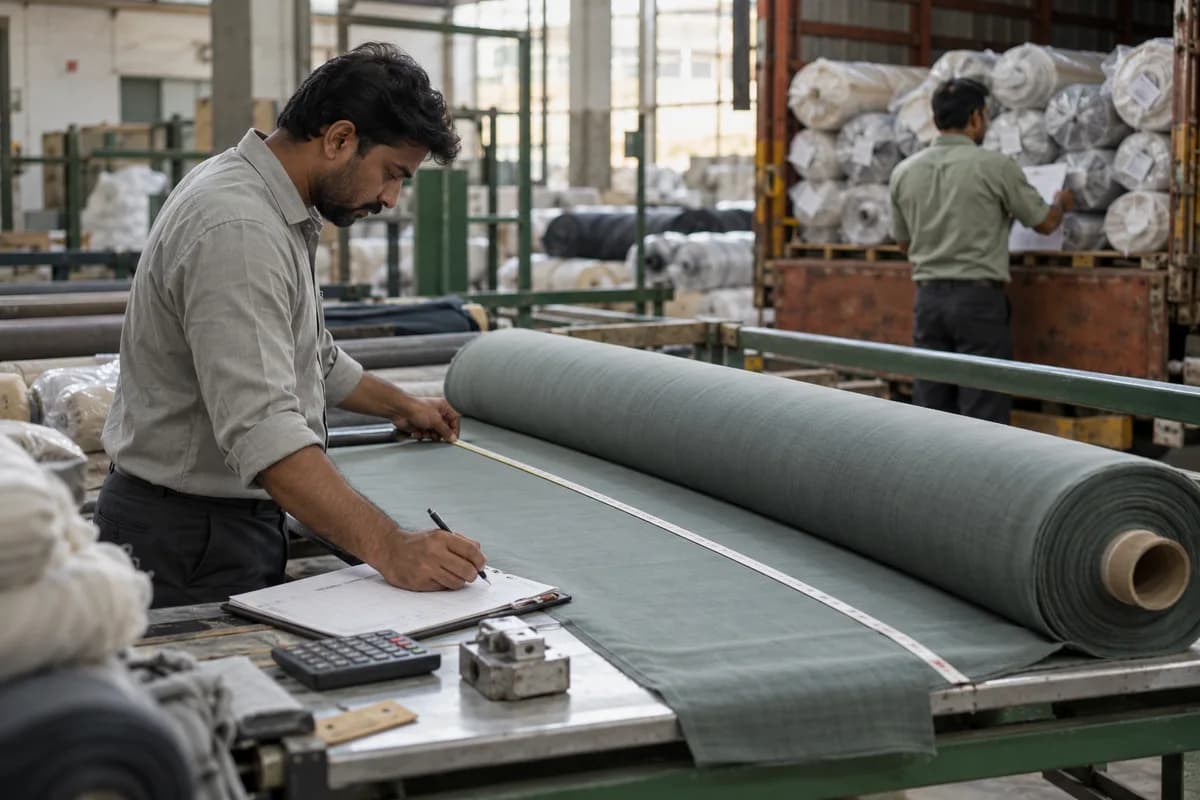
Measure on the inspection table before dispatch, not by eye, because a roll marked a hundred metres by the weaver is often a few metres off either way. Record measured length and width.
On return, measure again on the same table or the same kind of machine, and record the finished length, the finished width and the grade of each roll. Seconds need their own line.
Now the two lists can be compared roll against roll, so a missing roll is obvious, a short one is obvious, and neither depends on anybody’s recollection. Note the greige rolls rejected at inspection and kept back, because a roll that never left the store must never be counted as a roll that came back short.
Agree the shrinkage before dispatch
Every process changes length, because washing, stenter finishing and dyeing pull the fabric in, and some qualities lose more than others, so one figure rarely fits every lot. Ask the processor for the shrinkage he expects on this quality, and write that figure down before the vehicle leaves the gate.
That allowed figure becomes the line between acceptable and short, so fabric inside it is normal and fabric below it is a claim.
Without an agreed figure, every short return turns into an argument about weather, tension or machine settings, but with one it becomes a note on the processor’s account. Print the figure on the gate pass that travels with the vehicle, so the driver, the gate clerk and the processor all see the same allowed loss.
- Expected shrinkage in length
- Expected change in width
- Allowed rejection or seconds
- Who bears any excess loss
Count the days, not just metres
Lateness hides in the gap between the day a lot leaves and the day it returns, so list open lots by processor with days since sending. Sort it by age every morning.
A lot that has sat at a dyer for twice the usual time is a call to make today, not a surprise on the shipment date. Merchandisers who see this list chase early.
Over a few months the same list shows which processors are quick and which are slow, which is better evidence for allocating the next order than a rate quote. A slow processor is not always a bad one, since a lot can wait for a printing screen or a delayed chemical, so note the reason beside the date.
Settle the account at lot close
Close each lot against a statement of metres sent, metres received, allowed shrinkage, actual shortage and days taken, signed by both sides before the processor’s bill is paid.
Spreadsheets handle this for a while, but once several processors and many lots run together, a system that keeps roll lists and flags overdue lots saves hours of calls.
Start with the processor who gives you the most trouble, record his next three lots roll by roll, and compare your figures with his count. Closing then takes minutes. It replaces long calls about numbers that nobody can prove, with a signed page that both sides accept before the next lot goes out.
Processor job-work tracker
A one-page tracker gives each lot at a processor a line, with columns for processor, lot, quality, rolls sent, metres out, width out, process asked and shrinkage allowed. Further columns record date sent, promised date, rolls back, metres back, seconds, shortage and days at processor, so one glance shows the age of every open lot. A footer totals shortage by processor.
Open a blank worksheet to printQuestions owners ask
What if a processor disputes metres?
Show the roll list measured on your inspection table at dispatch, because a roll-by-roll record from the day of sending is stronger than a total on a delivery note.
Does yarn follow the same method?
Yes, by weight and cone or hank count instead of metres, and the same lot, date and allowed loss fields apply, as does the days-at-processor list.
Who should measure the returned fabric?
Someone who did not arrange the job, ideally the inspection team, because a neutral measurement keeps the record trusted by merchandising and by the processor.
Can this work on paper first?
It can, since a printed sheet at the gate works for a few lots, but move to software when sheets get lost or the list takes long to build.