In this guide 6 sections
Track each roll whenever buyers cut panels, grade by inspection or match shade, because length, grade and shade differ between rolls inside one lot. Lot totals suit greige sold whole. Most mills keep the lot as the parent record and each roll as the stock unit beneath it, receiving and issuing at roll level.
What a roll record holds that a lot record cannot
A roll carries its own number, finished length, width, grade and rack position, while a lot is only the dyeing or weaving run behind it, so rolls differ. That gap bites at dispatch.
A packing list built from lot totals promises metres that no single roll holds, so the buyer measures each roll on arrival, counts short and raises a claim. The claim was avoidable.
Weigh the cloth net of its tube and wrapper, because a gross weight copied onto the ticket overstates what the buyer actually receives.
- Roll number and lot number together
- Finished length after relaxing and inspection
- Grade from the inspection sheet
- Core or tube weight against gross weight
- Rack and bay for picking
Shade matching is where lot stock fails first
Dye lots drift between the first roll and the last, so a buyer cutting a panel from roll three and a sleeve from roll nine may see a band. Roll records fix that.
They let the store sort by shade card reading and ship matched rolls together, instead of sending any twenty from forty and hoping the cutting room sees no mismatch. Shade needs the roll.
Take the reading at the inspection frame. Doing it once there saves every later argument about which rolls were cut together and why the sleeves look darker than the fronts.
Grading and cut lengths change the maths
After inspection a roll may split into a first grade length and a short end, but lot stock has no place for that split, so the short end hides. It then ships as first grade.
Cut lengths follow the same logic, because a buyer ordering sixty metre pieces needs rolls that divide cleanly with joins marked, and only roll records let dispatch pick them. Remnants wait for the clearance sale.
Grade the short end separately. A buyer who accepts first grade on the long section and lower grade on the end still wants both lengths on the packing list.
When lot level is enough
Some mills sell greige by the lot to a processor who re-inspects each roll on arrival and cares about total metres, weave and count, so roll detail adds little. Ask how the processor receives.
If rolls are rejected whole on arrival, lot totals are enough, but if the processor matches shade or cuts to length, roll records pay back at once. Keep a roll list anyway.
Even then the roll numbers belong in the lot record as a plain list, which costs one column and saves an hour when a processor asks about roll fourteen.
A sensible middle path
Make the lot the parent and give each roll a child record with its own length, grade, shade reading and rack, so the planner still reads balances by lot. Begin with finished goods.
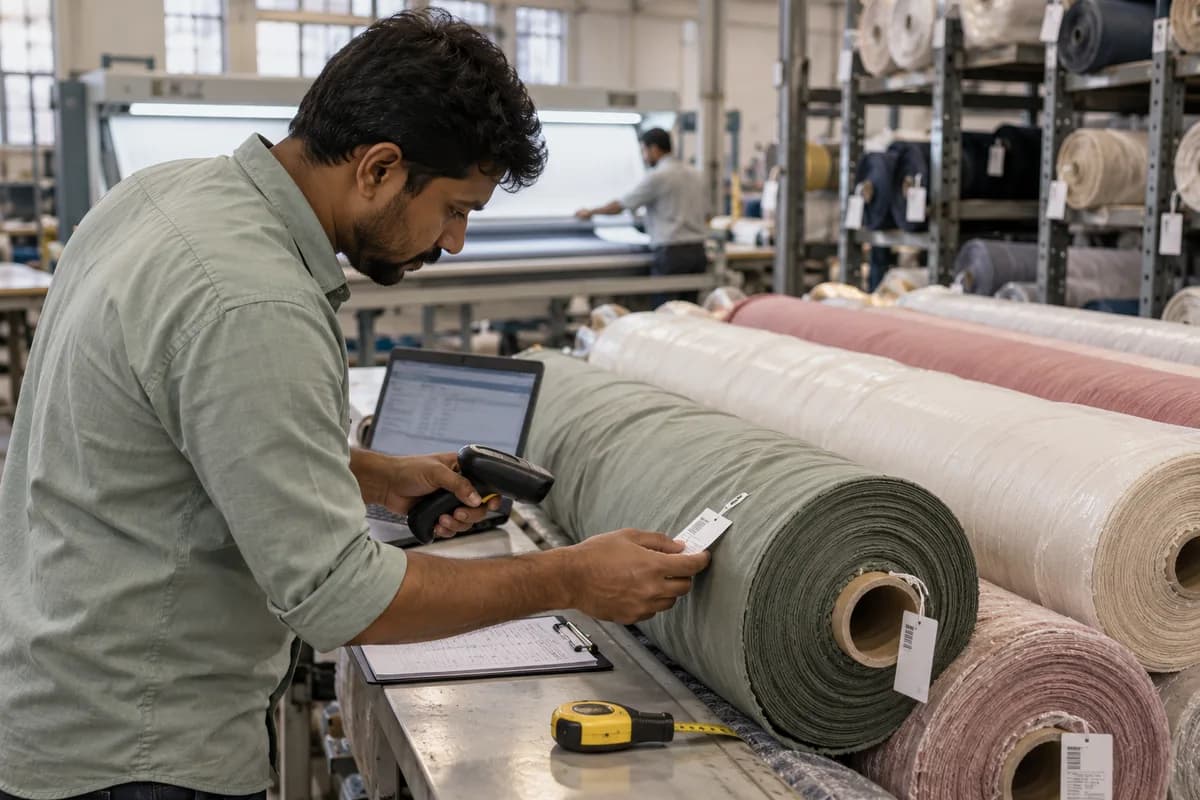
Roll labels print at inspection. That is the one desk that already holds length, grade and shade, so the typing happens once and the store scans from then on.
That store is where complaints arise, and greige can follow later, so pull your last five complaints and count how many a roll record could have settled.
- Receive rolls against the lot on inspection
- Issue by roll number on every packing list
- Report balance by lot for planning
Roll or lot decision worksheet
Printed on a single sheet, this worksheet has columns for product type, buyer use and stock level, and rows for greige, finished fabric, short ends and sample cuts. A closing block names every field a roll record must carry, the person who fills each one and the desk that checks it afterwards. Print it.
Open a blank worksheet to printQuestions owners ask
Do I need barcodes on every roll?
They help. A printed roll label with number, lot, length and grade lets the store scan at receipt, rack and dispatch, whereas hand keyed roll numbers cause most picking errors.
Can I switch from lot stock to roll stock midway?
Yes. Begin with new production and leave old lots as totals until they sell through, because re-measuring old rolls is rarely worth the effort.
How do remnants and short ends fit?
Give each its own roll number, marked with the parent roll and a lower grade, so nobody counts a short end as first grade. Simple.
Does roll level tracking slow the store?
Only at first. Label printing at the inspection frame moves the typing to the one desk that already holds the length, grade and shade numbers, so the store itself types less.