In this guide 6 sections
A bakery loyalty programme works when it hangs on the mobile number taken at billing and the order history behind it, not on a plastic card. Points accrue by themselves. Two records do the real work: the birthday a cake was ordered for, with its name and size, and the weekly regular who stopped coming.
Why the paper stamp card fails
Most bakery loyalty starts as a paper card with ten squares, and it fails for reasons that have nothing to do with the offer. Customers leave it at home. Staff forget the stamp. Stamps are easy to copy.
Nobody at the counter can say how many cards are in circulation, what they cost last month, or whether the free coffees went to regulars or to strangers. After a year the bakery knows it gave away some free coffees, but not who the regulars are, what they buy or which of them vanished in March.
A card cannot name your regulars.
Anchor the account to the mobile number at billing
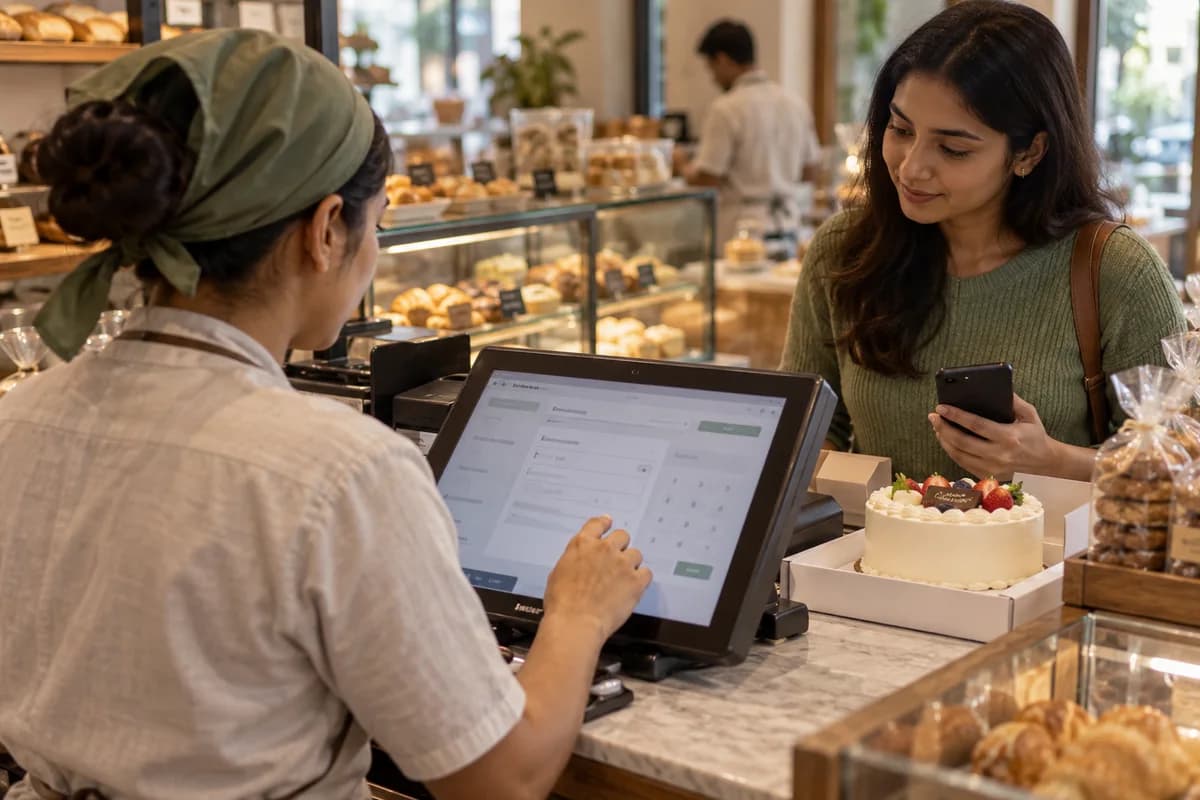
At a busy counter the one detail customers reliably give is a mobile number, provided asking takes a second and the cashier does not read out a script. Ask at billing and store it against the sale, so the loyalty account exists without a card, an app download or a signup form.
From that single field the bakery gets repeat rate, basket size, favourite items and the days since the last visit, all without a separate survey. It also opens a message channel for order-ready alerts, festival pre-orders and birthday reminders, which customers accept because each one is useful to them.
Tell customers what the number is for. Send fewer than you would tolerate. A bakery that texts weekly gets blocked, while one that writes twice a year about festival cake boxes stays welcome and keeps getting its orders.
The birthday order as a record
A bakery holds something almost no other shop does: the date of a birthday, because a cake was ordered for it, with the name piped on top. That customer will want another.
A reminder ten days ahead that mentions what they ordered last time reads as a service rather than an advertisement, so it is less likely to be resented. It beats a generic discount.
The same applies to anniversaries, office orders that repeat each quarter, and the school that orders for every function, prize day and sports meet. Recording the occasion against the order turns a one-time sale into a calendar the bakery can plan production, ingredient orders and staffing around.
- Occasion and date the cake was for
- Name written on the cake
- Size, flavour and any allergy note
- Mobile number of the person ordering
Designing the scheme to protect margin
Award points on bill value, not visits, because a wedding cake buyer and a single bun buyer are not the same customer. Set the accrual so the reward costs a known share of revenue, and price it against gross margin rather than selling price.
Exclude items that cannot be discounted. Say so plainly at the counter. Put an expiry on points so an unredeemed liability does not build up for years, but keep it long enough that it never feels like a trick.
Then watch the redemption rate. A scheme nobody redeems is failing, not saving money, while a scheme redeemed mostly on high-margin items such as celebration cakes is doing exactly its job.
The customer who stopped coming
The most useful loyalty report in a bakery is not the list of top spenders but the list of customers who came weekly for six months. They have not said they left. Most have not decided to.
A short message to that list, naming something specific such as the loaf they usually collect on Saturdays, may bring some of them back before a rival bakery does. Few neighbourhood bakeries notice.
None of this needs an expensive platform. It needs the mobile number captured at billing, the order history kept against it, and one person who opens the lapsed list on the first Monday.
Loyalty scheme cost sheet
Work out what one point costs at gross margin, the expected redemption rate and the annual liability before launch. One page of arithmetic separates a scheme that is generous on paper from one the bakery can afford.
Open a blank worksheet to printQuestions owners ask
Should a small bakery build an app for loyalty?
Almost never, because customers rarely download an app for a neighbourhood bakery and the mobile number at billing gives the same data without any friction. Texts reach the phone they carry.
How many points should a customer earn?
Set it from gross margin. Do not copy another shop. Decide what share of revenue the bakery will return, work backwards to the accrual rate, and test it against the expected redemption rate before launch.
Is it worth recording birthdays from cake orders?
Yes. The order already carries the date, the name and the size, so nothing extra needs typing at the counter while a queue builds behind the customer. A reminder ten days before the same date next year helps the customer and brings repeat demand to the bakery before any rival has a chance to ask.