In this guide 6 sections
Staged solar shipments arrive short because each load is packed from memory or a loose list, not checked against what is still owed on the order. The fix is a running balance per line, a packing list tied to the site plan and a scan or tick at the gate.
Where the shortfall starts
A large order for structures or components ships over weeks, and the first truck leaves with rails and clamps while the second carries piles. By load five, nobody recalls load three. Each person in the chain trusts the list in front of them, and nobody owns the running total of what is still owed to the site. Crates of similar inverters, string combiner boxes and earthing kits make it worse, since a miscount hides behind a familiar label on a lookalike crate.
Short loads usually trace to one cause. The packing list came from the original quote rather than the balance remaining, so it repeats lines already sent and misses lines newly released. Cable trays, earthing strips and junction boxes behave the same way, because several part numbers look alike on a crate and a hurried loader reads the first digits.
- Packing from the quote, not the balance
- Several people editing one dispatch sheet
- Partial loads not recorded as partial
- Site plan changes not reaching the yard
How double shipments happen
The opposite fault is just as costly. A coordinator sends a second set of base plates because the first dispatch note was never marked off, leaving surplus steel on site. The next row waits for fasteners. It happens most when two coordinators cover one project during leave, and each assumes the other has already marked the first note off.
Freight gets paid twice. Returning surplus is slow, and the site engineer stops trusting your delivery notes, which makes every later dispute about a short load harder to settle. Surplus also hides the real shortage, since the yard believes the site is covered and never reorders the missing item from the fabrication line. Weeks pass before anyone notices.
What a checked dispatch looks like
Start with order lines holding item, section, length, quantity ordered, quantity sent and quantity balance, and let each dispatch draw only from the balance. The system refuses an over-pack.
Tie each lot to a zone of the site plan, such as block C rows 4 to 9, so the site team sees whether the lot completes the area. Add a hold flag for lines not yet released, such as items waiting on galvanising or a drawing approval, so nobody packs them by mistake.
Print the delivery note from the same record, because handwritten edits at the gate are where numbers drift and a printed note traces back to a line. Closing a lot should need the loader’s count and the supervisor’s sign-off together, because either one alone leaves room for a quiet shortfall.
- Ordered, sent and balance on every line
- Lot tied to a site zone
- Delivery note printed from the dispatch record
- Vehicle and driver details kept
Checks at the gate and on site
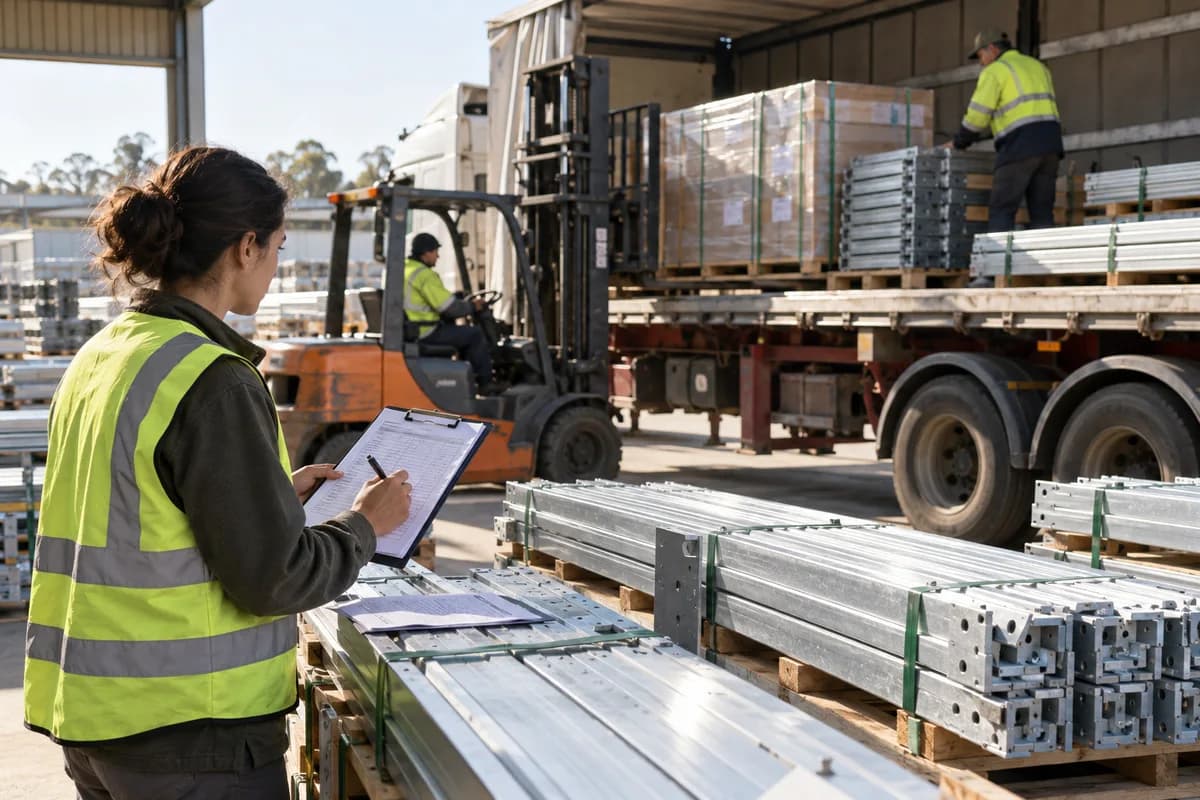
A loader ticks each bundle against the note, a supervisor signs, and the count covers bundles, not only lines, because a bundle of ten rails can hold nine. Photograph the loaded truck from the rear before it leaves, since a dated image settles arguments about what was on board when the site engineer disputes the count.
On site, the receiving engineer records what arrived, damaged or missing within a day, and that reply closes the loop between the yard and the crew. Without it you only learn of a shortfall when the crew stops work and phones the yard, by which time the next lot may already be loaded. Missing items get a shortage note with the lot number and a photo, sent the same day while the next lot is still on the floor.
Fixing the process this month
Take one running project and rebuild its balance by hand from every delivery note so far, marking each mismatch and its cause. That list shows where your process leaks. Print the balance for the loading team each morning, so the day starts from one shared figure instead of three half-remembered ones.
Agree one owner for the order balance. One name, one record. Everyone else reads it, and a weekly ten minute call with the site engineer costs less than one repeat freight run caused by a single missed bundle.
Run this check on three projects. If the same cause appears twice, change the packing step before anything else, because small fixes there pay back fastest, while the rest can wait.
Order balance sheet
A one-page tracker per project. Columns: line item, ordered, sent by lot number, balance, site zone and received quantity from the site engineer, with one row for every part number on the order. A top block holds order number, site address and agreed delivery sequence, while a bottom block lists shortages found and the lot that caused each one.
Open a blank worksheet to printQuestions owners ask
What is a staged dispatch?
It is one order shipped in several loads over weeks, usually matched to the installation sequence at site so each row of modules can be started.
Who should own the order balance?
One person in dispatch or project coordination. Several owners mean several versions.
Can this be done in Excel?
For one small project, yes. With several live projects and several people packing, a shared record that blocks over-packing is safer, because a spreadsheet will quietly accept a quantity larger than the balance.
How quickly should site report shortages?
Within a day of receipt, while the load can still be checked against the truck photo and the next lot adjusted before it leaves the yard.