In this guide 6 sections
Trade-in disputes start after delivery because the car’s condition was only discussed, never recorded. Dents, missing keys, absent service papers and warning lights go unwritten at the desk. A condition sheet signed by both sides, with dated photos, settles the argument before it begins.
The argument always happens on a different day
At the desk, everyone is friendly. The customer wants the new car and the used car manager wants the sale. Nobody stops to list the scratch on the rear bumper.
Two weeks later the car sits in the used lot. A buyer finds a crack in the dashboard trim. The previous owner says it was fine, and the dealership has nothing on paper to say otherwise.
Memory is the only evidence on either side. It never favours the person who has to pay. That is the whole problem.
What usually goes undocumented
The same few items cause most of the trouble. Keys are the first: one remote handed over instead of two, or a valet key missing. A spare costs real money from the manufacturer.
Service papers come next. A buyer asks for the logbook and the stamped service history, and the dealership cannot produce them. Then comes cosmetic damage, tyre wear and warning lights that appeared only on the test drive.
Last is the quiet stuff. Odometer reading, fuel level, floor mats and a removed stereo rarely reach the file.
- Number of keys and remotes received
- Service logbook, manuals and spare wheel present or not
- Dents, scratches and chips by panel
- Tyre tread and warning lights on the dash
- Odometer, fuel level and fitted accessories
Build a condition record the customer signs
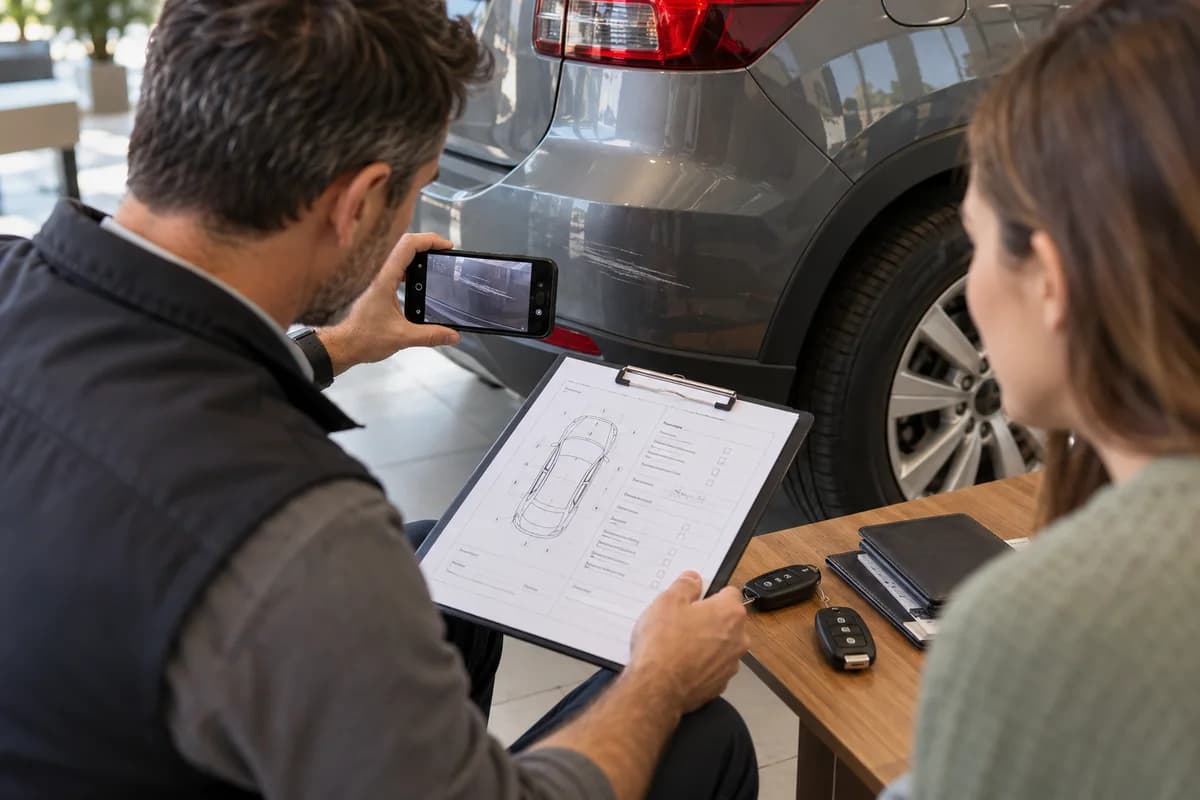
Use a body diagram with the panels numbered. The appraiser marks each flaw on the sketch and writes a short note. The customer sees the marks as they are made.
Take photos of every panel and of each flaw, with the stock number or registration plate in frame. Dated photos beat any description. Do it before the valuation talk starts.
Both sides sign before the valuation is agreed. A signature on a record that lists the faults makes a later claim about those same faults very hard to sustain.
- Numbered body diagram with each flaw marked
- Photos with plate or stock number in frame
- Key count, papers received, odometer and fuel
- Signature and date from customer and appraiser
Keep the record where the next person will find it
A sheet in the deal folder helps only until the folder moves. The used car manager, the reconditioning workshop and the salesperson who sells the car all need the same facts.
Link the condition record to the stock unit. When the workshop fixes the bumper, it adds a line. When a buyer questions the dashboard crack, the dealership opens the original photo in seconds.
This also gives you honest numbers. You can see how often reconditioning costs more than the appraiser guessed, and correct the next valuation.
Handle the dispute that still arrives
Some disputes are real. The customer may hide a fault, or the appraiser may miss one. A proper record at least shows where the miss happened.
Open the signed sheet first, then the photos, then the workshop’s notes. Compare calmly and agree what is in scope. Settle small differences quickly, since a small goodwill gesture costs less than a month of calls.
Take one step before Friday. Print a body diagram with numbered panels and use it on your next trade-in.
Trade-in condition sheet
Single printed form. A top-down car diagram with numbered panels sits on the left. The right side carries key and remote count, logbook and spare wheel tick boxes, odometer, fuel level, warning lights, tyre tread by corner and fitted accessories. At the foot are two signature lines with dates and a box for the photo file names.
Open a blank worksheet to printQuestions owners ask
Do we need photos if the customer signs the sheet?
Yes. A signature proves the customer saw the written list. Photos prove what each flaw looked like, which settles any argument about whether a mark grew worse.
Who should fill in the condition record?
The appraiser or used car manager, with the customer present. The person valuing the car sees it best, and the customer can point out anything missed.
What if the customer refuses to sign?
Note the refusal on the sheet with the date, keep the photos and finish the valuation on that record. A refusal to sign is itself useful information.
How long should we keep these records?
Hold each sheet and photo set through the warranty term and the legal claim period in your country. Your accountant or a local adviser can confirm the exact span.