In this guide 6 sections
Craft orders come back for three reasons: the wrong shade code, two dye lots mixed in one project, or a quantity or cut that came up short. Record shade, lot and sale unit as separate fields on every stock line, and reserve each order from a single lot.
Three ways a craft order goes wrong
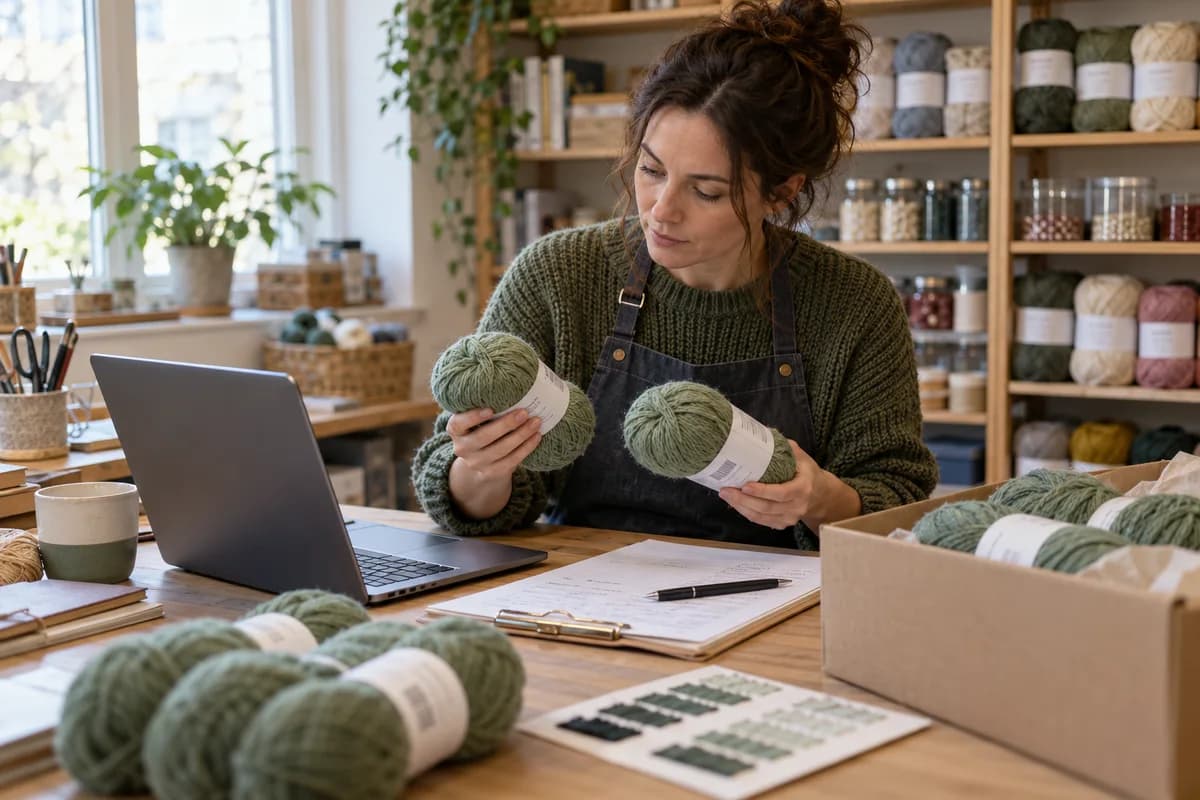
A knitter orders six skeins of a green called Fern and finds two different Ferns in the parcel, one bluer than the other, which shows at the sleeve. A beader gets the wrong size. Ribbon arrives in two pieces.
Each looks like carelessness at the packing bench. Most are record faults. The shade is a name in one place and a number in another, the lot was never noted and the unit of sale was never stated.
Screens do not help. Monitors render a green differently, so the code and the lot are the only promises a shop can keep about colour.
- Shade names that repeat across brands and ranges
- Two dye lots packed in one parcel
- Quantity counted in balls when the buyer thought in metres
- Ribbon or trim sent as joined pieces
- Bead size and hole not stated on the listing
Treat shade code and dye lot as separate fields
A shade code names a colour in a maker’s range, such as 4012 or Moss, while a dye lot names the batch that colour was dyed in. Two skeins with one code can still differ. Knit them side by side and the join shows as a stripe.
Hold both on the stock record. Brand, range, shade code, shade name and lot number each get a field, so a delivery of one colour in three lots lands as three stock lines.
Print the lot on the pick sheet and the invoice. The packer can then confirm a matched set at the bench, and a customer who reorders for a second sweater can quote it.
- Brand and range
- Shade code and shade name
- Lot number as received
- Balls or cones on the shelf per lot
- Date the lot was received
Reserve one lot for the whole order
Mixed lots arise when stock is counted by shade alone. Five skeins sit in lot A and three in lot B, and an order for six pulls from both. The count says six are available. Only five match.
Reserve from one lot where it can cover the quantity. If no lot is large enough, say so before checkout, then offer the largest lot with a note or a nearby shade and let the buyer choose.
Keep the lot against the customer’s last order. A reorder of the same shade a year later can then be matched, or declined honestly when the lot has sold through.
Sell in the unit the buyer is thinking in
Yarn sells by the ball or skein, thread by the spool or cone, beads by the strand, hank, tube or gram, and ribbon by the metre. Fix one sale unit per product. Show that unit’s size beside the price.
Add the length or weight of one unit. A ball holds a set number of metres and grams, and a strand a set number of beads, so buyers can compare brands. That also tells them whether a pattern needs eight balls or nine.
For cut goods, store the minimum cut, the cutting increment and whether joined pieces are allowed, because four metres of ribbon should leave as one length. Say so on the listing. A short end sold as a remnant needs its own label.
- Sale unit and unit size on every product
- Metres and grams per ball, hank or cone
- Beads per strand, with bead size and hole
- Minimum cut and cutting increment
- Remnants listed as items of their own
Read last season’s returns before you change anything
Export the returns and sort them by reason. Wrong shade, mixed lot, short length and wrong size are four different faults with four different fixes, and a simple count shows which field to add first.
Add a lot warning to every dyed product. One line is enough. Tell buyers to order everything the pattern needs at once, because lots vary between batches, and ask for the quantity before the cart, not after packing.
Photograph each lot on a white card in daylight when it arrives, and attach the photo to the listing. It costs a few minutes per delivery. It answers most shade complaints before they start. Begin with your five best-selling colours.
Shade and lot receiving sheet
A goods-in sheet with columns for brand, range, shade code, shade name, lot number, sale unit, unit size, quantity received and a lot photo reference. Below it sits a tally of the week’s returns by reason: wrong shade, mixed lot, short length or wrong size.
Open a blank worksheet to printQuestions owners ask
Can two skeins with the same shade code still differ?
Yes, when they come from different dye lots. The code names the colour in the range, and the lot names the batch. In a knitted or woven piece, the difference often shows only where the two meet.
How many skeins should a customer buy at once?
Enough for the whole project, plus a spare. Ask for the quantity before checkout and reserve all of it from one lot, so that a later reorder is not the only fix.
What if the lot I need is sold out?
Tell the buyer before they pay. Offer the largest lot left, a neighbouring shade or a back-in-stock alert. A returned parcel costs more goodwill than a clear no.
Do beads and thread need lot numbers too?
Dyed and plated beads vary between batches, as thread does, so record a lot wherever the maker prints one. For plain findings such as jump rings, size and metal finish matter more.