In this guide 6 sections
Care visit notes and invoices disagree because three records are kept apart: the caregiver’s log, the timesheet and the billed units. Each is written at another moment by another person. Clocking in at the client’s door ties all three to one visit and one set of times.
Three records, three authors
A home care visit leaves behind three things. The caregiver writes a log of tasks. The same caregiver submits hours on Friday afternoon. An office coordinator then turns those hours into billed units.
Each step is a retelling. A caregiver remembers a visit as an hour when the note says fifty minutes. The coordinator rounds up to the contracted block, and the invoice shows the block while the log tells another story.
None of these people is careless. The process makes them copy facts by hand from one sheet to the next, and every copy invites a small change.
- Visit log written at the client’s home
- Weekly timesheet from memory
- Billing units set by the coordinator
- Care plan hours as authorised
Where the drift starts
Start times are the biggest source. A caregiver arrives ten minutes early to wait for a family member, or leaves early when the client naps, while the roster still says nine to ten.
Travel between clients is next. Some agencies pay it, others do not, and the sheet rarely says which. Cancelled visits come third. The client was in hospital, the caregiver heard late, and the hour still went onto the timesheet as worked.
Task notes also wander. The plan says bathing and medication prompts. The log says tea and conversation. If a funder audits, the gap shows.
What clock-in at the door changes
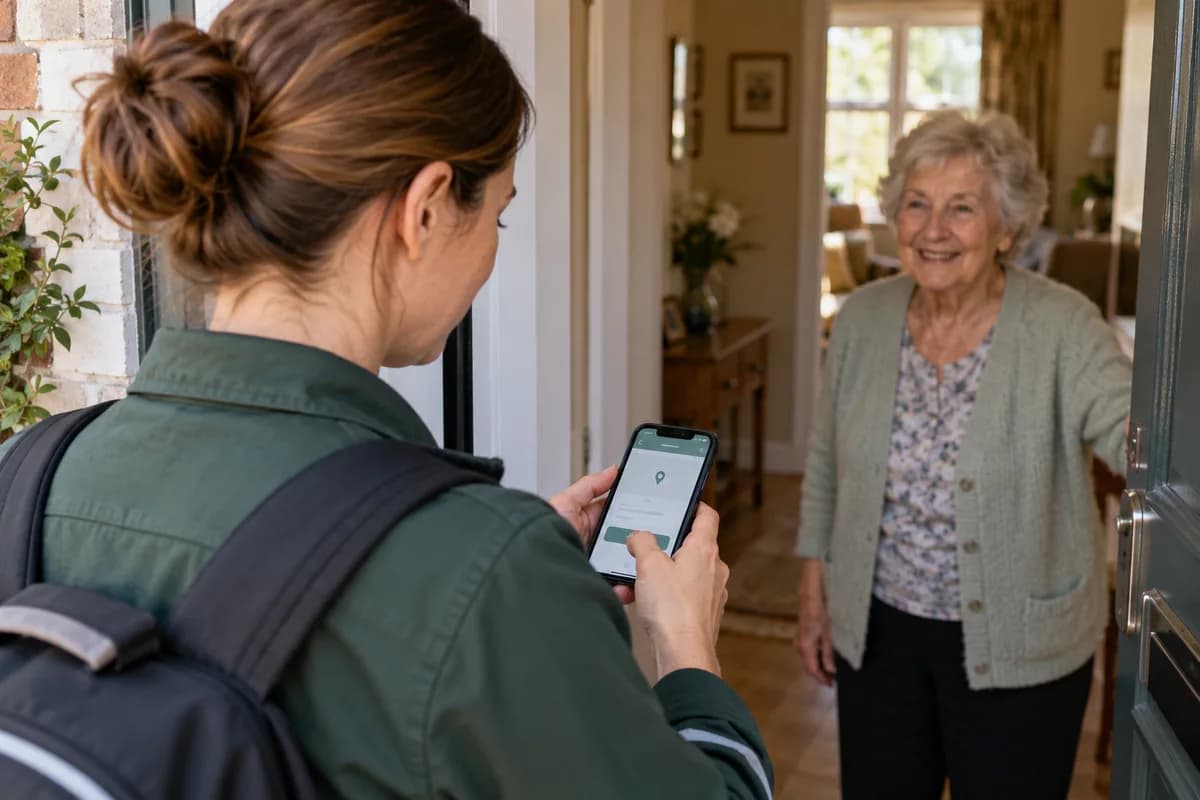
A caregiver who starts the visit at the client’s door records a real start time and a place, and ending it records the finish. The duration is no longer a guess.
The log is then written inside that same visit. Tasks are ticked from the care plan, with free text for anything unusual, so one record holds time, place and notes together.
If the caregiver forgets, the coordinator sees an open visit that day. Not at month-end.
- Arrival and departure time at the home
- Tasks ticked against the care plan
- Notes on mood, falls or refusals
- Late or missed visits visible the same day
Make billed units come from the visit
Billing should read from the closed visit. Contracted blocks, funder rules and rounding are set once per client, and the invoice then shows hours worked, hours authorised and the difference between them.
Where they differ, a short reason is needed. Waiting for a family member is one reason. A shortened visit at the client’s request is another.
This shows when a funder is paying for visits that never fully happened, and when your caregivers deliver more than the plan pays for.
- Authorised hours from the care plan
- Worked hours from the visit
- Difference with reason
- Rounding rule applied once
Reconcile weekly, not at month-end
A weekly review of mismatches keeps the list short. Sort by client, look at the gaps over a set threshold and ask the caregiver about each one while the visit is still fresh in memory.
Keep the reason codes the same each week so trends appear. Frequent early departures may mean the care plan is longer than the client needs. Raise it at review.
This week, pull three invoices and trace each billed unit back to a log entry. Count how many you can prove.
Visit to invoice trace sheet
A worksheet with one line per billed unit. Columns: client, visit date, authorised hours, caregiver, arrival and departure time, tasks ticked, log note present, billed units, difference and reason code. A bottom block totals unproven units per caregiver.
Open a blank worksheet to printQuestions owners ask
Why do caregiver hours rarely match billed hours?
Hours are copied from memory, then rounded to contracted blocks. Waiting time, early departures and cancelled visits each leave a gap between what happened and what was billed.
Is clock-in at the client’s home reliable?
It works when the caregiver starts and ends the visit on a phone at the door, with a fallback for poor signal that the coordinator approves afterwards.
What should a care visit note contain?
The tasks done from the care plan, the time in and out, anything unusual such as a fall or a refused meal, and the caregiver’s name.
How do I handle visits cancelled at short notice?
Record the cancellation time and reason on the visit, then apply your funder’s rule on whether it is billable. Never delete the visit.