In this guide 6 sections
Open one case file at the first call and keep everything in it until the final statement is paid. It holds the first-call record, signed authorisations, service details, vendor orders and every charge. One file means no hunting through notebooks when a family asks a question or an invoice is disputed.
Open the file at the first call
The first call is often taken at night by whoever is on duty. Give that person a short form that creates the case file on the spot. It needs the name of the deceased, place of death, the caller’s name and relationship, and a phone number that works.
Add the details that cause trouble later: who has authority to decide, any religious or cultural requirements, and whether a coroner or doctor’s certificate is still awaited.
Record the time of the call. It sets the clock for everything after, from the removal and the preparation to the date a certificate must reach the registrar.
- Deceased name, age and place of death
- Caller name, relationship and phone
- Removal time and staff on duty
- Certificate or coroner status
- Cultural or religious needs
Capture authorisations and identity
Before any work starts, get the signed authorisations. These usually cover embalming or preparation, release of the body, cremation or burial, and who may collect ashes. The exact forms depend on your local law.
Scan each signed page into the case file the same day. Paper copies get filed under the wrong surname, and a lost signature can halt a cremation.
Note who signed and in what capacity. Two relatives disagreeing is easier to settle with a dated record.
Plan the service as a list of bookings
A service is a set of bookings: the chapel or church, the officiant, the cemetery or crematorium slot, the hearse, bearers and any live music. Each one has a time and a person to confirm with.
Put every booking on the case file with a status of requested, confirmed or paid. Staff opening the file at seven in the morning should see at once what is still waiting for an answer.
Add the family’s own decisions as they come: the eulogy order, the printed programme, flowers and the notice for the newspaper.
- Venue and time slot
- Officiant or celebrant
- Cemetery or crematorium confirmation
- Transport and bearers
- Printed order of service
Order from vendors against the case
Coffin, flowers, memorial cards, newspaper notices and catering all come from outside suppliers. Raise each order from the case file so the cost and the supplier’s reference sit next to the family’s choice.
This matters at billing. When no case number links a coffin supplier’s invoice to a family, the money either goes unbilled or gets argued over.
Check each order against the family’s approved selection before it is placed. Many disputes begin with a model the family never chose.
Close with a final statement and a review
Build the final statement from the file, not from memory. List every service, every disbursement paid on the family’s behalf and every deposit received. Send it with the supplier receipts attached where the family asks.
After payment, mark the case closed and move on. Then hold a ten minute review each month on three closed files. Look for late authorisations, missing vendor references and any statement that needed correcting.
- Itemised services and disbursements
- Deposits and payments received
- Supplier receipts attached
- Outstanding balance and due date
Funeral case file checklist
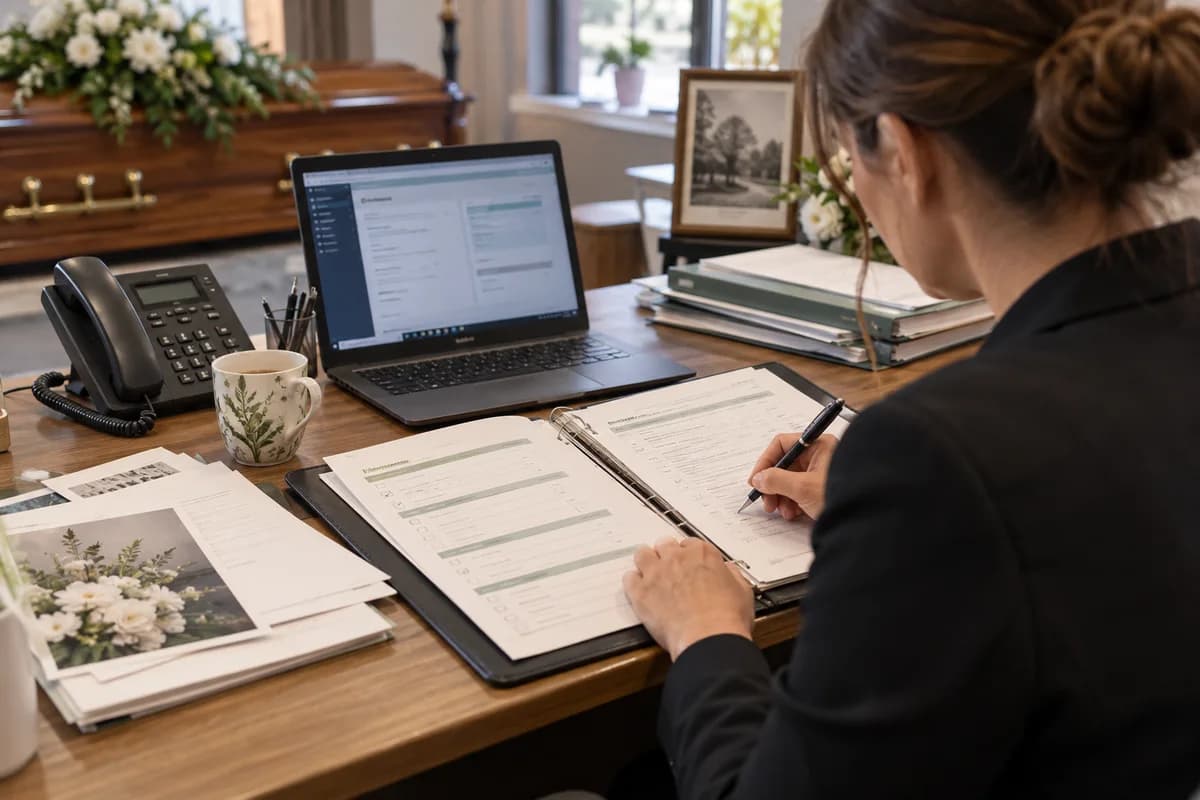
A two sided sheet. Side one has blocks for the first call, authorisations signed, service bookings and vendor orders, each with a tick box, a date and a staff initial. Side two lists the final statement lines, deposits received, balance due and the closing date.
Open a blank worksheet to printQuestions owners ask
What should a funeral home case file include?
At minimum the first-call record, signed authorisations, identity and certificate details, service bookings, vendor orders, charges and the final statement. Keep scans of every signed page.
How long should case files be kept?
It depends on your local rules and licence conditions. Ask your regulator or association, then set the retention period in the system.
Can families see the case file?
They can receive extracts such as the service plan and the statement. Keep the full file, with notes about other relatives, internal.
Is paper still acceptable?
Yes, if it is complete and filed by case. The risk is lost sheets and slow billing, which a digital file reduces.