Native Android and iOS Application Development
Native Android and iOS application development produces two separate apps, one in Kotlin and one in Swift, over a shared backend. It suits apps that depend on device hardware or must match each platform exactly.
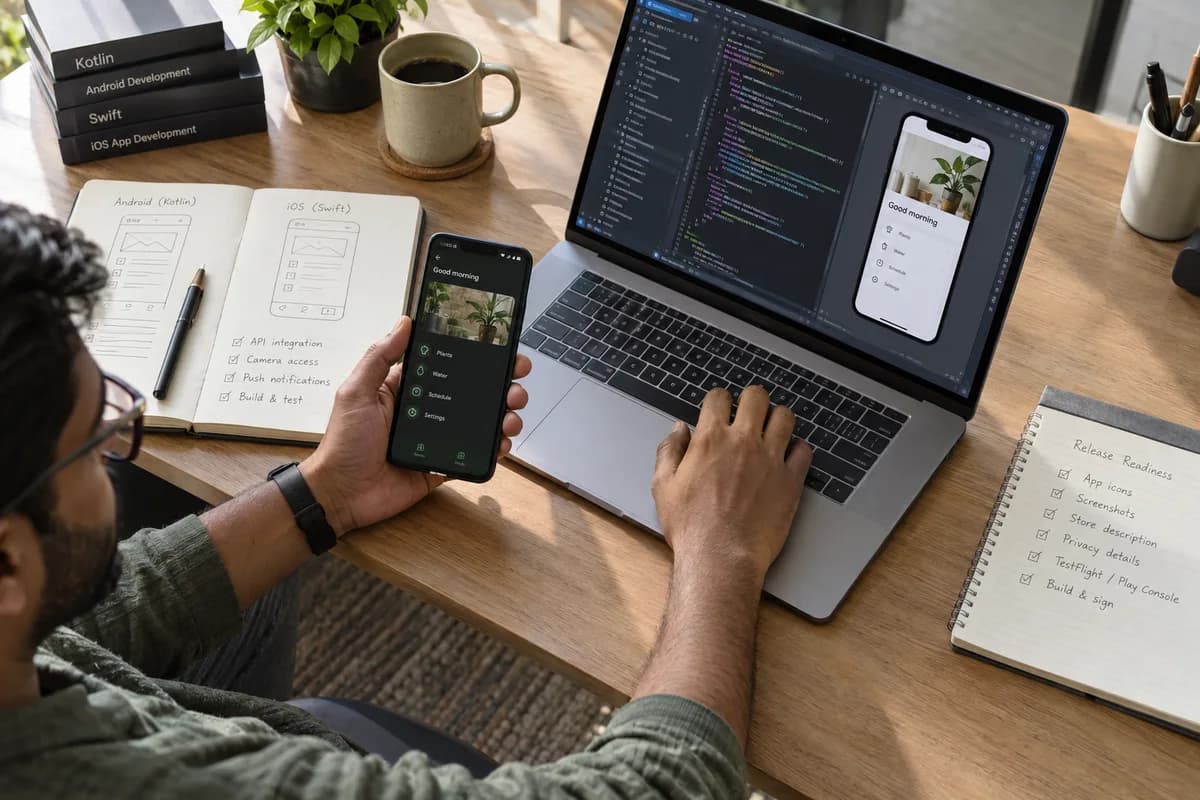
When two native apps are justified
What two codebases involve
Publishing under your own name
Frequently asked questions
Are native apps better than cross-platform ones?
No, not automatically. Native apps do better on hardware access and platform feel, but they cost more and release more slowly. For most business apps a shared codebase is the first option worth weighing.
Can we build one platform now and the other later?
Yes. The backend is built so the second app can follow later without rework behind the scenes. Which platform goes first is decided during scoping, based on who will use the app.
Who maintains the apps afterwards?
Either GullySystem under a support arrangement, or your own team once the code and keys are handed over. Both apps need attention whenever the operating systems change. Plan for that.
Tell us what you need.
Share your requirements and one of our engineers will come back to you within one business day.
What happens after you share your requirements
- A senior engineer reads your answers. Nobody phones first.
- Within one business day you get a written note: what we understood, what we would start with, and the questions we still have.
- If it fits, a proposal follows with the order of work, what we need from you and what you receive at each step.
- No call is booked and nothing is paid until you have read the note. Your details stay with us.
Start with your requirements
Seven short steps that tell us what you need. A senior engineer reads them before anyone gets in touch.
Share your requirements