Goods Receipt (GRN) for Automation equipment manufacturers
Record what physically arrives against a supplier order.
Does this function belong in your operation?
Use when purchased physical goods need quantity and acceptance checks on arrival.
Purchased goods arrive at a receiving location.
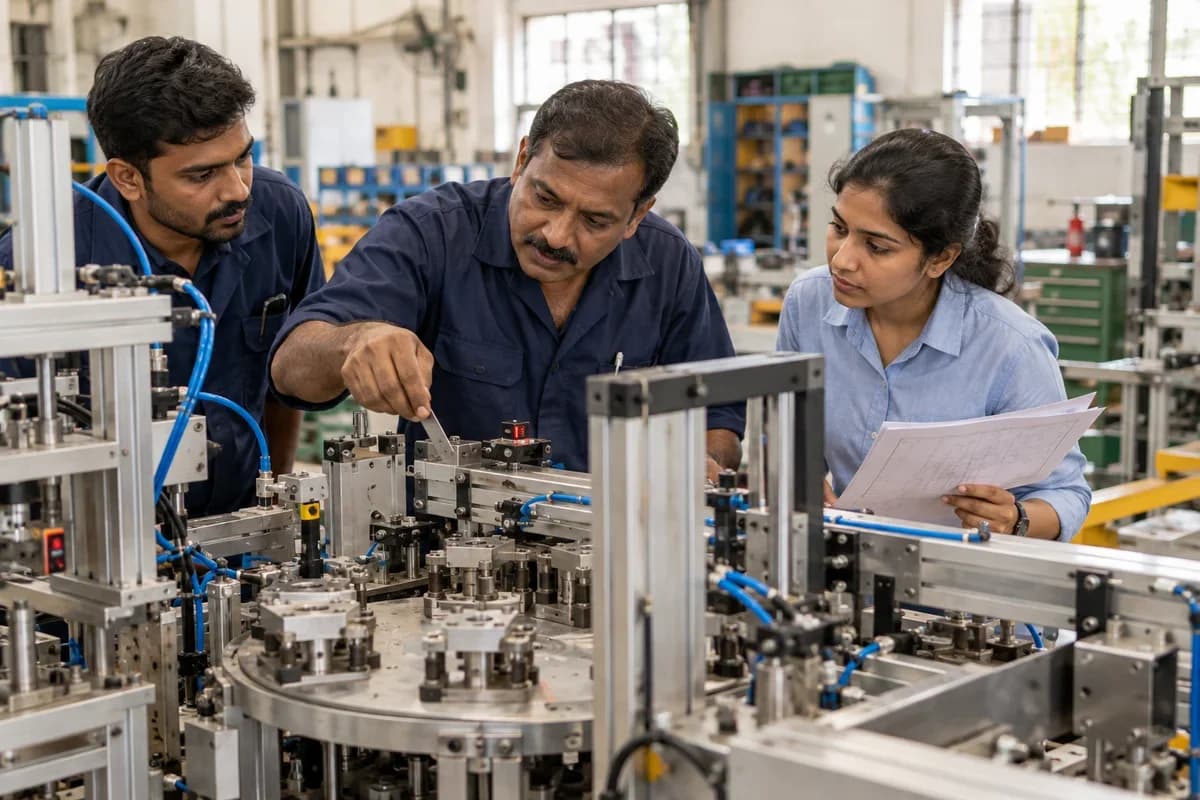
Cylinders and drives are checked at receipt against the purchase order. Mismatches go on a discrepancy note. Stores tag received parts with the machine number and the station.
Bring the records the workflow depends on.
- Purchase order
- Delivery note
- Acceptance and storage rules
Outputs to check
- Numbered receipt and inspection record
- Accepted and rejected quantity statement
- Purchase-order balance and bill-match inputs
Follow the goods receipt (grn) workflow.
Use this sequence to compare your current process with the proposed module. Agree the owner, permission and exception at each step.
Who uses the module, and who approves?
Keep responsibilities distinct even when one person holds more than one role.
Decide how exceptions are handled.
These business rules belong in configuration and testing. A normal transaction alone does not demonstrate that the workflow is ready.
Can this work independently?
Goods receipt needs item and supplier references; a purchase order is preferred or an explicitly approved unplanned receipt is required. Stock posting, quality release and invoice approval are separate handoffs. Receiving a delivery note does not prove that the stated goods were counted or accepted.
Systems and records it connects with
- Purchase orders: Authorised supplier commitments and open line balances.
- Stock: Item-location quantities and authorised stock movements.
- Vendor bills: Supplier invoice lines and authorised posting status.
- Quality control: Inspection results and authorised hold or release decisions.
Configure, test and introduce the workflow.
- We watch how material comes in and who signs for it. You describe the problems met at the gate. A short list of what needs recording returns to you.
- Open purchase orders and the item list are brought in. The purchase team checks a sample for accuracy. The storekeeper enters real deliveries on a trial screen next to the paper register. Gaps in the form are found and fixed.
- Hold rules, batch numbers and weighbridge entries are set where they apply. You approve which items need them. Storekeepers and the accounts desk practise on phones and screens. The paper register stops on an agreed date.
Check the result before rollout.
Apply these checks to a sample from the agreed workflow, then repeat with an exception. Keep the expected result beside the test record.
- Receipt quantities link to the purchase order.
- Rejected goods remain distinct from accepted stock.
- Partial deliveries leave the correct balance due.
How the business operates.
These machines are one-offs or short runs. The buyer describes a product and a target cycle time, and the maker designs a station that assembles, tests or packs it. Parts come from machine shops, catalogue suppliers and the maker’s own workshop. Weeks before delivery go on chasing a few late items. A frame cannot be closed until one bracket arrives.
The records that hold the operation together.
- Machine enquiry and estimate. Estimate design hours, machined parts, bought-in components, assembly and test time on one sheet, and keep the figure as the project budget that posted cost is compared with later. No second copy.
- Parts list with revision. Hold each assembly, machined part and catalogue item with its revision letter, and after release a change shows what moved and which open orders still carry the old drawing. Nothing is overwritten.
- Machined part orders. Release a drawing set to the workshop or to an outside machinist, with the due date and the stock material named per plate. Returned shafts and brackets are booked in line by line. Short deliveries stay open.
- Component purchasing and receipt. Order catalogue items straight from the released list, follow promised dates, and receive each pneumatic cylinder, proximity sensor or servo motor against the machine it belongs to. Gaps are visible.
Operational bottlenecks to check
The bill of materials changes during build
Designers revise parts while the workshop is already machining. Plates cut to the old drawing are scrapped and new ones ordered, and the difference sits in no single record, so the true cost of the revision is never read.
Bought-in parts arrive out of sequence
Cylinders arrive on Monday, sensors the week after, and the servo motors only when the supplier clears its own backlog. Fitters wait for a bracket. Or they build around the gap and strip it back later.
How work flows across this business
This module sits within a wider operating process. Use the sequence to identify the other teams and records affected by a change.
1. Concept and estimate
The customer’s product drawing, target cycle rate and floor layout are logged, designers sketch a concept, and the estimate covers design, machined parts, bought-in items, assembly and test. Scope is fixed here.
2. Design release
Assemblies, parts lists and the pneumatic and electrical schematics are released with a revision letter, and purchasing and the workshop receive only the released set. Drafts stay hidden.
3. Machining and buying
Plates, shafts and brackets go to the workshop or to outside machinists with due dates. Catalogue items such as cylinders, servo motors and light curtains are ordered and received against the machine. Gaps show early.
4. Assembly
Fitters build the frame and stations, electricians wire the panel and route the air piping, and programmers load the PLC sequence and HMI screens. Each stage logs its hours. Nothing moves on without a sign-off.
5. Run-off and buy-off
The machine runs the customer’s own parts at the agreed cycle rate while output, rejects and every remark are recorded against the run-off sheet. Punch items close one by one.
6. Shipping and support
The machine is dismantled, crated, shipped and installed on the customer’s floor, and the spares list and serial number stay on file for after-sales calls. Support starts from that file.
Industry reports to connect with
- Machines on the floor by build stage and due date
- Missing catalogue items per machine and supplier
- Outside machining due and overdue by machinist
- Estimate against posted cost by machine
Questions before implementation.
When should automation equipment manufacturers consider goods receipt (grn)?
Use when purchased physical goods need quantity and acceptance checks on arrival. Purchased goods arrive at a receiving location.
What should we bring to the requirements discussion?
Bring anonymised examples of Purchase order; Delivery note; Acceptance and storage rules. Show who creates, checks and changes each record. Use only records from an activity that meets the suitability conditions above.
Does this replace our existing business software?
The starting point is your current system and the gap you need to close. Record what physically arrives against a supplier order. Configuration, a connected module or a custom build are evaluated against that gap before a replacement is proposed.
What is outside this module?
A goods receipt does not replace specialist inspection or approval of the supplier's invoice.
How are scope, price and rollout decided?
The proposal follows a review of your records, user roles, branches and existing software. Data migration, connections, training and support are scoped separately where needed. Receipt quantities link to the purchase order. Use this check when reviewing the first working version.
Related functions for automation equipment manufacturers.
Discuss goods receipt (grn) for your business.
Tell us which workflow needs attention and which systems your team uses. The next step is a requirements discussion and a written scope.
What happens after you share your requirements
- We review your brief and the systems you already use.
- We clarify the workflow, missing information and the work to consider first.
- The proposed scope sets out the deliverables, responsibilities and dependencies.
- Review the scope and commercial terms before deciding whether to proceed.
Start with your requirements
Describe your current process, the people involved and the change you need. Start with the details you know; we can clarify the rest together.
Share your requirements