Batch and Serial Tracking for Battery dealers
Trace goods using batch identifiers or individual serial numbers.
Does this function belong in your operation?
Use when physical goods require lot history, expiry control or individual identification.
Traceable goods are received, produced or moved.
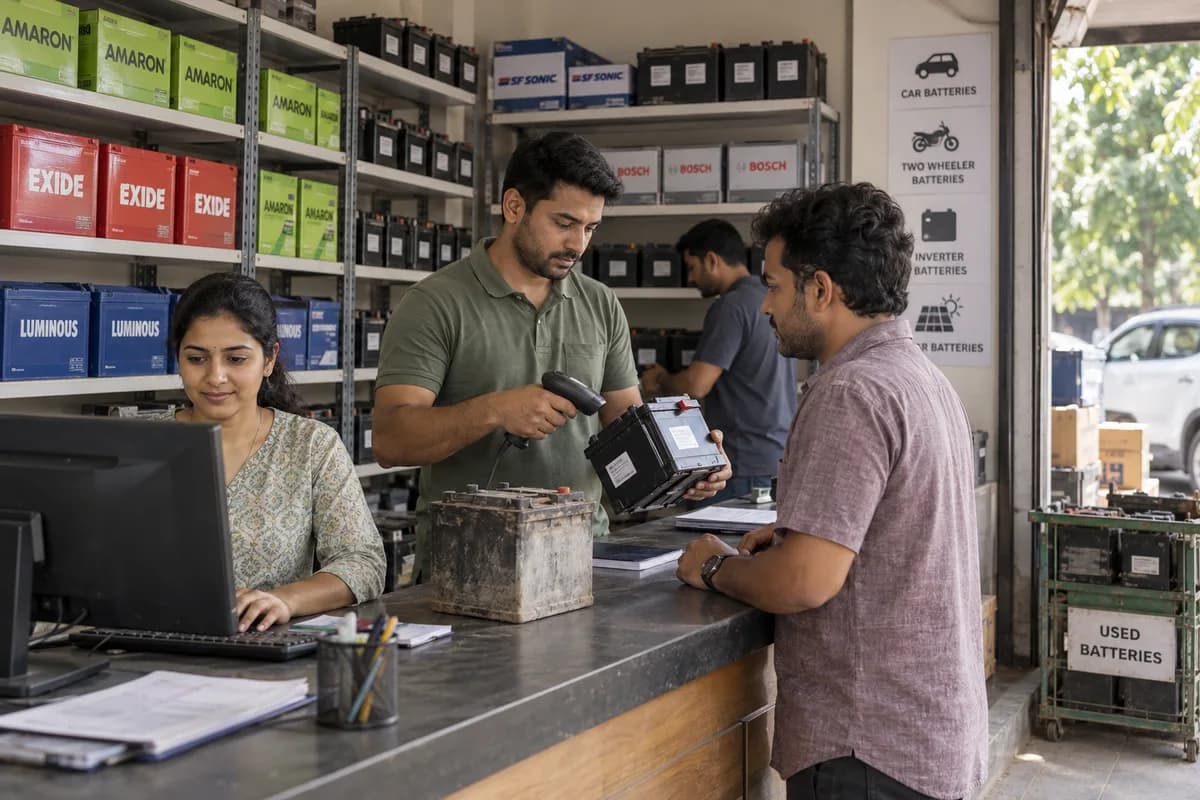
Every battery in the shop carries its serial and manufacturing date code, whether a 12V car unit or a tubular inverter cell. A warranty claim finds the sale in seconds. Old stock shows at the top.
Bring the records the workflow depends on.
- Item tracking rules
- Batch or serial identifiers
- Movement and expiry records
Outputs to check
- Lot or unit movement history
- Trace-forward and trace-back report
- Held or expiring stock list
Follow the batch and serial tracking workflow.
Use this sequence to compare your current process with the proposed module. Agree the owner, permission and exception at each step.
Who uses the module, and who approves?
Keep responsibilities distinct even when one person holds more than one role.
Decide how exceptions are handled.
These business rules belong in configuration and testing. A normal transaction alone does not demonstrate that the workflow is ready.
Can this work independently?
Traceability requires identifiers on the physical goods and their recorded movements. It can run from controlled imports, but goods receipt, production, stock and sales must preserve the same references. A trace report cannot recover identifiers that were never captured at a handoff.
Systems and records it connects with
- Goods receipt: Counted, accepted and rejected supplier-delivery quantities.
- Stock: Item-location quantities and authorised stock movements.
- Quality control: Inspection results and authorised hold or release decisions.
- Invoice management: Issued invoice references, line amounts and outstanding balances.
Configure, test and introduce the workflow.
- You tell us which items carry shelf life or serials. We write back how each will be numbered.
- The storekeeper shows how goods arrive. You get a goods receipt screen to try, with a field for the supplier’s lot. Send current stock. A trial import comes back with gaps listed for the team to fill, using whatever batch details exist.
- Counter and service staff practise. They issue by batch and look up a serial, and you get a trained group and a corrected import.
Check the result before rollout.
Apply these checks to a sample from the agreed workflow, then repeat with an exception. Keep the expected result beside the test record.
- Tracked items cannot move without required identifiers.
- Serial references do not duplicate active units.
- A lot can be traced to its recorded recipients.
How the business operates.
A serial number and a date code are stamped on the lid of each battery that leaves the counter. Months later it returns with a dead cell, and the claim stands or falls on a record the dealer must find in seconds.
The records that hold the operation together.
- Battery stock by brand and serial. Hold stock by brand, model, ampere-hour rating and chemistry, with serial and date code on every unit, and scans at receipt and sale keep the shelf count honest. No stock-taking guesswork.
- Date codes and stock ageing. List units by manufacture date and flag the ones nearing the age at which charge is lost, so the counter picks the oldest unit first. Shelf life is protected.
- Counter billing with exchange rebate. Quote two rates for each model, with or without an old core. The rebate prints on the bill, and the serial is added to the invoice line so the warranty record starts at the counter.
- Sale and warranty record. Tie every serial to a buyer and a date, and read the free-replacement and pro-rata periods from the brand’s terms, so a claim opens straight from the invoice. Proof is already filed.
Operational bottlenecks to check
Serials sit only on the warranty card
The customer loses the card. The dealer cannot show which 150Ah tubular inverter battery went out, or on what date, and the brand rejects the claim.
Old batteries are not counted
Exchange rebates are given at the counter, yet the count of scrap cores received, load-tested, held and sold to the smelter’s buyer is nobody’s figure.
How work flows across this business
This module sits within a wider operating process. Use the sequence to identify the other teams and records affected by a change.
1. Receive stock
Stock arrives against the supplier’s delivery note. Serial and date code are keyed or scanned, and each unit goes on the shelf as a record the counter can find by rating and make.
2. Quote and bill
The counter quotes a rate with and without an old core, raises the bill and ties the serial to the buyer’s name and phone. The warranty period starts from that day.
3. Take back the old core
The returned battery is logged with brand, rating, terminal condition and weight. The rebate shows on the bill, and the core goes into the exchange register to wait for its load test.
4. Handle a warranty case
The bench records open-circuit voltage and the drop test result, tags the unit and sends it to the service centre, and the customer is told where the battery stands. No guessing.
5. Collect trade dues
Garage and electrician accounts show the balance by age. A reminder fires ahead of the credit ceiling, receipts are posted against bills, and old dues stay visible on the list for the collector.
6. Claim brand schemes
Purchases and sales are set against each brand’s slab, and the claim form is prepared from the record when the period closes. Targets are checked as the month runs.
Industry reports to connect with
- Stock by brand, model, serial and manufacture date
- Batteries sold by serial, buyer and warranty end date
- Cores received, tested, held and sold, with rebate allowed
- Warranty cases by stage, brand and age
Questions before implementation.
When should battery dealers consider batch and serial tracking?
Use when physical goods require lot history, expiry control or individual identification. Traceable goods are received, produced or moved.
What should we bring to the requirements discussion?
Bring anonymised examples of Item tracking rules; Batch or serial identifiers; Movement and expiry records. Show who creates, checks and changes each record. Use only records from an activity that meets the suitability conditions above.
Does this replace our existing business software?
The starting point is your current system and the gap you need to close. Trace goods using batch identifiers or individual serial numbers. Configuration, a connected module or a custom build are evaluated against that gap before a replacement is proposed.
What is outside this module?
Traceability does not replace product testing, recall decisions or regulatory obligations.
How are scope, price and rollout decided?
The proposal follows a review of your records, user roles, branches and existing software. Data migration, connections, training and support are scoped separately where needed. Tracked items cannot move without required identifiers. Use this check when reviewing the first working version.
Related functions for battery dealers.
Discuss batch and serial tracking for your business.
Tell us which workflow needs attention and which systems your team uses. The next step is a requirements discussion and a written scope.
What happens after you share your requirements
- We review your brief and the systems you already use.
- We clarify the workflow, missing information and the work to consider first.
- The proposed scope sets out the deliverables, responsibilities and dependencies.
- Review the scope and commercial terms before deciding whether to proceed.
Start with your requirements
Describe your current process, the people involved and the change you need. Start with the details you know; we can clarify the rest together.
Share your requirements