Business solutions for Cattle farms
Explore software for work such as “Cows and buffaloes with milk records”. Review each business function below, including when it fits and what to check before implementation.
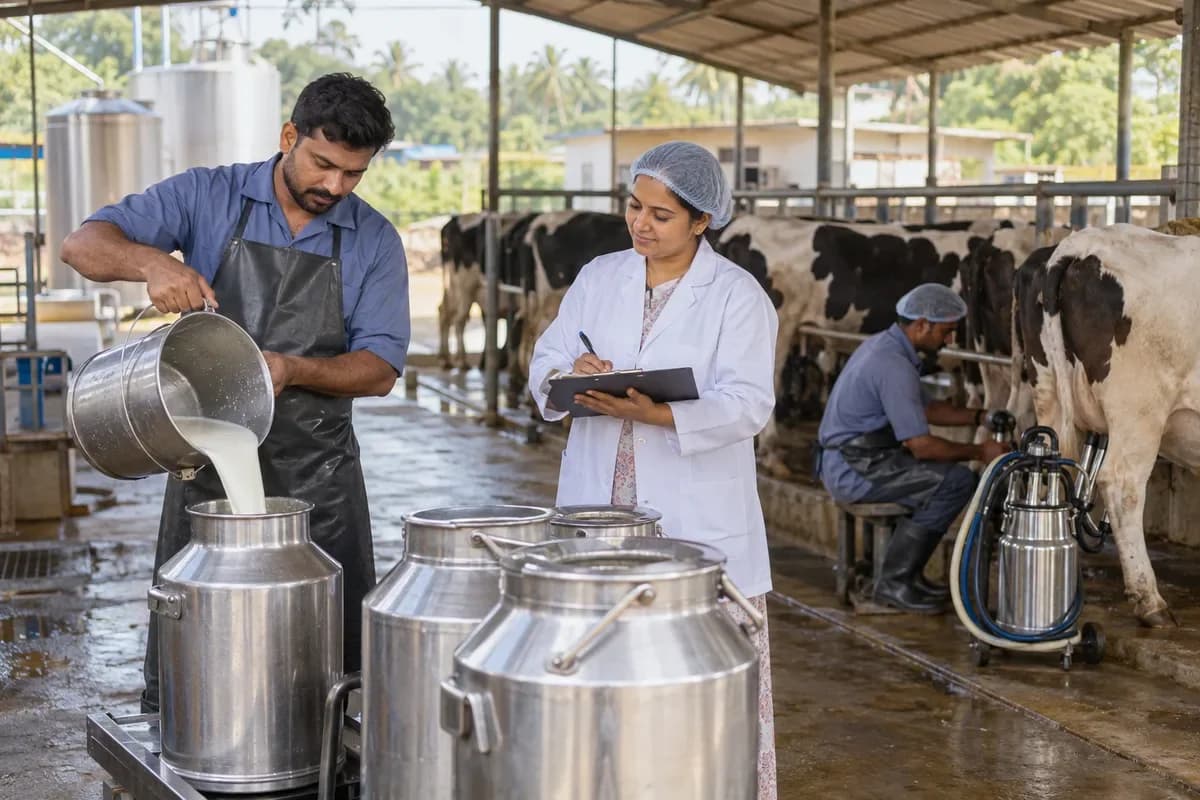
How the business operates.
A herd is managed as groups but earns as individuals. One cow fails to hold at service, another carries a treatment that bars its milk for days, a heifer misses the weight it should reach by breeding age. Each of these sits on a tag number and a date.
The records that hold the operation together.
- Animal register by tag. Hold each animal with ear tag or electronic (RFID) tag number, breed, dam, sire, birth date, sex, pen and status. Every later event on the farm points back to this one record.
- Heat, service and calving log. Record each heat seen, the insemination or bull service and the sire straw used. Calvings, stillbirths and calf details are added, so due dates and calving intervals appear as lists.
- Pregnancy checks and dry-off. Schedule checks for cows served weeks earlier and note the result. Dry-off dates are proposed from expected calving, and the cow moves to the dry group on that day.
- Treatments and withdrawal clock. Log diagnosis, drug, dose, route and the vet. A withdrawal date for milk and for meat is worked out from your drug list, and the animal is held back until it passes.
- Vaccination and deworming calendar. Set the rounds your vet advises, such as foot-and-mouth boosters or parasite control, by age or group. Due animals appear on a list, and the dose given is recorded against each tag.
- Milk yield by cow and tank. Enter litres per cow per milking, or batch totals where cows are not metered. The tank reading and the dairy’s fat figure are set against what the herd produced.
- Ration groups and feed stock. Define rations for lactating, dry, calf, heifer and finisher groups. Concentrate, silage, hay and minerals are issued by group, and stock left is shown against the number of heads.
- Weights and growth. Record scale or tape-measure readings at planned ages. Daily gain is shown for each calf and finisher, so animals falling behind their breed target are listed early.
Operational bottlenecks to check
Milk withdrawal is tracked on a parlour slate
A cow gets treated for mastitis on Monday. The cow’s milk cannot enter the tank until the clearing date has passed. That date is on a slate in the parlour. A new milker misses it, and the tank is contaminated.
Heat and service dates are guessed
The herdsman remembers which cows were seen bulling, but the inseminator wants the date, the sire straw used and the result of the check. Returns to service go unnoticed for another cycle.
Milk is totalled, not traced
The tank figure arrives from the collector, yet nobody can say which cow dropped in yield over the fortnight. Mastitis and poor rations show up late.
Feed is bought against a headcount that changed
Rations are set per group, and groups shift as calves wean and heifers join the herd. Concentrate orders follow last month’s number.
Pedigree and sale papers are rebuilt on demand
A buyer asks for dam, sire, vaccination history and weights of the heifer on offer. Someone searches three registers to answer.
Follow the work across teams.
This is a planning flow. Confirm the steps, owners and approval rules against your actual operation.
Roles and responsibility boundaries.
Reports your managers need.
- Open cows by days since calving, with last service and sire
- Calving interval and expected due dates by month
- Animals under milk or meat withdrawal, with clearing dates
- Milk yield per cow per lactation, against the tank statement
- Feed issued per group, cost per litre and cost per kilogram of gain
- Weight gain by calf and finisher against breed target
- Sales and culls with weight, age and buyer
Connections to scope
- RFID tag readers
- Weighing scale entry
- SMS
- Accounting export
Confirm data access, record ownership and the exchange method for each connection. Inclusion here does not mean every connection is available in a standard package.
Setup decisions and adoption risks.
Use these requirements to plan phases, data migration and user training. Agree the release sequence after reviewing your current systems.
Limitations to settle before implementation
- A smallholder milking two cows by hand can manage with a notebook, a wall calendar and a note of vet visits.
- Goat, sheep, poultry or fish operations will find Goat and Sheep Farm Management Software or a poultry-specific system a closer fit.
Modules to consider first.
These functions connect to the operating model above. Confirm each one against the work your business actually runs.
Choose the operation you want to improve.
Use these activities to explain your scope. Your business does not need every function in the directory.
- Cows and buffaloes with milk records
- Pregnant heifers
- Desi cattle for A2 dairies
- Bulk supply to start-up dairies
- Calves and breeding bulls
- Transport and delivery arrangement
- Buyer visit scheduling
Explore the business functions.
Production, stock, fleet and recurring billing functions apply only where your business runs those activities. Read the suitability conditions on each page.
Project Management
Manufacturing
Finance & Accounting
Inventory Management
Field Service
Procurement
Start with the problem your team can describe.
Bring a sample record and show where information is copied, missed or waiting for approval. Scope the first useful change from there.
What happens after you share your requirements
- We review your brief and the systems you already use.
- We clarify the workflow, missing information and the work to consider first.
- The proposed scope sets out the deliverables, responsibilities and dependencies.
- Review the scope and commercial terms before deciding whether to proceed.
Start with your requirements
Describe your current process, the people involved and the change you need. Start with the details you know; we can clarify the rest together.
Share your requirements