Attendance & Time Tracking for Cattle farms
Record working time, absence and approved attendance corrections.
Does this function belong in your operation?
Use when staff attendance or working time affects pay, deployment or reporting.
A shift starts, ends or needs correction.
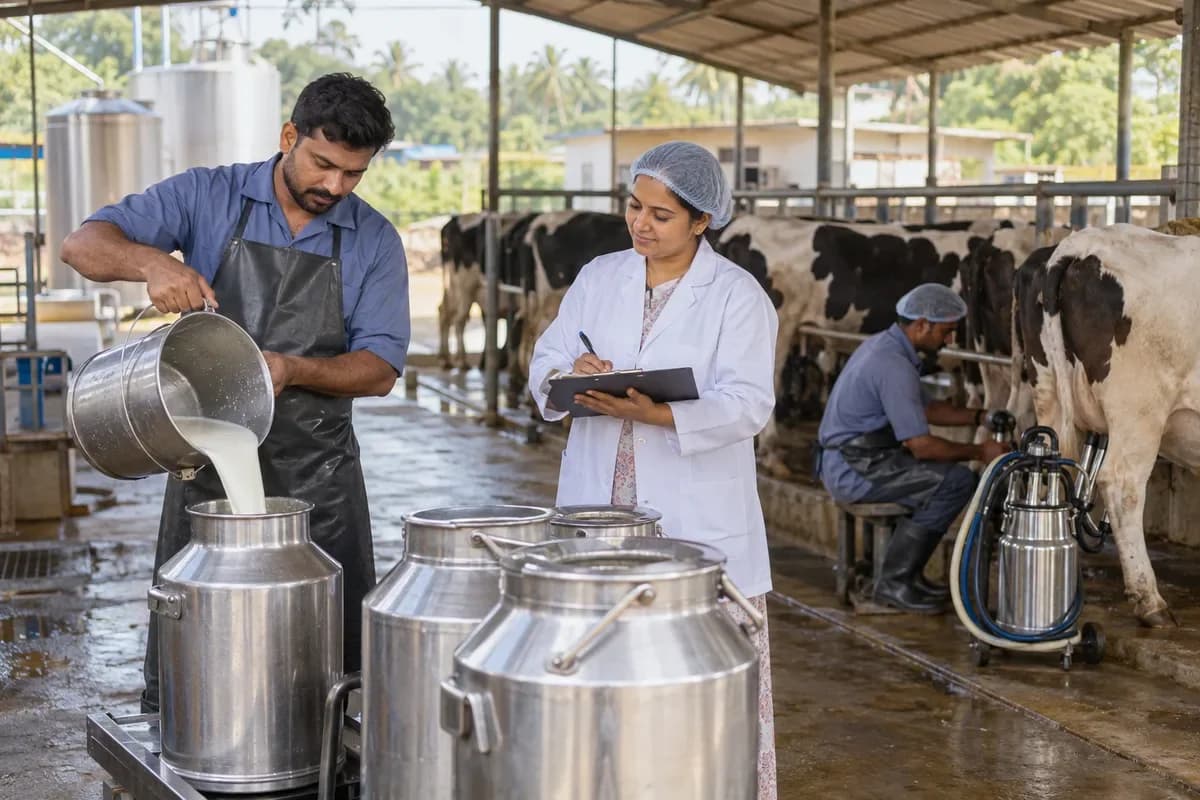
Milkers, feeders and the night watch are marked present against each shift. Overtime for a long calving night is noted separately. Monthly pay is worked from that record.
Bring the records the workflow depends on.
- Employee and shift list
- Attendance sources
- Overtime and correction rules
Outputs to check
- Approved attendance register
- Correction and overtime history
- Payroll-ready period totals
Follow the attendance & time tracking workflow.
Use this sequence to compare your current process with the proposed module. Agree the owner, permission and exception at each step.
Who uses the module, and who approves?
Keep responsibilities distinct even when one person holds more than one role.
Decide how exceptions are handled.
These business rules belong in configuration and testing. A normal transaction alone does not demonstrate that the workflow is ready.
Can this work independently?
Attendance can use manual entries or imported device records. Employee and shift identifiers are required; payroll, leave and project time are separate processes. Device integration must define how missing, duplicated or delayed events are reconciled before a period closes.
Systems and records it connects with
- Payroll management: Approved pay inputs, deduction calculations and payment instructions.
- Leave and holiday management: Approved absence and branch calendar information.
- Project time tracking: Approved task hours and their billable classification.
- Biometric attendance devices: Device event imports and rejected or duplicated attendance events.
Configure, test and introduce the workflow.
- We go through the register, the sheets and the machine reports in use today. You supply samples from a recent month. You get back a written note of how attendance flows.
- Shifts, grace periods, half day and overtime rules are listed in plain words. You confirm them. A rules sheet comes back that you can show staff. We look at the biometric model and at each place where marking happens. You say who marks where. A note returns on what connects directly and what needs a file.
- Last month’s records are loaded into a trial screen. The admin team compares the result with the sheet they really used. Differences are discussed. Supervisors and the admin team practise marking and correcting. You choose the start date. The old register retires after a clean month close.
Check the result before rollout.
Apply these checks to a sample from the agreed workflow, then repeat with an exception. Keep the expected result beside the test record.
- Overnight shifts use the correct dates.
- Corrections retain the approver.
- Approved totals reconcile with the attendance period.
How the business operates.
A herd is managed as groups but earns as individuals. One cow fails to hold at service, another carries a treatment that bars its milk for days, a heifer misses the weight it should reach by breeding age. Each of these sits on a tag number and a date.
The records that hold the operation together.
- Animal register by tag. Hold each animal with ear tag or electronic (RFID) tag number, breed, dam, sire, birth date, sex, pen and status. Every later event on the farm points back to this one record.
- Heat, service and calving log. Record each heat seen, the insemination or bull service and the sire straw used. Calvings, stillbirths and calf details are added, so due dates and calving intervals appear as lists.
- Pregnancy checks and dry-off. Schedule checks for cows served weeks earlier and note the result. Dry-off dates are proposed from expected calving, and the cow moves to the dry group on that day.
- Treatments and withdrawal clock. Log diagnosis, drug, dose, route and the vet. A withdrawal date for milk and for meat is worked out from your drug list, and the animal is held back until it passes.
Operational bottlenecks to check
Milk withdrawal is tracked on a parlour slate
A cow gets treated for mastitis on Monday. The cow’s milk cannot enter the tank until the clearing date has passed. That date is on a slate in the parlour. A new milker misses it, and the tank is contaminated.
Heat and service dates are guessed
The herdsman remembers which cows were seen bulling, but the inseminator wants the date, the sire straw used and the result of the check. Returns to service go unnoticed for another cycle.
How work flows across this business
This module sits within a wider operating process. Use the sequence to identify the other teams and records affected by a change.
1. Birth and tagging
A calf is born and given an ear tag. Dam, sire, sex, birth weight and pen are entered, and the animal joins the register as a calf in its feeding group.
2. Growth and group moves
Weights are taken at set ages. The calf moves from milk feeding to a weaner group and on to heifer or finisher pens, and the ration follows the group.
3. Breeding
Heat is logged, the cow is inseminated or served, and the straw or bull is noted. A pregnancy check date is set. The result moves the cow to in-calf or back to open.
4. Milking and dry-off
Each milking is recorded by cow or by batch. When yield falls or calving nears, a dry-off date is set and the cow moves to the dry group with its own ration.
5. Health and treatment
The vet’s diagnosis, drug and dose go on the animal. A withdrawal date blocks the cow’s milk or sale until it clears, and vaccination rounds are scheduled by group.
6. Sale or exit
A bull calf, cull cow or finished animal is sold on a sale note with the animal’s history attached. A death is recorded with the cause. Either way, the register status is closed.
Industry reports to connect with
- Open cows by days since calving, with last service and sire
- Calving interval and expected due dates by month
- Animals under milk or meat withdrawal, with clearing dates
- Milk yield per cow per lactation, against the tank statement
Questions before implementation.
When should cattle farms consider attendance & time tracking?
Use when staff attendance or working time affects pay, deployment or reporting. A shift starts, ends or needs correction.
What should we bring to the requirements discussion?
Bring anonymised examples of Employee and shift list; Attendance sources; Overtime and correction rules. Show who creates, checks and changes each record. Use only records from an activity that meets the suitability conditions above.
Does this replace our existing business software?
The starting point is your current system and the gap you need to close. Record working time, absence and approved attendance corrections. Configuration, a connected module or a custom build are evaluated against that gap before a replacement is proposed.
What is outside this module?
Location tracking, biometrics and payroll connections require agreed scope and appropriate permissions.
How are scope, price and rollout decided?
The proposal follows a review of your records, user roles, branches and existing software. Data migration, connections, training and support are scoped separately where needed. Overnight shifts use the correct dates. Use this check when reviewing the first working version.
Related functions for cattle farms.
Discuss attendance & time tracking for your business.
Tell us which workflow needs attention and which systems your team uses. The next step is a requirements discussion and a written scope.
What happens after you share your requirements
- We review your brief and the systems you already use.
- We clarify the workflow, missing information and the work to consider first.
- The proposed scope sets out the deliverables, responsibilities and dependencies.
- Review the scope and commercial terms before deciding whether to proceed.
Start with your requirements
Describe your current process, the people involved and the change you need. Start with the details you know; we can clarify the rest together.
Share your requirements