Business solutions for Corrugated box manufacturers
Explore software for work such as “3 ply and 5 ply plain shipping boxes”. Review each business function below, including when it fits and what to check before implementation.
How the business operates.
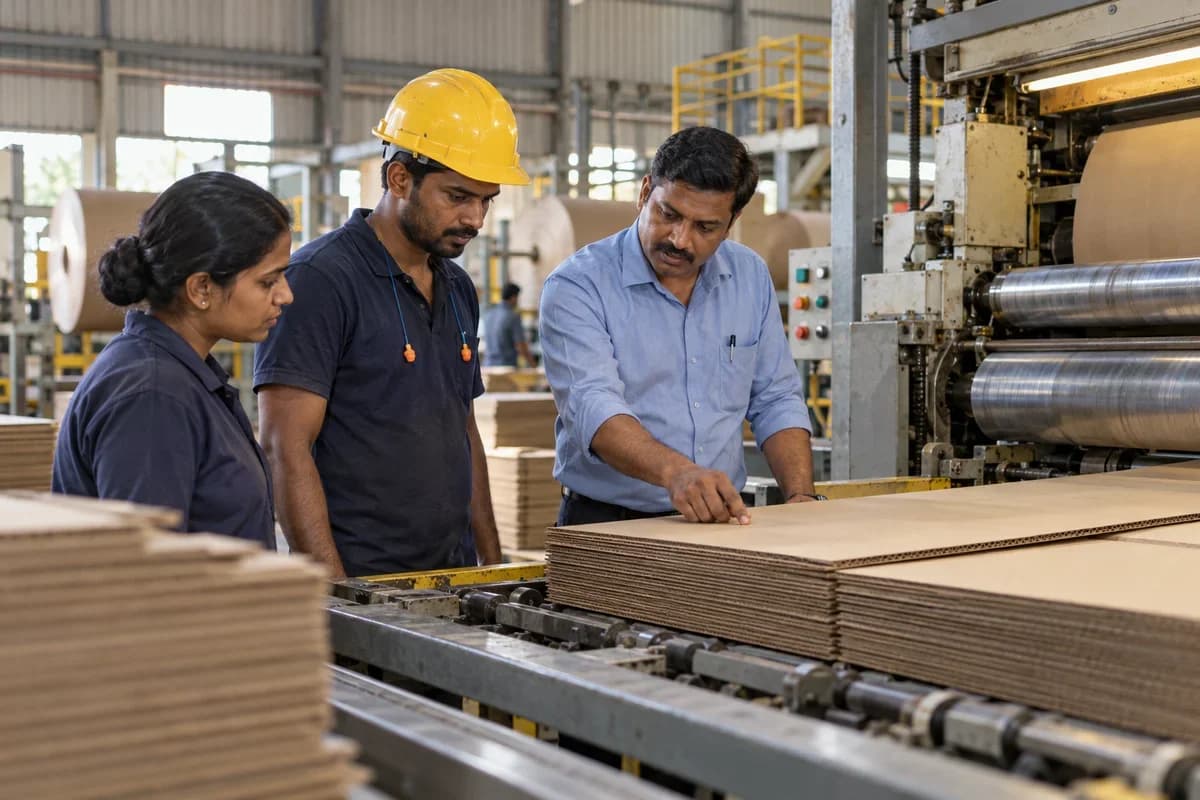
A corrugated plant buys paper by the reel and sells boxes by the thousand. In between, a corrugator glues fluting medium between liners to make sheets, and converting machines slot, score, print and die-cut them. Trim waste at the board edge decides whether a job earns anything. Margins are thin. A buyer who packs fruit, ceramics or machine spares judges the box by what it carries.
The records that hold the operation together.
- Box specification library. Keep inside dimensions, ply, flute, board grade, print colours and the approved sample for every buyer.
- Estimating and quotations. Price boxes from blank size, board weight, print colours and tooling. Every revision is kept for the next enquiry.
- Taking orders and quoting dates. Each quantity and date is checked against corrugator hours first. The buyer’s packing line is then never promised a stack the plant cannot make.
- Liner and medium reel stock. Log each reel on the dock with its grammage, width and mill lot so planners see which can go to the corrugator.
- Corrugator planning. Group orders by board width, sequence flute changes and show which run feeds which converting machine.
- Converting queue. Line up printer slotters, die cutters, stitchers and gluers, with the die and plates each job needs.
- Tooling register for dies and plates. Track each cutting die, creasing rule and print plate with impressions run, repairs and rack position.
- Strength and moisture tests. Record burst, edge crush, box compression and board moisture against the run, and hold a job that fails its limits. A failed job stays on hold.
Operational bottlenecks to check
Board runs lose their paper reels
Liner and medium reels go onto the stands in the order they are racked, and the grammage and supplier lot stay on a slip. The sheets that come out carry no trace.
Trim waste is guessed
The corrugator makes board at one set width, and orders with different blank sizes have to be cut out of that width without leaving too much trim. Nobody can say how much of a reel became box and how much became trim. Quotes stay guesses.
Dies and plates have no register
Cutting dies, creasing rules and print plates sit on racks by habit, and a repeat order waits while someone hunts for the die that was worn out and set aside last season. Hours go.
Strength claims arrive without a test
A buyer reports crushed stacks on a pallet. The burst and compression readings for that board run sit in a notebook under a date. Not a job number.
Bundle counts and print colours drift
A repeat order goes out with the wrong bundle size. Or an older logo. The approved sample lives in a drawer. Nobody checks it.
Follow the work across teams.
This is a planning flow. Confirm the steps, owners and approval rules against your actual operation.
Roles and responsibility boundaries.
Reports your managers need.
- Board runs by flute and width
- Reel use against sheets produced
- Trim per order and shift
- Tests per run with pass or hold status
- Dies and plates by impressions since repair
- Bundles dispatched by buyer
- Open invoices per buyer, longest unpaid at the top
Connections to scope
- Barcode and bundle label printing
- Weighing scale input
- WhatsApp or other messaging
- Accounting software export
Confirm data access, record ownership and the exchange method for each connection. Inclusion here does not mean every connection is available in a standard package.
Setup decisions and adoption risks.
Use these requirements to plan phases, data migration and user training. Agree the release sequence after reviewing your current systems.
Limitations to settle before implementation
- Cutting a few boxes by hand from bought sheets is simple enough to run from a paper book.
- Printers of thin paperboard cartons will find Folding Carton Manufacturer Management Software closer.
Modules to consider first.
These functions connect to the operating model above. Confirm each one against the work your business actually runs.
Choose the operation you want to improve.
Use these activities to explain your scope. Your business does not need every function in the directory.
- 3 ply and 5 ply plain shipping boxes
- 7 ply heavy duty export boxes
- Printed and die-cut retail cartons
- Courier and e-commerce boxes in small lots
- Boxes for produce, mangoes and perishables
- Partitions, inserts and corrugated sheets
- Rate contracts with large buyers
- Repeat orders from factories nearby
Explore the business functions.
Production, stock, fleet and recurring billing functions apply only where your business runs those activities. Read the suitability conditions on each page.
Retail and POS
Manufacturing
Batch and Serial Tracking
Trace goods using batch identifiers or individual serial numbers.
View workflow and suitability →Production Planning
Plan manufacturing quantities against demand, materials and capacity.
View workflow and suitability →Quality Control
Record specified inspections and the disposition of checked goods.
View workflow and suitability →Work Order Management
Track a production job from material issue to completed output.
View workflow and suitability →
Assets and Fleet
Procurement
CRM
Start with the problem your team can describe.
Bring a sample record and show where information is copied, missed or waiting for approval. Scope the first useful change from there.
What happens after you share your requirements
- We review your brief and the systems you already use.
- We clarify the workflow, missing information and the work to consider first.
- The proposed scope sets out the deliverables, responsibilities and dependencies.
- Review the scope and commercial terms before deciding whether to proceed.
Start with your requirements
Describe your current process, the people involved and the change you need. Start with the details you know; we can clarify the rest together.
Share your requirements