Resource and Room Booking for Cricket academies
Reserve shared rooms, equipment or facilities for defined periods.
Does this function belong in your operation?
Use when several people compete for shared rooms, facilities or equipment.
A person or team needs exclusive use of a shared resource.
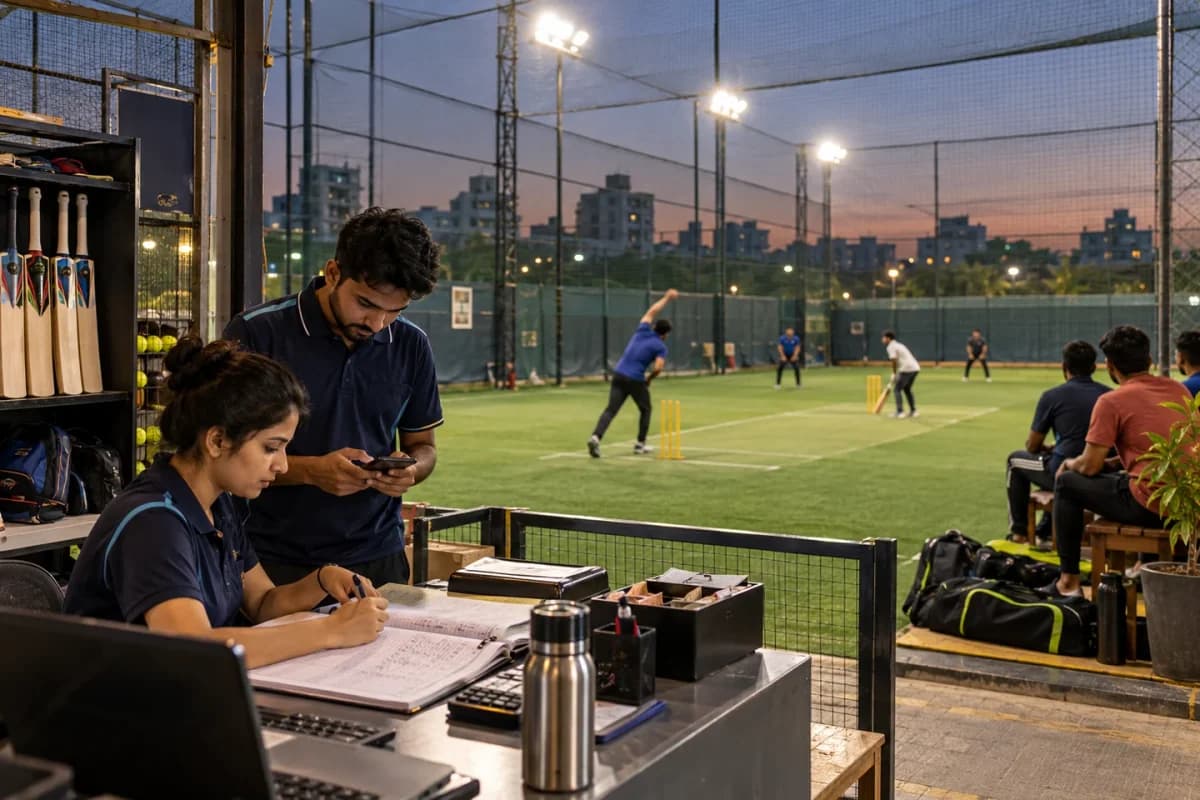
Turf wickets, nets and indoor lanes are booked by batch and coach. Rain closes the turf and moves sessions indoors. Rental slots for outside teams share the same calendar.
Bring the records the workflow depends on.
- Resource list
- Availability calendars
- Eligibility and booking rules
Outputs to check
- Resource reservation calendar
- Approval and access handoff
- Utilisation and cancellation record
Follow the resource and room booking workflow.
Use this sequence to compare your current process with the proposed module. Agree the owner, permission and exception at each step.
Who uses the module, and who approves?
Keep responsibilities distinct even when one person holds more than one role.
Decide how exceptions are handled.
These business rules belong in configuration and testing. A normal transaction alone does not demonstrate that the workflow is ready.
Can this work independently?
Resource booking can run independently with its own calendars and eligible users. Billing, door access and notifications are optional handoffs. Reserving a room or device does not prove that it is prepared, safe or accessible; operational readiness remains with the resource custodian.
Systems and records it connects with
- Online booking portal: Customer booking requests and confirmation references.
- Member records: Eligible users and the booking rights attached to their accounts.
- Invoice management: Issued invoice references, line amounts and outstanding balances.
- Notifications: Approved event messages and delivery or failure status.
Configure, test and introduce the workflow.
- We note rooms and equipment with their rules. You provide plans and rates, and receive a booking policy for review.
- Each plan’s hours and limits are entered. Sample members are used to test them. The board and reminders are set up. Front desk staff try booking, moving and cancelling.
- Extra-hour pricing is connected to invoices. A test bill is checked by accounts. Groups of members receive logins. Usage numbers begin to collect from the first week.
Check the result before rollout.
Apply these checks to a sample from the agreed workflow, then repeat with an exception. Keep the expected result beside the test record.
- Overlapping reservations follow the agreed rule.
- Restricted resources remain limited to eligible users.
- Cancelled bookings release their allocation.
How the business operates.
A cricket academy teaches players of different ages in batches that meet at fixed hours. A morning group of juniors, an evening group of seniors and a weekend group for beginners may all share the same nets. Lanes are few. A coach can only be in one place, and a morning rain-off sends three groups scrambling for the same indoor hall.
The records that hold the operation together.
- Enquiries and trials. Record each enquiry, fix the trial slot and keep the coach’s notes on batting, bowling and fielding with the player’s file.
- Players, parents and batches. Hold the player, the parent contacts, the age group and the batch, with a history of every move from one batch to the next.
- Net and ground booking. Book lanes, the turf wicket and the indoor hall by hour for each batch, and see clashes and rain-offs on a single day view.
- Session attendance. Mark attendance by batch from a phone at the nets, with notes on injuries and late arrivals kept against the player.
Operational bottlenecks to check
Batches overbook the nets
Two coaches plan a session on the same lane at the same hour. One group waits.
Fees lapse without a prompt
A monthly fee falls due on a date that differs for every joiner, so reminders depend on the front desk remembering whose month ended. Some are missed. Parents then pay two months at once, or stop.
How work flows across this business
This module sits within a wider operating process. Use the sequence to identify the other teams and records affected by a change.
1. Enquiry and trial
A parent’s enquiry becomes a record with the player’s age and level sought. A trial slot is fixed, and the coach’s notes from the net session are added afterwards.
2. Enrolment
The player is placed in an age group and batch. The fee plan, kit list and parent contact are set, and the first fee is received.
3. Sessions
Net lanes and the turf wicket are booked by batch and hour. The coach marks attendance, and injuries or drills are noted on the player.
4. Progress
Each term the coach rates skills and fitness on the card. The head coach reads the card before moving a player to a higher batch.
5. Matches
Squads are picked from attendance and form. Consent is collected, travel is planned, and runs and wickets are logged against each player after the match.
6. Fees and renewals
Reminders go out before a cycle ends. Each payment gets a receipt, and anyone whose cycle lapses lands on the desk’s call list.
Industry reports to connect with
- Enrolment by age group and batch
- Attendance by batch and by player
- Fees due, received and lapsed by plan
- Net and ground use by lane and hour
Questions before implementation.
When should cricket academies consider resource and room booking?
Use when several people compete for shared rooms, facilities or equipment. A person or team needs exclusive use of a shared resource.
What should we bring to the requirements discussion?
Bring anonymised examples of Resource list; Availability calendars; Eligibility and booking rules. Show who creates, checks and changes each record. Use only records from an activity that meets the suitability conditions above.
Does this replace our existing business software?
The starting point is your current system and the gap you need to close. Reserve shared rooms, equipment or facilities for defined periods. Configuration, a connected module or a custom build are evaluated against that gap before a replacement is proposed.
What is outside this module?
Reservations do not establish equipment readiness, safety or suitability for a particular use.
How are scope, price and rollout decided?
The proposal follows a review of your records, user roles, branches and existing software. Data migration, connections, training and support are scoped separately where needed. Overlapping reservations follow the agreed rule. Use this check when reviewing the first working version.
Related functions for cricket academies.
Discuss resource and room booking for your business.
Tell us which workflow needs attention and which systems your team uses. The next step is a requirements discussion and a written scope.
What happens after you share your requirements
- We review your brief and the systems you already use.
- We clarify the workflow, missing information and the work to consider first.
- The proposed scope sets out the deliverables, responsibilities and dependencies.
- Review the scope and commercial terms before deciding whether to proceed.
Start with your requirements
Describe your current process, the people involved and the change you need. Start with the details you know; we can clarify the rest together.
Share your requirements