Resource and Room Booking for Denting and painting shops
Reserve shared bodyshop work areas for ready vehicle jobs and record changes to planned use.
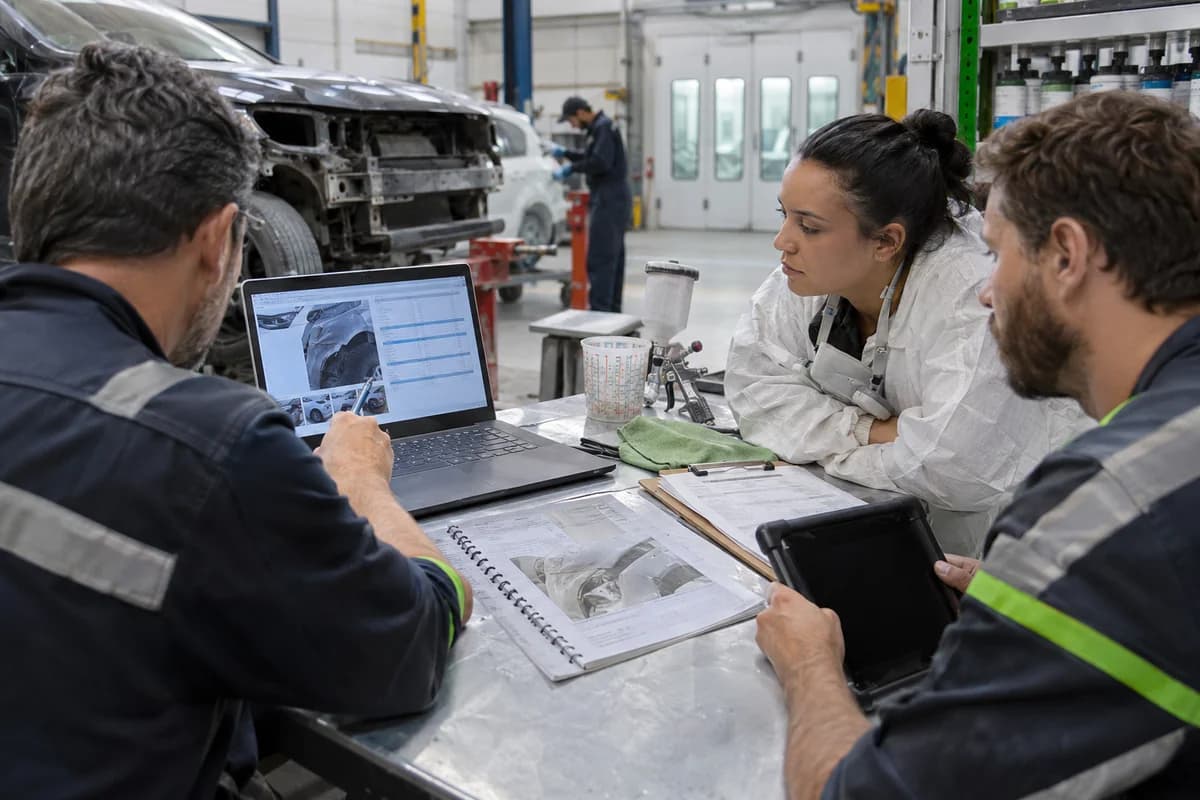
Does this function belong in your operation?
Use only when several vehicle jobs share a booth or work area that requires planned allocation.
A stage planner requests a paint booth or other designated shared area for an identified job.
A paint booth or shared work area has limited capacity, but an empty calendar slot does not mean a vehicle is ready to use it. The planner must see job readiness and area blocks together.
Bring the records the workflow depends on.
- Named work areas, permitted uses and availability blocks
- Vehicle job, planned stage and expected occupancy
- Preceding-stage, material and responsible-person readiness
- Reservation changes, actual use and release status
Outputs to check
- Booth or work-area reservation calendar
- Readiness, conflict and blocked-capacity list
- Actual-use and reallocation history
Follow the resource and room booking workflow.
Use this sequence to compare your current process with the proposed module. Agree the owner, permission and exception at each step.
Who uses the module, and who approves?
Keep responsibilities distinct even when one person holds more than one role.
Decide how exceptions are handled.
These business rules belong in configuration and testing. A normal transaction alone does not demonstrate that the workflow is ready.
Can this work independently?
Run with a maintained area calendar and manual vehicle-job references. Job cards provide readiness information when connected. Technical readiness, maintenance records and staff assignments remain distinct decisions.
Systems and records it connects with
- Job cards: stage request and preparation holds.
- Maintenance records: authorised unavailable periods and clearance references.
- Staff calendars: named operator availability where an agreed connection exists.
Configure, test and introduce the workflow.
- List actual shared areas and permitted uses. Define readiness checks, priority authority and who can block capacity.
- Trial a parts-delayed vehicle, booth outage, overrun and urgent rework request. Review every displaced booking.
- Reconcile future allocations with the physical workshop and open jobs before use. Assign responsibility for actual occupancy updates.
Check the result before rollout.
Apply these checks to a sample from the agreed workflow, then repeat with an exception. Keep the expected result beside the test record.
- A blocked booth cannot be confirmed for the same period.
- A job awaiting parts or preceding work stays visibly unready.
- An overrun identifies affected reservations without silently double-booking the area.
How the business operates.
A vehicle arrives with visible panel damage, but the first estimate does not settle every repair decision. Additional findings, parts availability and an insurer response can change the accepted job. A bodyshop needs a panel-based record connecting assessment, estimate revisions, customer authority, work stages and inspection. Paint reference and comparison evidence belong with that record. Track who is holding the next decision so a car waiting for authorisation does not appear ready for the booth.
The records that hold the operation together.
- Vehicle identity, intake photographs and affected-panel assessment
- Original estimate, supplement versions and item-level acceptance
- Customer work authorisation and separate insurer or surveyor references
- Required parts, received condition, issued materials and returned items
Operational bottlenecks to check
Extra damage creates an unapproved supplement
Attach findings to the changed panel lines and obtain the required decisions. An updated estimate must not overwrite the version on which the customer or insurer previously responded.
A booth slot hides an unresolved hold
Display missing parts, incomplete preceding stages and unanswered authorisation separately from the calendar. The planner needs a ready job and a ready area before the reservation becomes usable work time.
How work flows across this business
This module sits within a wider operating process. Use the sequence to identify the other teams and records affected by a change.
1. Record panel-level intake
Identify the vehicle, damaged areas and pre-existing condition. Preserve photographs with the intake record. A customer’s description starts the assessment; it does not determine the repair method or insurer coverage.
2. Prepare the initial scope
List proposed work by panel and charge type. Note unresolved inspection or parts questions. Present the estimate and retain the exact version shared with the customer and any external reviewer.
3. Control supplements and authorisation
When further findings change the job, record the affected lines, evidence and revised amount. Keep the customer’s work decision separate from an insurer’s funding decision. Hold affected work until the required authority is recorded.
4. Plan ready work and material
Check the accepted scope, required parts and responsible staff. Allocate a shared booth or work area for a job that meets its readiness conditions. A reservation does not confirm equipment readiness or permission to begin.
5. Track stages and inspection findings
Update the vehicle’s actual stage and hold reason. Retain paint and colour references where used. Route a new finding or failed review back to the owner of the decision instead of moving the car forward on a calendar date.
6. Review, hand over and settle
Record final inspection, agreed rework and customer communication. Bill accepted work with the confirmed payer arrangement. Preserve the original job when a customer returns with a concern about a specific repaired panel.
Industry reports to connect with
- Vehicles by actual stage, hold reason and responsible person
- Open supplements awaiting customer or external decisions
- Parts shortages and material usage linked to accepted panel work
- Shared-area reservations, overruns and blocked capacity
Questions before implementation.
When should denting and painting shops consider resource and room booking?
Use only when several vehicle jobs share a booth or work area that requires planned allocation. A stage planner requests a paint booth or other designated shared area for an identified job.
What should we bring to the requirements discussion?
Bring anonymised examples of Named work areas, permitted uses and availability blocks; Vehicle job, planned stage and expected occupancy; Preceding-stage, material and responsible-person readiness; Reservation changes, actual use and release status. Show who creates, checks and changes each record. Use only records from an activity that meets the suitability conditions above.
Does this replace our existing business software?
The starting point is your current system and the gap you need to close. Reserve shared bodyshop work areas for ready vehicle jobs and record changes to planned use. Configuration, a connected module or a custom build are evaluated against that gap before a replacement is proposed.
What is outside this module?
This scope is workshop-capacity scheduling. Equipment operation, safety checks and technical permission remain with responsible staff; customer room access and rental billing are outside this workflow.
How are scope, price and rollout decided?
The proposal follows a review of your records, user roles, branches and existing software. Data migration, connections, training and support are scoped separately where needed. A blocked booth cannot be confirmed for the same period. Use this check when reviewing the first working version.
Related functions for denting and painting shops.
Discuss resource and room booking for your business.
Tell us which workflow needs attention and which systems your team uses. The next step is a requirements discussion and a written scope.
What happens after you share your requirements
- We review your brief and the systems you already use.
- We clarify the workflow, missing information and the work to consider first.
- The proposed scope sets out the deliverables, responsibilities and dependencies.
- Review the scope and commercial terms before deciding whether to proceed.
Start with your requirements
Describe your current process, the people involved and the change you need. Start with the details you know; we can clarify the rest together.
Share your requirements