Multi-Branch Consolidation for Farm equipment and tractor dealers
Combine branch records while retaining each branch's operational view.
Does this function belong in your operation?
Use when several branches need consistent records and a combined management view.
Management needs reporting across several operating locations.
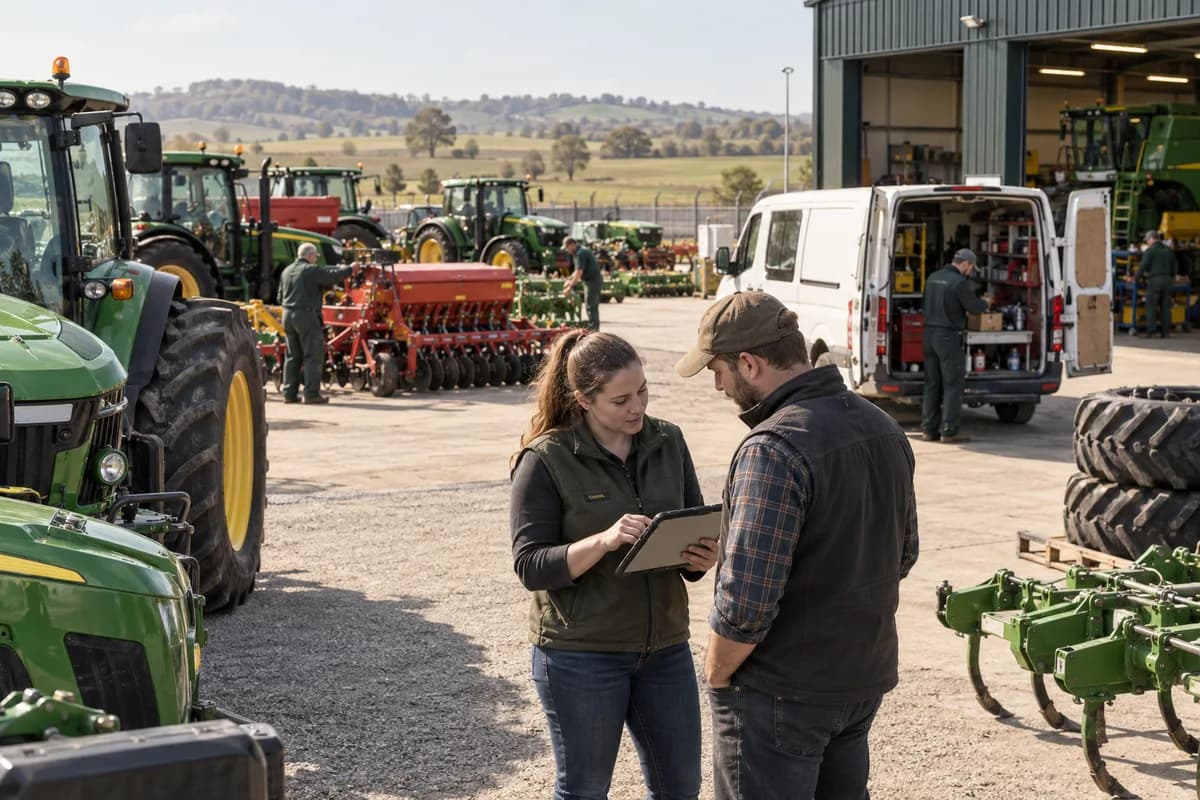
Dealerships in several districts keep their own stock and sales but report into one view. Owners compare tractor sales and parts turnover by branch. A short part may sit at another outlet.
Bring the records the workflow depends on.
- Branch list
- Shared master data
- Consolidation rules
Outputs to check
- Branch and combined reporting views
- Shared master-data register
- Inter-branch reconciliation list
Follow the multi-branch consolidation workflow.
Use this sequence to compare your current process with the proposed module. Agree the owner, permission and exception at each step.
Who uses the module, and who approves?
Keep responsibilities distinct even when one person holds more than one role.
Decide how exceptions are handled.
These business rules belong in configuration and testing. A normal transaction alone does not demonstrate that the workflow is ready.
Can this work independently?
Consolidation needs consistent branch identifiers and source data. Branch systems can remain separate if their imports reconcile. Operational consolidation is distinct from statutory group accounting; separate entities, intercompany entries and currencies need accountant-approved treatment rather than simple addition.
Systems and records it connects with
- Point of sale billing: Counter sales, tender records and authorised returns.
- Stock: Item-location quantities and authorised stock movements.
- Roles and permissions: Named user access and action-level authority.
- Dashboards and KPIs: Defined operational measures with traceable source totals.
Configure, test and introduce the workflow.
- You list outlets, warehouses and who runs them. You get a written structure showing what is shared and what stays local.
- Item lists from each branch are compared. You get a trial merge to correct before anything is combined. A pair of branches bill and transfer on the trial. You hear where the routine differs and the settings are adjusted. Real counters teach fast.
- Other outlets join in turn. Managers are trained on the screens for their branch and on cross-branch stock. The combined figures are shown beside each branch’s own books. The owner and accountant confirm they agree.
Check the result before rollout.
Apply these checks to a sample from the agreed workflow, then repeat with an exception. Keep the expected result beside the test record.
- Group totals reconcile with branch totals.
- Branch users see their permitted scope.
- Inter-branch activity follows the agreed treatment.
How the business operates.
A tractor is sold once and serviced for twenty years. The dealer who keeps its serial number, its hours, the front loader bought with it and every repair on one record is the dealer the farmer rings first. Trust follows the record.
The records that hold the operation together.
- Machine stock by serial number. Hold each tractor, combine, baler and implement with serial, model year, engine hours, location and cost, from inward receipt to sale. Hours roll forward at every visit.
- Farm customer records. Keep each farm with its machines, acreage, crops such as wheat, maize or silage grass, and contacts, so a call about a baler opens the whole fleet.
- Packaged quotations. Quote a tractor with loader, plough or baler as one package, and keep the drawbar, hitch and hydraulic coupler kit each implement needs on the line. Revisions stay on file.
- Trade-ins and used equipment. Value an old machine by hours, tyre wear and condition, log reconditioning cost, and list it with its service history and photographs. The figure comes off the new deal.
Operational bottlenecks to check
Implements are not tied to the tractor
A front loader, a mouldboard plough and a round baler are sold on three invoices. Years later nobody can say which hitch class or hydraulic kit belongs with which machine.
Trade-in values are guesses
Meter hours, tyre wear and attachments are noted on a scrap of paper. The used list shows a price with no basis behind it. Buyers notice.
How work flows across this business
This module sits within a wider operating process. Use the sequence to identify the other teams and records affected by a change.
1. Enquiry
A farmer asks about a machine by phone or at a field day, and the salesperson records the crop, the acreage and the tractors already on the farm.
2. Quote and demo
A package lists the tractor, loader, plough or baler, attachments, trade-in and finance, and a demo machine is lent against a date and comes back with its hours.
3. Order and delivery
The deposit is received. The machine is reserved, then set up with ballast weights, tyres and hydraulic couplers, and the farmer signs at handover with hours and serial numbers recorded.
4. Seasonal readiness
Before planting and harvest, the parts counter raises orders for belts, knives, twine and filters against last season’s sales, and the workshop books pre-season service for sprayers and balers.
5. Service and field calls
Breakdowns and scheduled service become jobs. A field truck leaves with the parts list pulled, and the technician writes up hours, work done and any worn coulter or seized bearing at the farm.
6. Warranty and used sales
Claims go to the manufacturer with the record attached. Traded machines are reconditioned, then listed with their service history and photographs of the cab and the hydraulics, so the next buyer sees the hours and repairs.
Industry reports to connect with
- Machines in stock by model, hours and age
- Demo machines on loan and days out
- Trade-ins valued against price achieved
- Belts and filters sold weekly against earlier seasons
Questions before implementation.
When should farm equipment and tractor dealers consider multi-branch consolidation?
Use when several branches need consistent records and a combined management view. Management needs reporting across several operating locations.
What should we bring to the requirements discussion?
Bring anonymised examples of Branch list; Shared master data; Consolidation rules. Show who creates, checks and changes each record. Use only records from an activity that meets the suitability conditions above.
Does this replace our existing business software?
The starting point is your current system and the gap you need to close. Combine branch records while retaining each branch's operational view. Configuration, a connected module or a custom build are evaluated against that gap before a replacement is proposed.
What is outside this module?
Separate legal entities, currencies and accounting consolidation require additional rules.
How are scope, price and rollout decided?
The proposal follows a review of your records, user roles, branches and existing software. Data migration, connections, training and support are scoped separately where needed. Group totals reconcile with branch totals. Use this check when reviewing the first working version.
Related functions for farm equipment and tractor dealers.
Discuss multi-branch consolidation for your business.
Tell us which workflow needs attention and which systems your team uses. The next step is a requirements discussion and a written scope.
What happens after you share your requirements
- We review your brief and the systems you already use.
- We clarify the workflow, missing information and the work to consider first.
- The proposed scope sets out the deliverables, responsibilities and dependencies.
- Review the scope and commercial terms before deciding whether to proceed.
Start with your requirements
Describe your current process, the people involved and the change you need. Start with the details you know; we can clarify the rest together.
Share your requirements