Business solutions for Flour mills
Explore software for work such as “Packed atta in kirana shops”. Review each business function below, including when it fits and what to check before implementation.
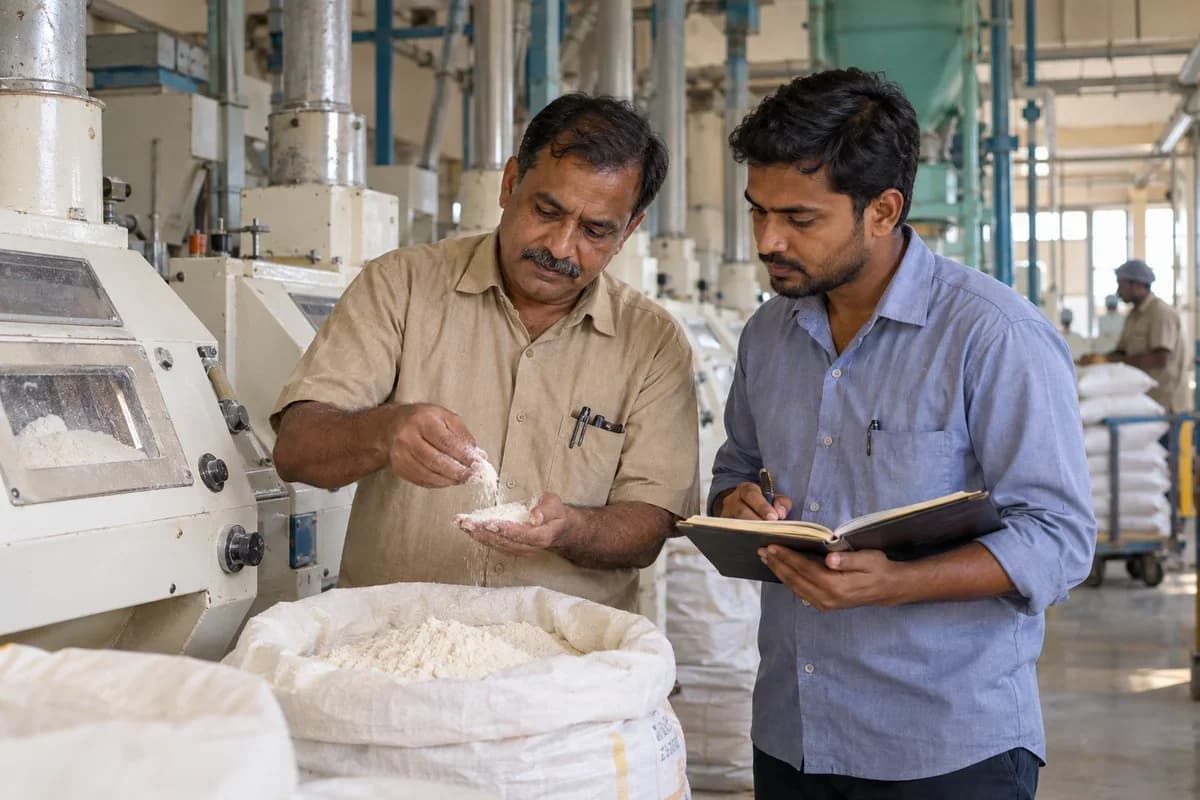
How the business operates.
Wheat varies by crop, protein and moisture, and the blend fed to the rolls decides what kind of flour comes out. Bakers and food makers order flour by grade and specification, and expect each delivery to match the last one.
The records that hold the operation together.
- Wheat purchase and weighbridge. Weigh trucks, sample each lot and record supplier, moisture, protein and gluten, then price it against the agreed rate.
- Silo and bin stock. Show wheat by bin and type, with the quantity drawn and left, so a blend never plans on an empty bin.
- Blend recipes by grade. Store the bin shares for each flour grade, and save the recipe actually used on every run.
- Cleaning and tempering log. Record weight cleaned, water added and rest time, with the loss that came off at the cleaner.
- Milling runs and extraction. Log flour streams and offal for each run, and read extraction by wheat lot and by grade.
- Customer specification tests. Hold protein, ash, moisture and colour limits per customer, and test each batch against them before release.
- Bagging and tanker loads. Count bags by grade and weight, and record bulk loads with the bin and batch they were drawn from.
- Bran and pollard sales. Sell offal by weight to feed makers and credit the income to the run that produced it.
Operational bottlenecks to check
The wheat blend is not written down
Bins are mixed by feel. The shift changes the recipe. A baker finds the dough behaves differently from last week, and the mill cannot show which bins were opened, in what share, or by which shift.
Extraction is calculated once a month
Wheat weighed in and flour weighed out are compared on paper after the month closes. Losses in tempering and cleaning go unnoticed for weeks, because nobody weighs the screenings or the water that went into the wheat on a given day.
Flour specifications live in emails
Protein, ash and moisture limits agreed with each bakery sit in old mails and delivery notes, and the tester checks a batch against a number remembered from last season. The tester checks against memory. Disputes follow.
Bag and bulk dispatches are not reconciled
Flour leaves in sacks and tankers. Stock in the bins and stock on the books drift apart. Nobody trusts either.
By-product income is unconnected
Bran and pollard are sold by weight to feed makers. Their income is never read against the wheat that produced them. The true margin stays hidden.
Follow the work across teams.
This is a planning flow. Confirm the steps, owners and approval rules against your actual operation.
Roles and responsibility boundaries.
Reports your managers need.
- Extraction rate by wheat lot, grade and month
- Wheat stock by bin and type
- Flour batches with test results against customer limits
- Bran and pollard sales by buyer
- Bag and bulk dispatch by customer
- Customer balances, oldest first
Connections to scope
- Weighbridge scale import
- Barcode and label printing
- Accounting export
Confirm data access, record ownership and the exchange method for each connection. Inclusion here does not mean every connection is available in a standard package.
Setup decisions and adoption risks.
Use these requirements to plan phases, data migration and user training. Agree the release sequence after reviewing your current systems.
Limitations to settle before implementation
- A small stone grinder serving households by weight can keep a paper register.
- Rice processors will find Rice Mill Management Software closer to their paddy and polishing steps.
Modules to consider first.
These functions connect to the operating model above. Confirm each one against the work your business actually runs.
Choose the operation you want to improve.
Use these activities to explain your scope. Your business does not need every function in the directory.
- Packed atta in kirana shops
- Home and apartment delivery of fresh flour
- Bakery and sweet maker supply
- Hostel, mess and institutional contracts
- Multigrain and millet flour lines
- Distributor appointment in new wards and towns
- Private label packing
- Festival season sales
- Online and quick commerce listings
Explore the business functions.
Production, stock, fleet and recurring billing functions apply only where your business runs those activities. Read the suitability conditions on each page.
Assets and Fleet
Manufacturing
Batch and Serial Tracking
Trace goods using batch identifiers or individual serial numbers.
View workflow and suitability →Bill of Materials
Define the materials and quantities needed for a manufactured item.
View workflow and suitability →Production Planning
Plan manufacturing quantities against demand, materials and capacity.
View workflow and suitability →Quality Control
Record specified inspections and the disposition of checked goods.
View workflow and suitability →
Sales and Distribution
Procurement
Inventory Management
Start with the problem your team can describe.
Bring a sample record and show where information is copied, missed or waiting for approval. Scope the first useful change from there.
What happens after you share your requirements
- We review your brief and the systems you already use.
- We clarify the workflow, missing information and the work to consider first.
- The proposed scope sets out the deliverables, responsibilities and dependencies.
- Review the scope and commercial terms before deciding whether to proceed.
Start with your requirements
Describe your current process, the people involved and the change you need. Start with the details you know; we can clarify the rest together.
Share your requirements