Warehouse Management for Flour mills
Track physical stock by warehouse location and movement.
Does this function belong in your operation?
Use when stock must be located and moved across warehouses, bins or sites.
Goods enter, leave or move within storage locations.
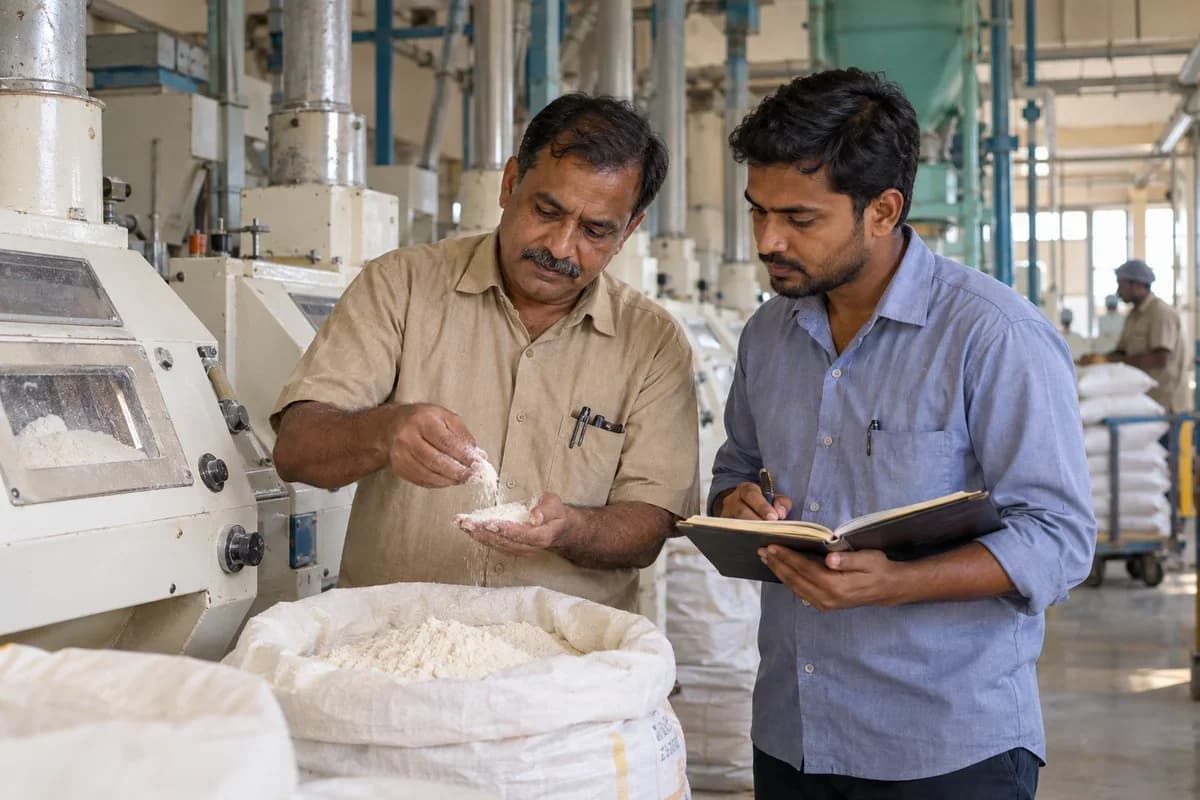
Bagged flour, semolina and bran are stacked by grade, pack size and date. Loaders see which stack to pick first. Space in the godown is shown before the next run fills it.
Bring the records the workflow depends on.
- Warehouse and bin structure
- Item handling rules
- Opening stock by location
Outputs to check
- Location-level stock record
- Picking and transfer documents
- Count and in-transit exception list
Follow the warehouse management workflow.
Use this sequence to compare your current process with the proposed module. Agree the owner, permission and exception at each step.
Who uses the module, and who approves?
Keep responsibilities distinct even when one person holds more than one role.
Decide how exceptions are handled.
These business rules belong in configuration and testing. A normal transaction alone does not demonstrate that the workflow is ready.
Can this work independently?
Warehouse control needs item definitions, opening quantities and location rules. Goods receipt, sales dispatch and transfers supply movement references. It can run independently through entered instructions, but accounting value and customer invoicing remain outside physical warehouse execution.
Systems and records it connects with
- Stock tracking and alerts: Item-location quantities and authorised stock movements.
- Goods receipt: Counted, accepted and rejected supplier-delivery quantities.
- Multi-outlet stock: Outlet quantities and acknowledged transfer movements.
- Transport documents: Consignment details and authorised movement-document references.
Configure, test and introduce the workflow.
- We walk through each location and its layout. You supply stock lists, and a location plan returns.
- Sites, racks and sections are named. Staff check the names against signage. Balances are loaded per location. Counts confirm the load before use.
- Transfer notes and pick lists are tested across nearby sites. Loaders say what to change. Each storekeeper is given a location of their own. Live movement begins on an agreed day.
Check the result before rollout.
Apply these checks to a sample from the agreed workflow, then repeat with an exception. Keep the expected result beside the test record.
- Transfers reduce and increase the correct locations.
- In-transit stock remains identifiable.
- Counts reconcile with approved adjustments.
How the business operates.
Wheat varies by crop, protein and moisture, and the blend fed to the rolls decides what kind of flour comes out. Bakers and food makers order flour by grade and specification, and expect each delivery to match the last one.
The records that hold the operation together.
- Wheat purchase and weighbridge. Weigh trucks, sample each lot and record supplier, moisture, protein and gluten, then price it against the agreed rate.
- Silo and bin stock. Show wheat by bin and type, with the quantity drawn and left, so a blend never plans on an empty bin.
- Blend recipes by grade. Store the bin shares for each flour grade, and save the recipe actually used on every run.
- Cleaning and tempering log. Record weight cleaned, water added and rest time, with the loss that came off at the cleaner.
Operational bottlenecks to check
The wheat blend is not written down
Bins are mixed by feel. The shift changes the recipe. A baker finds the dough behaves differently from last week, and the mill cannot show which bins were opened, in what share, or by which shift.
Extraction is calculated once a month
Wheat weighed in and flour weighed out are compared on paper after the month closes. Losses in tempering and cleaning go unnoticed for weeks, because nobody weighs the screenings or the water that went into the wheat on a given day.
How work flows across this business
This module sits within a wider operating process. Use the sequence to identify the other teams and records affected by a change.
1. Wheat purchase and intake
A truck is weighed and sampled. Moisture, protein, gluten and foreign matter are recorded before it is tipped into a bin.
2. Cleaning and tempering
Wheat is cleaned and tempered with water. Weights, water added and rest time are logged for the run.
3. Blending and milling
The grade recipe selects bins. Roll passages produce flour streams, and the streams are combined into the target grade.
4. Testing
A sample from each flour batch is tested for protein, ash, moisture and colour, and compared with the customer’s limits.
5. Bagging and bulk loading
Flour is bagged by weight or loaded into a tanker. Each order shows the bag counts and the bins the flour came from.
6. Dispatch and receivables
Delivery notes and invoices are raised. Customer balances are tracked until the bakery or biscuit plant pays.
Industry reports to connect with
- Extraction rate by wheat lot, grade and month
- Wheat stock by bin and type
- Flour batches with test results against customer limits
- Bran and pollard sales by buyer
Questions before implementation.
When should flour mills consider warehouse management?
Use when stock must be located and moved across warehouses, bins or sites. Goods enter, leave or move within storage locations.
What should we bring to the requirements discussion?
Bring anonymised examples of Warehouse and bin structure; Item handling rules; Opening stock by location. Show who creates, checks and changes each record. Use only records from an activity that meets the suitability conditions above.
Does this replace our existing business software?
The starting point is your current system and the gap you need to close. Track physical stock by warehouse location and movement. Configuration, a connected module or a custom build are evaluated against that gap before a replacement is proposed.
What is outside this module?
Warehouse software does not replace physical handling, storage-safety or product-care procedures.
How are scope, price and rollout decided?
The proposal follows a review of your records, user roles, branches and existing software. Data migration, connections, training and support are scoped separately where needed. Transfers reduce and increase the correct locations. Use this check when reviewing the first working version.
Related functions for flour mills.
Discuss warehouse management for your business.
Tell us which workflow needs attention and which systems your team uses. The next step is a requirements discussion and a written scope.
What happens after you share your requirements
- We review your brief and the systems you already use.
- We clarify the workflow, missing information and the work to consider first.
- The proposed scope sets out the deliverables, responsibilities and dependencies.
- Review the scope and commercial terms before deciding whether to proceed.
Start with your requirements
Describe your current process, the people involved and the change you need. Start with the details you know; we can clarify the rest together.
Share your requirements