Goods Receipt (GRN) for Label manufacturers
Record what physically arrives against a supplier order.
Does this function belong in your operation?
Use when purchased physical goods need quantity and acceptance checks on arrival.
Purchased goods arrive at a receiving location.
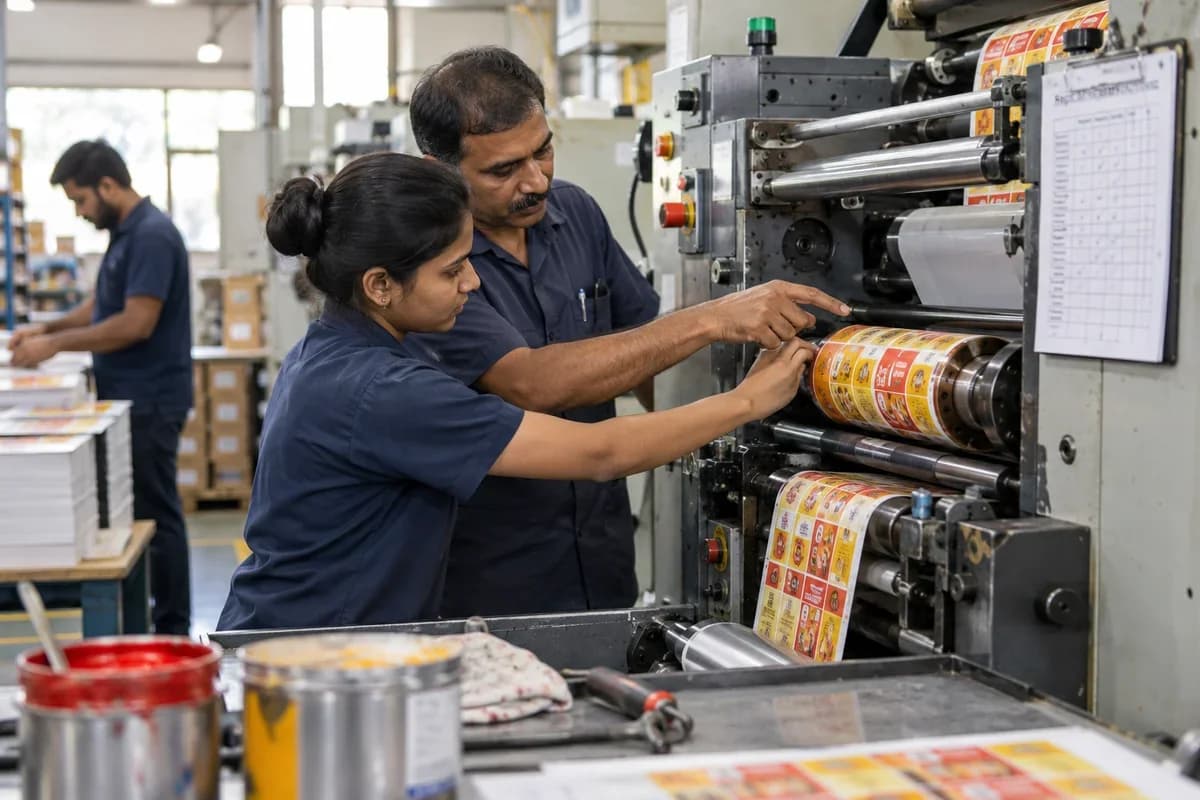
Reels of face stock and adhesive arrive with a delivery note, and the stores clerk counts rolls, widths and metres against it. Damaged cores are noted. Lot numbers are recorded for the press team.
Bring the records the workflow depends on.
- Purchase order
- Delivery note
- Acceptance and storage rules
Outputs to check
- Numbered receipt and inspection record
- Accepted and rejected quantity statement
- Purchase-order balance and bill-match inputs
Follow the goods receipt (grn) workflow.
Use this sequence to compare your current process with the proposed module. Agree the owner, permission and exception at each step.
Who uses the module, and who approves?
Keep responsibilities distinct even when one person holds more than one role.
Decide how exceptions are handled.
These business rules belong in configuration and testing. A normal transaction alone does not demonstrate that the workflow is ready.
Can this work independently?
Goods receipt needs item and supplier references; a purchase order is preferred or an explicitly approved unplanned receipt is required. Stock posting, quality release and invoice approval are separate handoffs. Receiving a delivery note does not prove that the stated goods were counted or accepted.
Systems and records it connects with
- Purchase orders: Authorised supplier commitments and open line balances.
- Stock: Item-location quantities and authorised stock movements.
- Vendor bills: Supplier invoice lines and authorised posting status.
- Quality control: Inspection results and authorised hold or release decisions.
Configure, test and introduce the workflow.
- We watch how material comes in and who signs for it. You describe the problems met at the gate. A short list of what needs recording returns to you.
- Open purchase orders and the item list are brought in. The purchase team checks a sample for accuracy. The storekeeper enters real deliveries on a trial screen next to the paper register. Gaps in the form are found and fixed.
- Hold rules, batch numbers and weighbridge entries are set where they apply. You approve which items need them. Storekeepers and the accounts desk practise on phones and screens. The paper register stops on an agreed date.
Check the result before rollout.
Apply these checks to a sample from the agreed workflow, then repeat with an exception. Keep the expected result beside the test record.
- Receipt quantities link to the purchase order.
- Rejected goods remain distinct from accepted stock.
- Partial deliveries leave the correct balance due.
How the business operates.
A label printer sells small flat items by the million, wound on cores. The material is a sandwich of face stock, adhesive and a silicone liner, and each combination behaves differently on the press and on the customer’s applicator. Narrow web presses print, varnish, foil and die-cut in one pass, so a fault at any station travels with the web until someone stops the press. A single wrong barcode ruins an entire reel. Reprints cost the printer twice.
The records that hold the operation together.
- Label specification library. Keep size, shape, face stock, adhesive, colours, die and unwind direction for every label a customer orders, so a reorder opens the same card. Spot colour recipes sit beside it.
- Estimating and quotations. Price labels from material area, press time, die and finishing, and keep the earlier quote of a reorder beside the new one so short runs are compared fairly. Margins are visible.
- Proof and data approval. File each proof, barcode grade check and variable data file against the job version, so the press runs only the artwork that prepress cleared. Approvals carry the date.
- Label order intake and promised dates. An order gets a promised date once press hours are free and the reel is on the rack, so the sales desk quotes from live capacity. Overbooking shows early.
Operational bottlenecks to check
Material combinations are unrecorded
A label is face stock, adhesive and liner chosen for a surface and a temperature. The reel lot used rarely reaches the job sheet, so an adhesion complaint has no starting point. Complaints stall without a lot number.
Rotary dies are unlogged
Magnetic and solid dies wear with every thousand metres. Die usage by job and remaining cutting length are estimated rather than recorded. Worn dies fail without warning.
How work flows across this business
This module sits within a wider operating process. Use the sequence to identify the other teams and records affected by a change.
1. Artwork and quote
Artwork arrives with label size, material and quantity, and the estimator prices film or paper area, press time, die and finishing before the quote goes out. Reorders copy the old card.
2. Proof and data approval
Prepress proofs colour, checks barcodes and variable data on a verifier, and files the signed approval against the artwork version before plates or digital files are released. Only cleared artwork prints.
3. Material and die check
The operator scans each reel and the system compares its width, face stock and lot with the job card. It then marks the cutting die as free on its rack. A wrong reel never reaches the unwind.
4. Printing and converting
The press prints, varnishes or foils, die-cuts and strips the matrix, and every run notes the reel lot, the anilox and the die that were fitted. Stops are logged.
5. Inspection and rewinding
The web passes under inspection for colour, register and barcode grade, and rolls are wound to the customer’s core and label count. Rejects are tagged and held.
6. Labelling and dispatch
Roll labels print, the packing list travels with the pallet, and the delivery goes out against the order it was cut for. Dispatch scans every roll.
Industry reports to connect with
- Jobs on press by flexo, digital and finishing station
- Face stock consumed against labels delivered
- Make-ready and stripped matrix waste per job
- Barcode grade results per roll
Questions before implementation.
When should label manufacturers consider goods receipt (grn)?
Use when purchased physical goods need quantity and acceptance checks on arrival. Purchased goods arrive at a receiving location.
What should we bring to the requirements discussion?
Bring anonymised examples of Purchase order; Delivery note; Acceptance and storage rules. Show who creates, checks and changes each record. Use only records from an activity that meets the suitability conditions above.
Does this replace our existing business software?
The starting point is your current system and the gap you need to close. Record what physically arrives against a supplier order. Configuration, a connected module or a custom build are evaluated against that gap before a replacement is proposed.
What is outside this module?
A goods receipt does not replace specialist inspection or approval of the supplier's invoice.
How are scope, price and rollout decided?
The proposal follows a review of your records, user roles, branches and existing software. Data migration, connections, training and support are scoped separately where needed. Receipt quantities link to the purchase order. Use this check when reviewing the first working version.
Related functions for label manufacturers.
Discuss goods receipt (grn) for your business.
Tell us which workflow needs attention and which systems your team uses. The next step is a requirements discussion and a written scope.
What happens after you share your requirements
- We review your brief and the systems you already use.
- We clarify the workflow, missing information and the work to consider first.
- The proposed scope sets out the deliverables, responsibilities and dependencies.
- Review the scope and commercial terms before deciding whether to proceed.
Start with your requirements
Describe your current process, the people involved and the change you need. Start with the details you know; we can clarify the rest together.
Share your requirements