Warehouse Management for Medical supplies distributors
Track physical stock by warehouse location and movement.
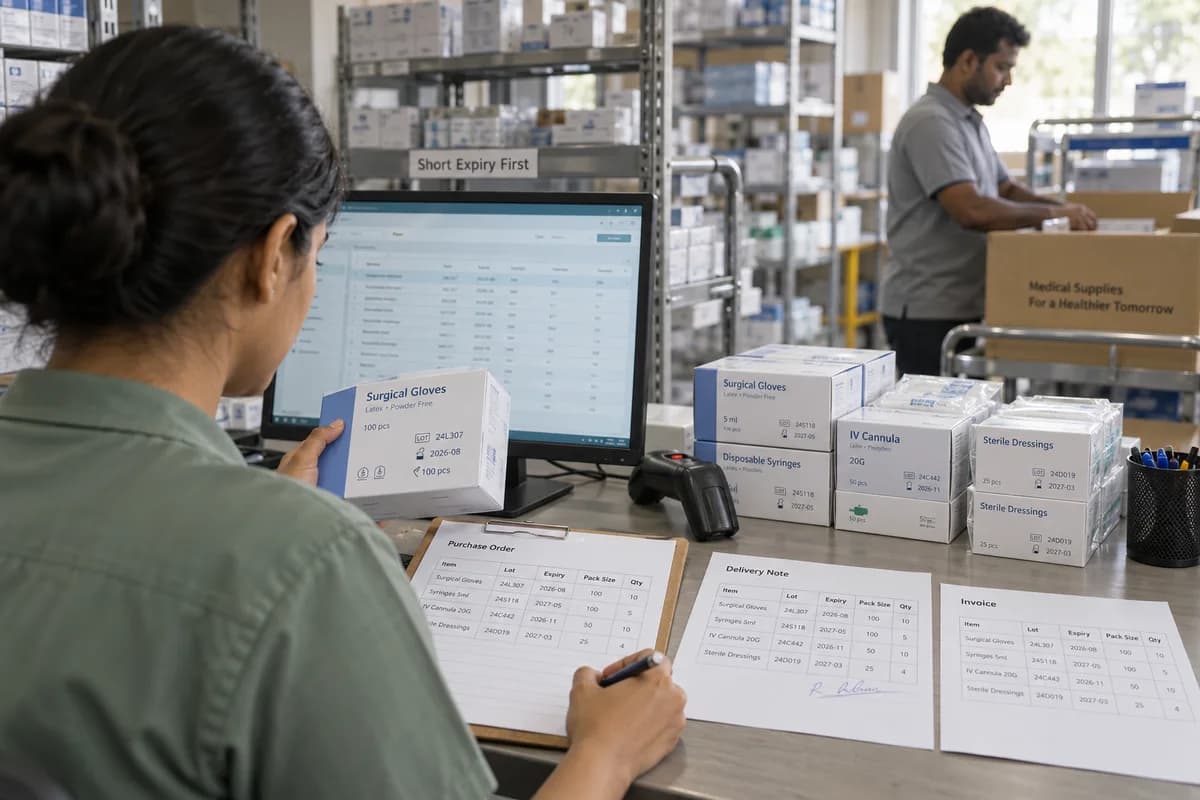
Does this function belong in your operation?
Use when stock must be located and moved across warehouses, bins or sites.
Goods enter, leave or move within storage locations.
A medical-supply warehouse can hold general consumables, restricted implant storage and consignment sets placed at hospitals. Those are different custody locations, not one shelf total. Keep lot, pack unit, ownership and release status attached to movements so a transfer to a hospital does not automatically become a completed sale.
Bring the records the workflow depends on.
- Warehouse, secure storage and consignment locations
- Item, lot, pack unit and relevant expiry data
- Owner and release or restriction status
- Transfer, picking and count-authorisation rules
Outputs to check
- Usable stock by location and item identity
- Consignment quantities awaiting usage or return evidence
- Open transfers and count discrepancies
Follow the warehouse management workflow.
Use this sequence to compare your current process with the proposed module. Agree the owner, permission and exception at each step.
Who uses the module, and who approves?
Keep responsibilities distinct even when one person holds more than one role.
Decide how exceptions are handled.
These business rules belong in configuration and testing. A normal transaction alone does not demonstrate that the workflow is ready.
Can this work independently?
Warehouse control needs item definitions, opening quantities and location rules. Goods receipt, sales dispatch and transfers supply movement references. It can run independently through entered instructions, but accounting value and customer invoicing remain outside physical warehouse execution.
Systems and records it connects with
- Stock tracking and alerts: Item-location quantities and authorised stock movements.
- Goods receipt: Counted, accepted and rejected supplier-delivery quantities.
- Multi-outlet stock: Outlet quantities and acknowledged transfer movements.
- Transport documents: Consignment details and authorised movement-document references.
Configure, test and introduce the workflow.
- We walk through each location and its layout. You supply stock lists, and a location plan returns.
- Sites, racks and sections are named. Staff check the names against signage. Balances are loaded per location. Counts confirm the load before use.
- Transfer notes and pick lists are tested across nearby sites. Loaders say what to change. Each storekeeper is given a location of their own. Live movement begins on an agreed day.
Check the result before rollout.
Apply these checks to a sample from the agreed workflow, then repeat with an exception. Keep the expected result beside the test record.
- Trace a lot through warehouse receipt, hospital consignment and documented return or usage.
- Reconcile a case split and subsequent pick without changing the total physical quantity.
- Confirm restricted and incomplete stock is excluded from routine picking availability.
How the business operates.
Hundreds of small items move every day, each with a lot number, an expiry date and a pack size. The hospital’s order counts single units, while the company’s shipper carton holds a case. A box of 100 gloves becomes a case of ten boxes on one side and a single pair on the other.
The records that hold the operation together.
- Buyer rate contract and purchase order
- Item, lot, expiry and delivery reference
- Consignment set, customer location and actual-use slip
- Signed delivery acknowledgement and buyer receipt reference
Operational bottlenecks to check
Bills return for a missing document
A hospital sends back a bill because the signed goods received note or the order number is missing, and the payment wait starts again from the day of resubmission.
Consignment stock is not reconciled
Bone plates and sutures sit in the operation theatre cupboard, usage is reported late, and the count at the hospital never matches the books. Some usage is never billed.
How work flows across this business
This module sits within a wider operating process. Use the sequence to identify the other teams and records affected by a change.
1. Confirm the buyer order
Identify the buyer’s contract, requested item and delivery location. Resolve rate or item differences before releasing the order.
2. Allocate and dispatch identified stock
Pick the appropriate lots and record the quantities sent with the delivery note. Keep held stock outside available quantities.
3. Record receipt or consignment placement
Capture the customer acknowledgement. For consignment, record what remains at the customer separately from confirmed usage.
4. Bill supported usage or delivery
Reconcile the order, delivery and buyer receipt or actual-use evidence. Missing lot stickers or disputed quantities remain open for review.
5. Follow settlement and traceability
Track submission, approval, deductions and collection. Retain lot-to-customer links for a supplier investigation or recall instruction.
Industry reports to connect with
- Stock and customer holdings by lot and expiry
- Consignment sets awaiting use or return evidence
- Bills submitted, disputed and unpaid
- Customer deliveries linked to supplier lots
Questions before implementation.
When should medical supplies distributors consider warehouse management?
Use when stock must be located and moved across warehouses, bins or sites. Goods enter, leave or move within storage locations.
What should we bring to the requirements discussion?
Bring anonymised examples of Warehouse, secure storage and consignment locations; Item, lot, pack unit and relevant expiry data; Owner and release or restriction status; Transfer, picking and count-authorisation rules. Show who creates, checks and changes each record. Use only records from an activity that meets the suitability conditions above.
Does this replace our existing business software?
The starting point is your current system and the gap you need to close. Track physical stock by warehouse location and movement. Configuration, a connected module or a custom build are evaluated against that gap before a replacement is proposed.
What is outside this module?
Warehouse software does not replace physical handling, storage-safety or product-care procedures.
How are scope, price and rollout decided?
The proposal follows a review of your records, user roles, branches and existing software. Data migration, connections, training and support are scoped separately where needed. Trace a lot through warehouse receipt, hospital consignment and documented return or usage. Use this check when reviewing the first working version.
Related functions for medical supplies distributors.
Discuss warehouse management for your business.
Tell us which workflow needs attention and which systems your team uses. The next step is a requirements discussion and a written scope.
What happens after you share your requirements
- We review your brief and the systems you already use.
- We clarify the workflow, missing information and the work to consider first.
- The proposed scope sets out the deliverables, responsibilities and dependencies.
- Review the scope and commercial terms before deciding whether to proceed.
Start with your requirements
Describe your current process, the people involved and the change you need. Start with the details you know; we can clarify the rest together.
Share your requirements