Shipping Integration for Online pharmacies
Link fulfilment records with the agreed shipping provider.
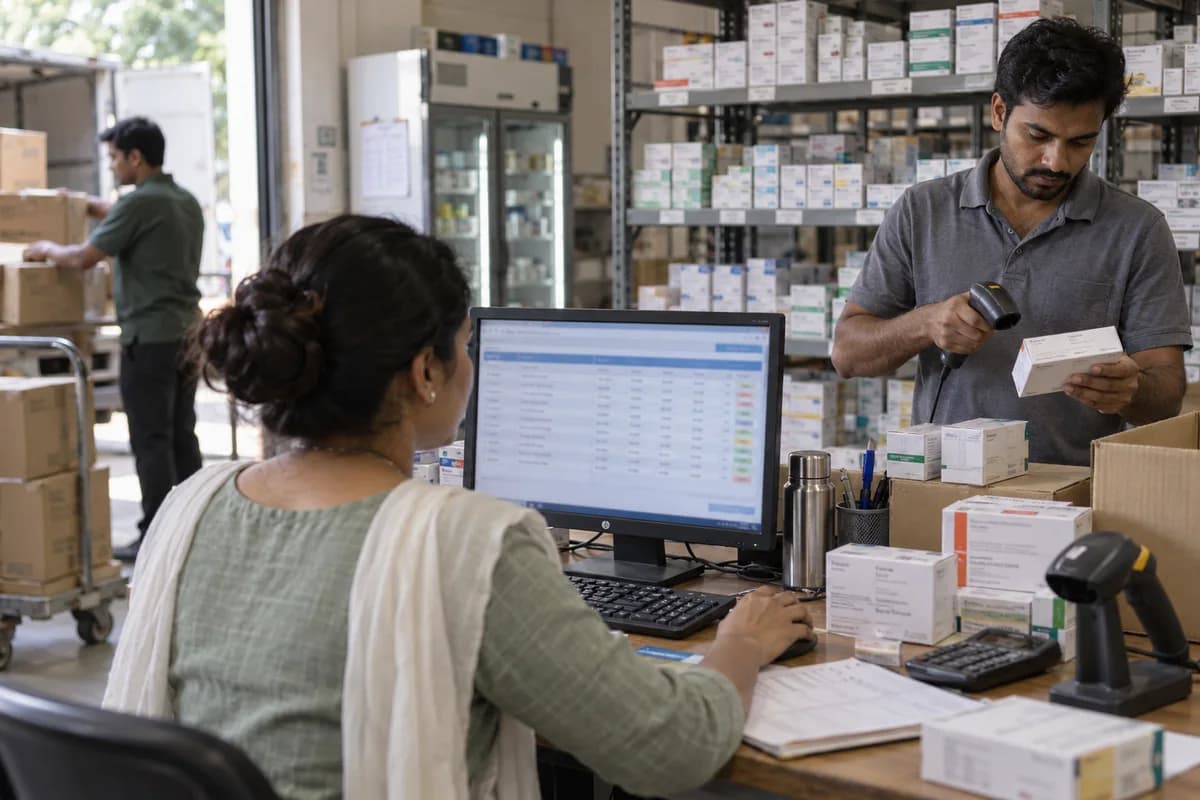
Does this function belong in your operation?
Use when the business dispatches physical goods through shipping providers.
A physical order is ready for dispatch.
Parcels are assigned to a courier at pack time, and the manifest is handed over before the cut-off. Tracking status flows back to the order. Cold boxes go with the right service.
Bring the records the workflow depends on.
- Order and parcel details
- Carrier account access
- Dispatch and tracking rules
Outputs to check
- Carrier booking and label reference
- Shipment status history
- Failed booking and return reconciliation
Follow the shipping integration for order fulfillment workflow.
Use this sequence to compare your current process with the proposed module. Agree the owner, permission and exception at each step.
Who uses the module, and who approves?
Keep responsibilities distinct even when one person holds more than one role.
Decide how exceptions are handled.
These business rules belong in configuration and testing. A normal transaction alone does not demonstrate that the workflow is ready.
Can this work independently?
Shipping needs an order or dispatch reference and supported carrier access. Order, warehouse and customer-notification links exchange the shipment reference. The carrier owns transport events and settlement; booking a parcel is not evidence of physical collection or final delivery.
Systems and records it connects with
- Order management: Confirmed order lines and remaining fulfilment balances.
- Invoice management: Issued invoice references, line amounts and outstanding balances.
- Stock tracking and alerts: Item-location quantities and authorised stock movements.
- Courier and aggregator systems: Supported shipment bookings, carrier references and tracking events.
Configure, test and introduce the workflow.
- You list the couriers and aggregators you use. You get a note on what each allows through a connection.
- Your team enters the credentials for each courier account. A test booking is made in the courier’s test mode. Approval waits can occur. Labels and a manifest are produced for sample orders. The dispatch staff check the layout.
- WhatsApp or SMS wording is agreed. Test messages reach your own phones. A past remittance is matched to orders on the trial. Accounts confirm the shortfall list.
Check the result before rollout.
Apply these checks to a sample from the agreed workflow, then repeat with an exception. Keep the expected result beside the test record.
- Shipment references link to orders.
- Repeated requests do not create unintended duplicate bookings.
- Failed bookings remain available for correction.
How the business operates.
An online pharmacy has no counter. The prescription arrives as a photo, the pharmacist checks it on a screen, and the medicine leaves in a parcel the patient never sees being packed.
The records that hold the operation together.
- Storefront and marketplace orders. Collect baskets from your website, app and marketplace listings into one order queue, with payment status, delivery address and a flag on every line that needs a prescription.
- Prescription upload and verification. Hold each prescription image against its order, and let the pharmacist mark every line accepted, queried or rejected with a name, a time and a typed reason.
- Restricted item rules. Mark medicines that need a valid prescription, a quantity cap, a cold-storage flag or a no-post rule, so the basket is stopped before payment is taken.
- Substitution and generic matching. Offer an equivalent generic pack when a brand is out of stock, and record the pharmacist’s approval and the patient’s consent before the substitute reaches the pick list.
Operational bottlenecks to check
Prescription and order live in different tools
The image arrives through chat or upload while the order sits in the storefront, so proving which pharmacist approved which opioid or antibiotic line means searching two places.
Recall notices cannot be answered quickly
A batch is withdrawn. Without a scan at packing, nobody can list every parcel and every patient that received it, so the search is done by hand.
How work flows across this business
This module sits within a wider operating process. Use the sequence to identify the other teams and records affected by a change.
1. Order intake
A basket arrives from the website, app or marketplace, payment status is recorded, and any line that needs a prescription is flagged on arrival. Nothing skips the queue.
2. Prescription check
The pharmacist opens the uploaded image beside the order, accepts, queries or rejects each line, and records any approved substitution together with the patient’s consent.
3. Picking and batch capture
Packers receive a pick list sorted by shelf, scan the lot and expiry of each pack, and the system stops any line that is near expiry or blocked.
4. Packing and dispatch
The parcel is weighed, labelled and handed to a courier against a manifest, and cold-chain boxes carry a packed-at time with the tracking number sent to the patient. The cold clock starts here.
5. Delivery, returns and complaints
Courier status updates the order, and a returned parcel goes to a holding bin where the pharmacist inspects the seal and decides to restock, destroy or return it. Every outcome carries a reason.
6. Refill and reorder
From the days supplied on each line a refill date is set, the patient receives a reminder by SMS or messaging app, and one tap repeats the last order.
Industry reports to connect with
- Orders waiting for pharmacist review, by age
- Lines rejected or queried, with reason
- Batches dispatched, by patient and parcel
- Cold-chain parcels and courier delay
Questions before implementation.
When should online pharmacies consider shipping integration for order fulfillment?
Use when the business dispatches physical goods through shipping providers. A physical order is ready for dispatch.
What should we bring to the requirements discussion?
Bring anonymised examples of Order and parcel details; Carrier account access; Dispatch and tracking rules. Show who creates, checks and changes each record. Use only records from an activity that meets the suitability conditions above.
Does this replace our existing business software?
The starting point is your current system and the gap you need to close. Link fulfilment records with the agreed shipping provider. Configuration, a connected module or a custom build are evaluated against that gap before a replacement is proposed.
What is outside this module?
Carrier connections, serviceability and delivery outcomes depend on the provider; no delivery time is implied.
How are scope, price and rollout decided?
The proposal follows a review of your records, user roles, branches and existing software. Data migration, connections, training and support are scoped separately where needed. Shipment references link to orders. Use this check when reviewing the first working version.
Related functions for online pharmacies.
Discuss shipping integration for order fulfillment for your business.
Tell us which workflow needs attention and which systems your team uses. The next step is a requirements discussion and a written scope.
What happens after you share your requirements
- We review your brief and the systems you already use.
- We clarify the workflow, missing information and the work to consider first.
- The proposed scope sets out the deliverables, responsibilities and dependencies.
- Review the scope and commercial terms before deciding whether to proceed.
Start with your requirements
Describe your current process, the people involved and the change you need. Start with the details you know; we can clarify the rest together.
Share your requirements