Work Order Management for Packaging machinery manufacturers
Track a production job from material issue to completed output.
Does this function belong in your operation?
Use when physical production needs a job-level record of materials and output.
A production plan releases a specific job.
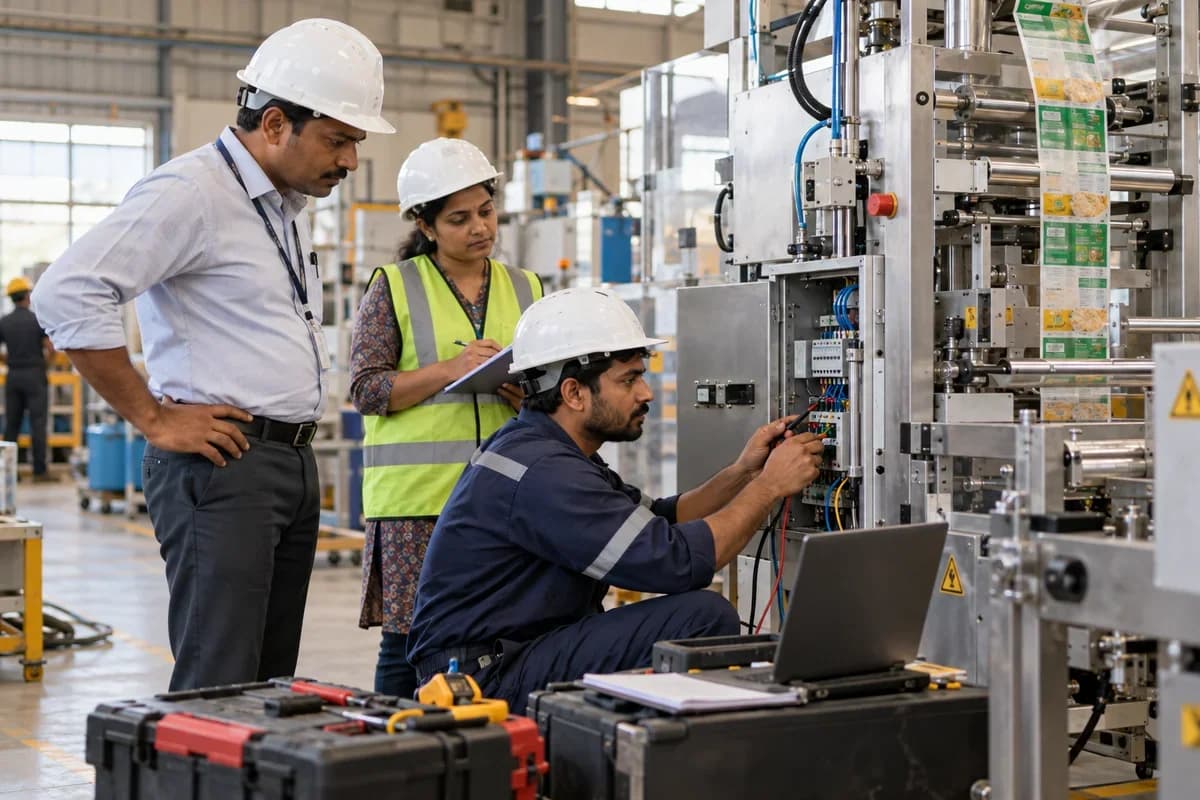
A build order moves a machine through frame welding, stainless fabrication, wiring and mechanical assembly. Supervisors mark each stage. A delayed part shows which machines it holds up.
Bring the records the workflow depends on.
- Required output
- Approved material list
- Process steps and due dates
Outputs to check
- Released production-job record
- Material and output reconciliation
- Work-in-progress and variance list
Follow the work order management workflow.
Use this sequence to compare your current process with the proposed module. Agree the owner, permission and exception at each step.
Who uses the module, and who approves?
Keep responsibilities distinct even when one person holds more than one role.
Decide how exceptions are handled.
These business rules belong in configuration and testing. A normal transaction alone does not demonstrate that the workflow is ready.
Can this work independently?
A work order needs an output definition and process instructions. It can use entered materials and progress, but bill-of-materials, stock and quality links make execution traceable. Sales orders provide demand; closing production is not the same as dispatching or invoicing the finished goods.
Systems and records it connects with
- Bill of materials: Approved component quantities and production-definition versions.
- Production planning: Demand, planned quantities and resource or material constraints.
- Stock: Item-location quantities and authorised stock movements.
- Job work delivery notes: Material dispatch and return references for outside processing.
Configure, test and introduce the workflow.
- Tell us the stages a job passes through, in your words. A stage list comes back to confirm.
- Sales orders are connected, and so is the bill of materials. A sample work order draws on each. A screen shows jobs by stage. The supervisor tries it beside the whiteboard.
- Supervisors and the store use live work orders. The whiteboard is retired after a trial period.
Check the result before rollout.
Apply these checks to a sample from the agreed workflow, then repeat with an exception. Keep the expected result beside the test record.
- Output links to its work order.
- Material usage is traceable.
- Unfinished quantities remain visible.
How the business operates.
A packaging machine leaves the factory with a serial number, a set of change parts for each pack size, and a list of options chosen by the buyer. Months later the buyer rings. A sealing jaw is worn. Which jaw fits that machine is not obvious.
The records that hold the operation together.
- Enquiries and sample trials. Log each packer’s product, pack size and speed target, and keep the sample trial results with the enquiry that follows.
- Model and option quotations. Price a model with chosen options, such as a checkweigher or ink-jet coder, and format sets from your catalogue, keeping every revision and the outcome.
- Serial number register. Hold the serial number, model, options, buyer, plant address and warranty dates for every machine you have sold.
- Build orders and parts lists. Release a standard parts list adjusted for options, issue stores against it and track fabricated and bought-out items.
Operational bottlenecks to check
Options are lost between sales and build
The buyer ordered a date coder and a second film reel stand. The shop builds from the base model, and the omission is found at installation. The buyer is annoyed.
Change parts are tied to nothing
Forming collars, sealing jaws and cartoning guides for each pack size are drawn once and made again and again. Nobody knows which set belongs to which serial number. Work repeats.
How work flows across this business
This module sits within a wider operating process. Use the sequence to identify the other teams and records affected by a change.
1. Enquiry and sample trial
A packer sends a product, a pouch or carton size and a target speed. Sales proposes a model and options, and the trial run on the packer’s sample is logged against the enquiry.
2. Quotation and order
The quotation lists the model, options, change parts and operator training. On order, a serial number is issued and a build order opens from the standard parts list.
3. Fabrication and assembly
Frames, guards and machined parts are made or bought, then servo drives, photo sensors and the machine controller are fitted. Stores issue every item against the build order. Nothing leaves without it.
4. Factory acceptance run
The machine runs on the buyer’s film or cartons. Speed, temperatures and rejects are recorded, and the format set for each pack size is tried and signed.
5. Dispatch and installation
Crating, shipping and the commissioning engineer’s trip are scheduled. Snags found at the plant and the operators trained go onto the machine record before the engineer flies home.
6. Spares and service
Spare orders and service tickets attach to the serial number, with warranty status and earlier repairs on screen.
Industry reports to connect with
- Machines in build by model and promised dispatch date
- Option take-up by model and customer
- Format sets made, by pack size and serial number
- Acceptance runs signed and outstanding
Questions before implementation.
When should packaging machinery manufacturers consider work order management?
Use when physical production needs a job-level record of materials and output. A production plan releases a specific job.
What should we bring to the requirements discussion?
Bring anonymised examples of Required output; Approved material list; Process steps and due dates. Show who creates, checks and changes each record. Use only records from an activity that meets the suitability conditions above.
Does this replace our existing business software?
The starting point is your current system and the gap you need to close. Track a production job from material issue to completed output. Configuration, a connected module or a custom build are evaluated against that gap before a replacement is proposed.
What is outside this module?
This is a production work order; field repairs and customer visits belong in job cards.
How are scope, price and rollout decided?
The proposal follows a review of your records, user roles, branches and existing software. Data migration, connections, training and support are scoped separately where needed. Output links to its work order. Use this check when reviewing the first working version.
Related functions for packaging machinery manufacturers.
Discuss work order management for your business.
Tell us which workflow needs attention and which systems your team uses. The next step is a requirements discussion and a written scope.
What happens after you share your requirements
- We review your brief and the systems you already use.
- We clarify the workflow, missing information and the work to consider first.
- The proposed scope sets out the deliverables, responsibilities and dependencies.
- Review the scope and commercial terms before deciding whether to proceed.
Start with your requirements
Describe your current process, the people involved and the change you need. Start with the details you know; we can clarify the rest together.
Share your requirements