Attendance & Time Tracking for Plumbing contractors
Record working time, absence and approved attendance corrections.
Does this function belong in your operation?
Use when staff attendance or working time affects pay, deployment or reporting.
A shift starts, ends or needs correction.
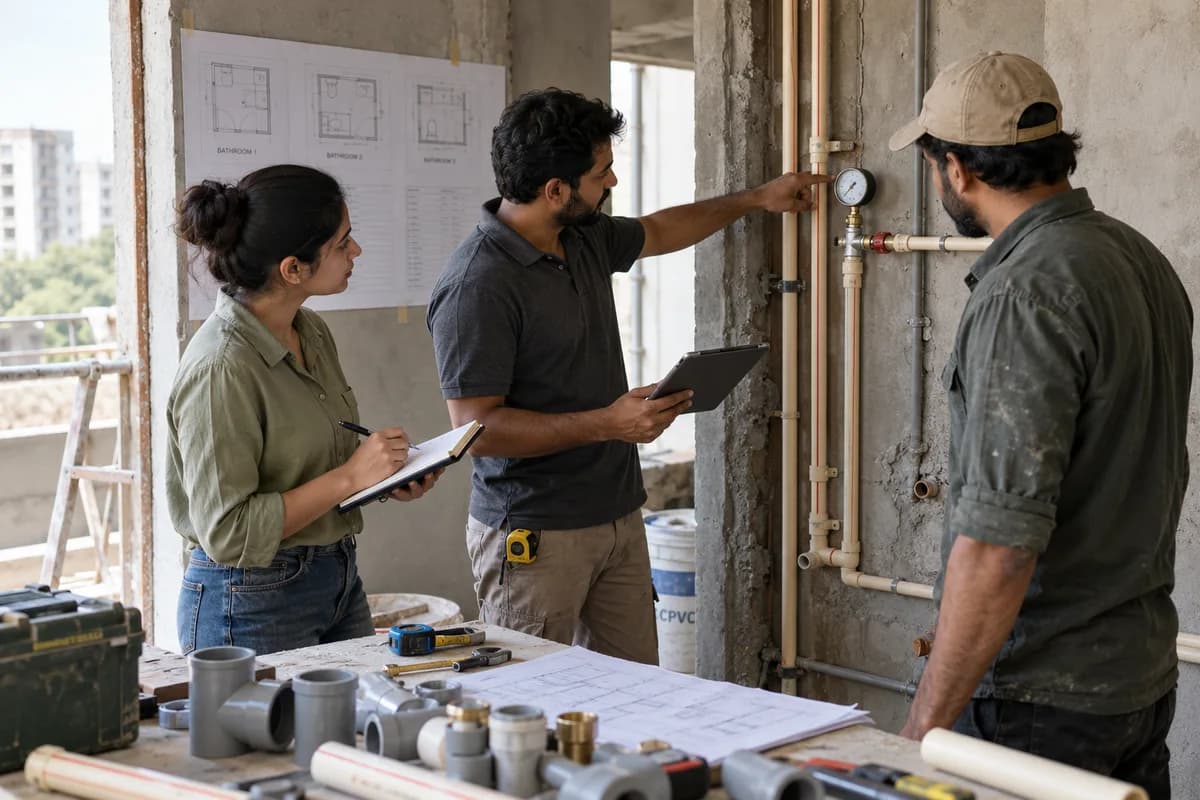
Plumbers and helpers punch in at the site they are sent to, not the office. Contractors see the headcount for each block. Overtime on a deadline day is recorded.
Bring the records the workflow depends on.
- Employee and shift list
- Attendance sources
- Overtime and correction rules
Outputs to check
- Approved attendance register
- Correction and overtime history
- Payroll-ready period totals
Follow the attendance & time tracking workflow.
Use this sequence to compare your current process with the proposed module. Agree the owner, permission and exception at each step.
Who uses the module, and who approves?
Keep responsibilities distinct even when one person holds more than one role.
Decide how exceptions are handled.
These business rules belong in configuration and testing. A normal transaction alone does not demonstrate that the workflow is ready.
Can this work independently?
Attendance can use manual entries or imported device records. Employee and shift identifiers are required; payroll, leave and project time are separate processes. Device integration must define how missing, duplicated or delayed events are reconciled before a period closes.
Systems and records it connects with
- Payroll management: Approved pay inputs, deduction calculations and payment instructions.
- Leave and holiday management: Approved absence and branch calendar information.
- Project time tracking: Approved task hours and their billable classification.
- Biometric attendance devices: Device event imports and rejected or duplicated attendance events.
Configure, test and introduce the workflow.
- We go through the register, the sheets and the machine reports in use today. You supply samples from a recent month. You get back a written note of how attendance flows.
- Shifts, grace periods, half day and overtime rules are listed in plain words. You confirm them. A rules sheet comes back that you can show staff. We look at the biometric model and at each place where marking happens. You say who marks where. A note returns on what connects directly and what needs a file.
- Last month’s records are loaded into a trial screen. The admin team compares the result with the sheet they really used. Differences are discussed. Supervisors and the admin team practise marking and correcting. You choose the start date. The old register retires after a clean month close.
Check the result before rollout.
Apply these checks to a sample from the agreed workflow, then repeat with an exception. Keep the expected result beside the test record.
- Overnight shifts use the correct dates.
- Corrections retain the approver.
- Approved totals reconcile with the attendance period.
How the business operates.
Most of the work is invisible within a week, behind tiles, plaster and a false ceiling. If something weeps two years later, the only argument you have is the record you made before it was covered.
The records that hold the operation together.
- Enquiries and site visits. Log every enquiry with its source and address. Schedule the site visit, and keep the measurements and photographs of the bathroom, kitchen or riser with the client so nobody measures twice.
- Quotations and rate lists. Build quotations and estimates from your own CPVC, UPVC, PPR and labour rates, item by item as a bill of quantities, with every revision kept and open quotations in one list.
- Service calls and job tickets. Raise a ticket for each complaint, dispatch a plumber, record the visit and bill the repair, from a dripping tap to a choked soil pipe or a failed float valve. Nothing goes missing.
- Plumbing jobs and work orders. Run each building or flat as a job with its stages, plumbers, material and schedule, from sleeve fixing and chasing through first fix to final fix. Each stage shows what is left.
Operational bottlenecks to check
There is no proof of the test
Tiles go on, a leak shows, and the builder says it was never tested. The photo is somewhere in a chat from March. The claim is yours to disprove.
Fittings are over-ordered and lost
Elbows, tees and angle valves are bought in bulk, but their quantities are not allocated to each site. Purchases repeat unchecked.
How work flows across this business
This module sits within a wider operating process. Use the sequence to identify the other teams and records affected by a change.
1. Enquiry
A burst-pipe complaint or a site enquiry arrives by phone, WhatsApp or a walk-in. It is logged under the client’s name and the site address, with the kind of work asked for and who took the call.
2. Site visit and quotation
The supervisor visits and takes measurements, noting the risers, traps, valves and sanitaryware needed. A quotation is built from the rate list. The client accepts, negotiates or drops it, and the outcome is kept.
3. Job and plumbers
An accepted quotation becomes a job. Plumbers and helpers are assigned to it, and a service call goes to the technician who covers that locality, with the address and complaint on their phone.
4. Work and material
Pipes, fittings and sanitaryware are issued from the store to the job. Each stage is recorded, from sleeves and chasing to first fix, and hydrostatic pressure tests are noted against the line that was tested.
5. Billing
Measurements turn into a running account bill or a final invoice, with sales tax or VAT where it applies. Receipts are posted against the bill as they arrive.
6. Follow-up
Snags are closed. The handover is recorded. Clients on a maintenance contract are called before it renews, so the overhead tank and pump visits continue without a gap.
Industry reports to connect with
- Quotations open, won and lost, by builder
- Service calls by status, locality and plumber
- Pipe, fitting and sanitaryware issued against each job
- Running bills raised, retention held and amounts received
Questions before implementation.
When should plumbing contractors consider attendance & time tracking?
Use when staff attendance or working time affects pay, deployment or reporting. A shift starts, ends or needs correction.
What should we bring to the requirements discussion?
Bring anonymised examples of Employee and shift list; Attendance sources; Overtime and correction rules. Show who creates, checks and changes each record. Use only records from an activity that meets the suitability conditions above.
Does this replace our existing business software?
The starting point is your current system and the gap you need to close. Record working time, absence and approved attendance corrections. Configuration, a connected module or a custom build are evaluated against that gap before a replacement is proposed.
What is outside this module?
Location tracking, biometrics and payroll connections require agreed scope and appropriate permissions.
How are scope, price and rollout decided?
The proposal follows a review of your records, user roles, branches and existing software. Data migration, connections, training and support are scoped separately where needed. Overnight shifts use the correct dates. Use this check when reviewing the first working version.
Related functions for plumbing contractors.
Discuss attendance & time tracking for your business.
Tell us which workflow needs attention and which systems your team uses. The next step is a requirements discussion and a written scope.
What happens after you share your requirements
- We review your brief and the systems you already use.
- We clarify the workflow, missing information and the work to consider first.
- The proposed scope sets out the deliverables, responsibilities and dependencies.
- Review the scope and commercial terms before deciding whether to proceed.
Start with your requirements
Describe your current process, the people involved and the change you need. Start with the details you know; we can clarify the rest together.
Share your requirements