Business solutions for Poultry farms
Explore software for work such as “Direct supply to retail chicken shops”. Review each business function below, including when it fits and what to check before implementation.
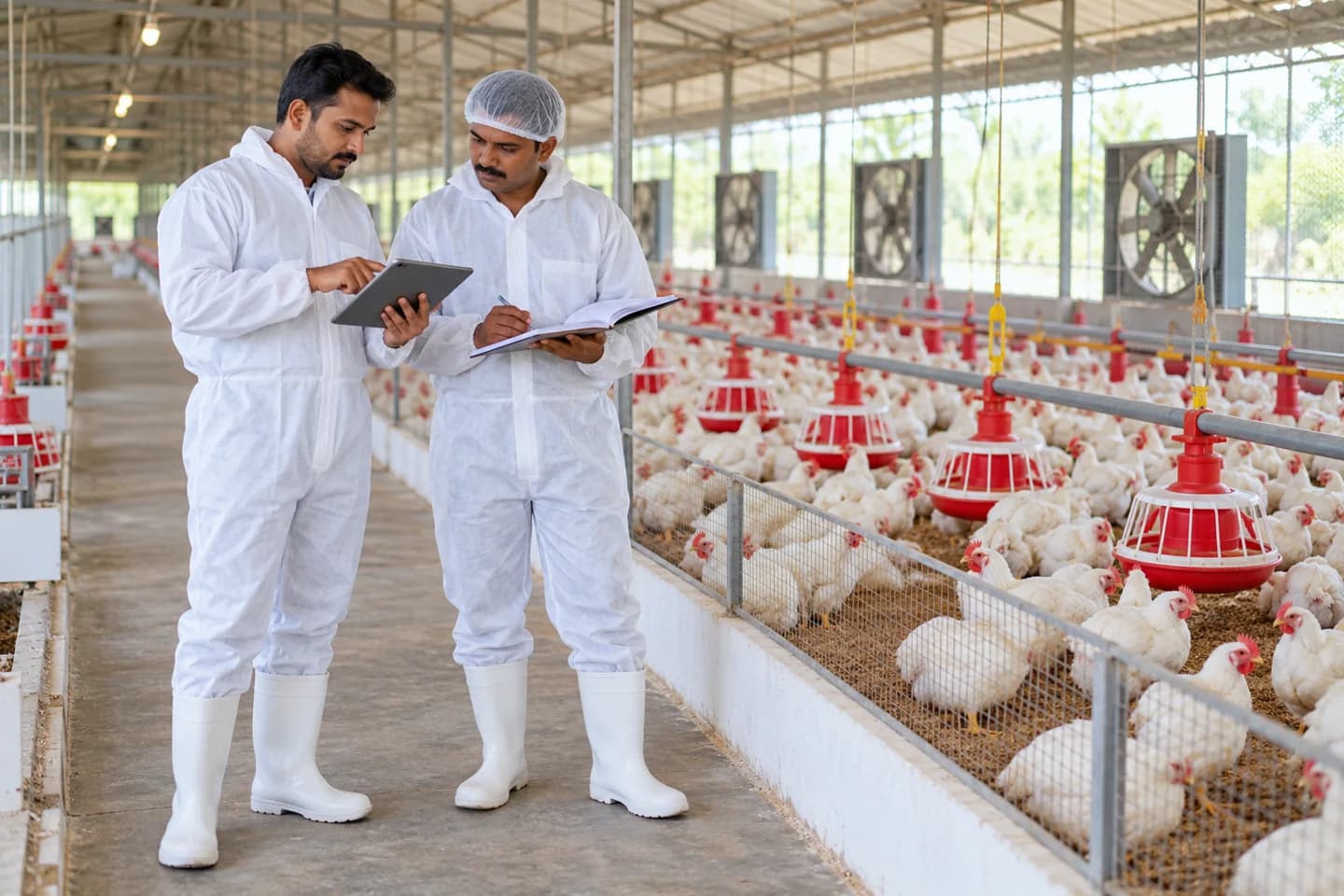
How the business operates.
A shed is a small business with a clock on it. Chicks are placed on a known day, and every bird, bag of feed and dose of medicine after that belongs to one flock number. Mistakes show up weeks later as a poor conversion figure nobody can explain. A daily record per flock shows where it went wrong.
The records that hold the operation together.
- Flock and shed register. Open a flock for each placement with the shed, hatchery, breeder flock, chick count and grade, and every later entry carries the same number through to the final lift. One number, one history.
- Daily shed sheet. Capture mortality, culls, feed opened, water reading and temperature per shed on a phone. A count above the breed curve alerts the manager the same morning, before the next shed is walked, so the warning comes early.
- Feed bins and issue. Record bulk or bagged feed received bin by bin and then issued to each flock, with returns noted, so that conversion is read against the feed lot actually used. Memory plays no part.
- Weights and growth targets. Save weekly sample weighings for each flock and compare them with the target for the breed, so a lagging shed is seen early. A flat curve raises a flag for the manager.
- Vaccination and medicine. Hold the vaccine calendar, batch numbers and every medicine course, with the withdrawal end date shown on the flock. A sale booked before that date draws a warning. The vet adviser can approve an exception.
- Egg collection and grading. Record eggs collected per layer shed, then size grades, cracks and rejects, and send trays to each dealer against a count that both sides sign at the door. A short delivery is visible at once.
- Lift planning and weighment. Plan the catching crew and trucks, enter each weighbridge slip, and record the buyer’s shortage or dead-on-arrival claim against the load. Every truck ties back to the flock and shed it left behind.
- Contract grower settlement. Work out each grower’s payment from chicks placed, feed supplied, birds lifted and mortality, using the grower agreement, with the figure behind every line shown on the sheet. Each dispute starts from a figure.
Operational bottlenecks to check
The daily sheet never reaches the office
Mortality and feed figures are written on a board in the shed and copied weekly. A rising death count in shed three is noticed after the loss is already large. That is costly.
Poor conversion has no visible cause
Feed bags leave one shared store with no flock number written against them. When birds eat more but gain less, the owner cannot tell whether the ration, the drinkers or the day-old stock caused it. It is guesswork.
Medicine and withdrawal dates are remembered
An antibiotic course is started in one shed, and the sale of birds is booked for the same week. Whether the withdrawal period has passed depends on someone’s memory. That is risky.
Egg counts differ at each hand-over
Trays counted in the house, in the store and at the dealer’s door give three numbers. Cracks and rejects are guessed, so the grading split is never trusted. Buyers notice.
Grower settlements are argued
A contract grower is paid from chicks placed, feed supplied, birds lifted and mortality. Each figure sits in a different book, so the settlement sheet is rebuilt by hand and disputed. Trust drops.
Follow the work across teams.
This is a planning flow. Confirm the steps, owners and approval rules against your actual operation.
Roles and responsibility boundaries.
Reports your managers need.
- Flock summary with placement, mortality, feed used and final feed conversion
- Mortality by shed, day and recorded cause
- Feed received, issued and left in each bin
- Sample weight against breed target by week
- Vaccination and medicine courses with withdrawal end dates
- Egg production, grade split and rejects by layer shed
- Grower settlement sheets with the figures behind each line
Connections to scope
- WhatsApp or other messaging
- SMS
- Weighbridge slip entry
- Accounting export
Confirm data access, record ownership and the exchange method for each connection. Inclusion here does not mean every connection is available in a standard package.
Setup decisions and adoption risks.
Use these requirements to plan phases, data migration and user training. Agree the release sequence after reviewing your current systems.
Limitations to settle before implementation
- A backyard keeper with a few dozen birds can keep a notebook and does not need flock-level software. Several sheds with rotating batches soon change that.
- Hatcheries that set and hatch eggs will find Hatcheries Management Software closer, and feed mills are better served by a manufacturing product built around formulation and batching.
Modules to consider first.
These functions connect to the operating model above. Confirm each one against the work your business actually runs.
Choose the operation you want to improve.
Use these activities to explain your scope. Your business does not need every function in the directory.
- Direct supply to retail chicken shops
- Standing orders for hotels and caterers
- Country chicken sold to households
- Table eggs to bakeries and shops
- Dressed and cut chicken
- Quail and duck eggs
- Manure sold to farms
- Selling culled layers
Explore the business functions.
Production, stock, fleet and recurring billing functions apply only where your business runs those activities. Read the suitability conditions on each page.
Manufacturing
Procurement
Finance & Accounting
Inventory Management
Project Management
Platform
Start with the problem your team can describe.
Bring a sample record and show where information is copied, missed or waiting for approval. Scope the first useful change from there.
What happens after you share your requirements
- We review your brief and the systems you already use.
- We clarify the workflow, missing information and the work to consider first.
- The proposed scope sets out the deliverables, responsibilities and dependencies.
- Review the scope and commercial terms before deciding whether to proceed.
Start with your requirements
Describe your current process, the people involved and the change you need. Start with the details you know; we can clarify the rest together.
Share your requirements